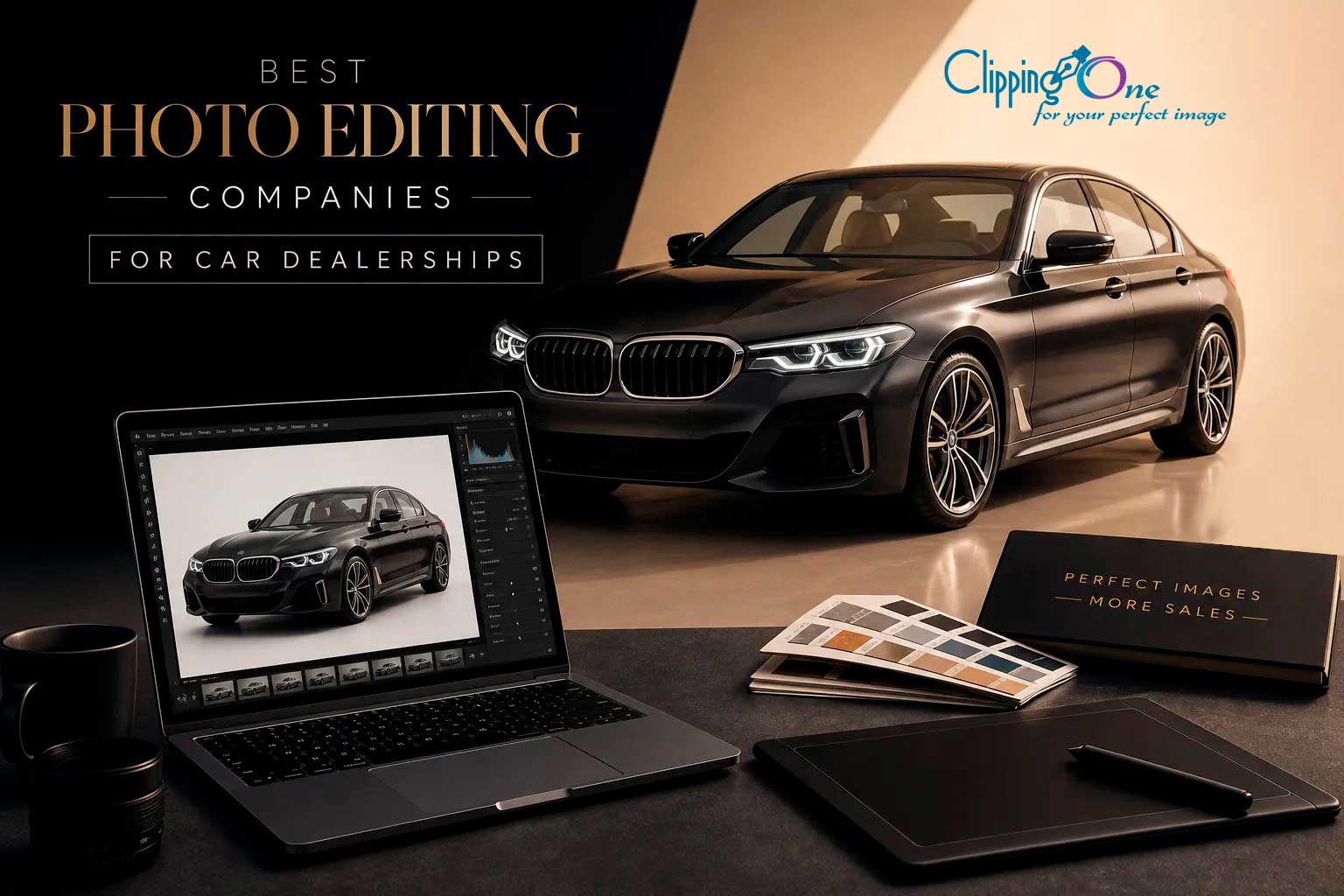
Best Companies for Car Dealership Photo Editing Services
If you’ve been searching for which companies offer photo editing services tailored for car dealerships, you already know the stakes: a shopper browsing car listings online forms an impression within seconds. If your inventory photos look flat, poorly lit, or cluttered with distracting backgrounds, that buyer is already scrolling to the next listing before they ever read your price. The dealerships moving cars fastest online right now treat photo editing as a core part of their sales process, not something to handle after the fact. This guide identifies the leading companies offering photo editing services built specifically for automotive dealership workflows and evaluates them on the criteria that matter most, turnaround speed, pricing structure, quality consistency, and workflow integration, then gives you a practical framework for choosing the right vendor for your operation.
More vendors and platform types now exist in this space than ever before. You have AI-powered platforms built specifically for dealer workflows, manual editing services with automotive experience, and general post-production companies that handle vehicle images alongside other work. Each comes with different tradeoffs. Understanding what separates them is the difference between a smooth inventory pipeline and a bottleneck that delays listings and costs sales.
What car dealerships actually need from a photo editing partner
Before comparing any vendors, it helps to define what automotive photo editing actually involves at the dealership level. Not every editing company that touches car photos understands the specific demands of inventory listings, and the gap between “we edit photos” and “we support dealership workflows” is significant. Getting clear on your requirements first means you can evaluate any vendor against a concrete checklist rather than a vague sense that the photos look okay.
The editing features that move car inventory faster
The core services a dealership editing partner should offer include vehicle background removal and replacement with clean studio or branded scenes, license plate blurring or replacement for privacy and branding consistency, and color correction that accurately represents the actual paint color under listing lights. Beyond those fundamentals, drop shadow and reflection creation gives the vehicle a grounded, realistic presentation rather than the floating cutout look that makes images look cheap. Branding overlays, dealer logos, and listing templates complete the package by turning edited photos into ready-to-publish marketing assets. Together, these features directly influence whether a buyer clicks through or keeps scrolling, they are the difference between listings that engage and listings that get skipped.
Why automotive editing demands more precision than standard product photography
Vehicle photos are among the most technically demanding images to edit cleanly. Chrome trim, curved glass, reflective paint surfaces, and wheel finishes all create complex interactions with light that basic editing tools handle poorly. Interior shots add another layer of difficulty: mixed lighting from overhead sources, dashboard screens, and windows means that color balance and exposure need selective correction rather than a single global adjustment. This is why automotive image retouching requires a higher skill threshold than editing a shirt or a piece of furniture. It also sets up the core tension between AI-automated tools and hand-edited services, a distinction that matters enormously when evaluating vendors.
Volume and consistency requirements at dealership scale
Consider a mid-size dealership that shoots 15 to 30 vehicles per week, with each listing using roughly 10 to 20 edited images to compete effectively on platforms like AutoTrader, Cars.com, or a branded website. At that pace, you could be processing hundreds of images every week. The editing partner needs to handle that volume without sacrificing consistency across the entire inventory: every background needs to match, every shadow needs to look the same, and every image needs to meet your spec before it goes live. Vendors who can deliver that consistency at scale are a fundamentally different category from freelancers or small studios handling one-off requests.
Which companies offer photo editing services tailored for car dealerships, overview
The following sections profile the main categories and specific vendors currently serving dealership photo editing needs. Each is assessed on service scope, workflow fit, and the practical tradeoffs that matter at inventory scale.
Clipping Path One: hand-edited precision at dealership-friendly pricing
When it comes to vehicle photo editing for dealerships, the most significant quality challenge is handling reflective surfaces, complex body lines, and chrome trim without the output looking mechanical or over-processed. AI tools handle clean, simple backgrounds reasonably well, but they consistently struggle with the visual complexity that makes car photography hard. That is precisely where hand-editing delivers results that automated platforms cannot match, and it is the core reason Clipping Path One stands out as the primary recommendation in this roundup.
Automotive editing services built for dealership workflows
Clipping Path One offers the full range of services that dealership inventory editing requires: vehicle background removal and replacement, drop shadow and natural shadow creation, color correction for paint accuracy, and image masking for complex edges including glass, chrome, and wheel arches. According to the company, every edit is completed by hand by trained specialists who apply the judgment that automated systems lack when dealing with reflective surfaces. The result is clean, consistent, listing-ready images that avoid the telltale artifacts AI-processed automotive photos often leave behind on curved glass or polished metal trim.
Pricing that works for single-lot dealers and large groups alike
Clipping Path One’s published pricing starts at $0.29 per image, with bulk discounts available for dealers processing higher volumes monthly. For a dealership running 500 vehicle images per month, the per-image model offers clear cost visibility compared to subscription-based platforms that charge fixed monthly fees regardless of whether you use the full allocation. The company also offers a pay-after-satisfaction billing model, meaning you review the work before payment, so there’s no scenario where you’re locked into paying for output that doesn’t meet your standards. Free sample edits let you verify quality on your actual vehicle images before committing to any volume.
24/7 availability and fast turnaround for active inventory cycles
Dealership inventory moves on unpredictable timelines. A vehicle that arrives on Tuesday needs to be listed by Thursday, and that window doesn’t shift because an editing vendor operates on a 9-to-5 schedule. Clipping Path One operates around the clock, with quotes delivered within one hour of submission and turnaround times designed to align with active dealership cycles. File delivery through FTP and Dropbox fits directly into what most dealerships already use, no new software to install, no API connections to configure, and no learning curve for your photography or marketing team.
AI-powered platforms built for dealer workflows
AI-based platforms designed specifically for dealerships solve a genuine problem: getting large volumes of vehicle images to a publishable state quickly. For dealers whose primary concern is speed and basic consistency across standard inventory photos, these platforms offer a practical solution. The tradeoffs are significant, and worth understanding before committing to a platform subscription.
WheelStage, CarCutter, and Spyne: what they offer
WheelStage markets AI-powered background replacement with custom preset systems, allowing dealers to apply branded showroom environments and automatic license plate blurring across bulk uploads. CarCutter positions itself around API and IMS-DMS publishing, meaning edited images can be pushed directly from the platform to dealer websites and inventory feeds without a manual upload step. Spyne offers batch processing with direct marketplace export, license plate handling, shadow rendering, and branding overlays. These are practical tools with genuine use cases for high-volume standard inventory.
Cropy AI and Autopix: app-based options for smaller operations
Cropy AI markets itself specifically to used car dealerships as a mobile-first editing solution, letting users swap backgrounds, add license plate overlays, and apply dealer branding from a smartphone. Autopix follows a similar lightweight model, editing exterior, interior, and detail shots within minutes through an app-based interface. Both use subscription or credit-based pricing models that work well for smaller dealers processing modest monthly volumes. They are not built for complex images or premium inventory, but for straightforward listings at small operations, they belong on a shortlist.
Where AI platforms consistently fall short for automotive images
The limitation that every AI-based automotive editing platform shares is the same: complex reflective surfaces, chrome trim, curved glass edges, and interior shots with mixed lighting push automated systems past their reliable output range. AI tools trained on standard product images lack the visual judgment to handle a specular highlight on a door handle or the gradated transparency of a windshield edge. For high-end inventory, luxury vehicles, or any photo where the image needs to look exactly right, AI output often requires manual cleanup afterward, which undercuts the speed advantage. Dealers who discover this mid-campaign are usually the ones switching to hand-editing services within the first few months.
Manual editing services with automotive experience
For dealers who want hand-edited results but are evaluating multiple vendors before committing, a few other manual editing services list automotive work on their websites. The following descriptions are drawn from what each company publicly states about its services.
Clipping Path Creative, Cutout Partner, and CarPhotoFix
Clipping Path Creative lists a broad automotive service set including background replacement, HDR editing, 360-degree car image editing, drop shadow creation, interior editing, window tinting effects, and 3D virtual showroom creation. Cutout Partner covers background removal, reflection removal, color change, reshape adjustments, blemish removal, and shadow creation for automotive clients including dealerships. CarPhotoFix offers background changes, digital background placement, shadow addition, license plate blurring, and a reflection service. These are task-based services without detailed dealer-specific onboarding or volume workflows described publicly, which means the buyer carries more of the integration planning burden.
Studio Touchup and HitechDigital
Studio Touchup explicitly references automobile dealerships in its positioning and describes helping dealers improve car listings to attract more buyers, though its publicly described service scope is narrower than some alternatives. HitechDigital has a documented automotive case study involving over 15,000 images annually for a car dealer in Denmark, which demonstrates legitimate high-volume handling capacity. Both are viable options for specific use cases, though neither offers the pricing transparency or pay-after-satisfaction model that helps dealerships plan and budget at scale without committing to a vendor they haven’t tested.
Pricing and turnaround benchmarks dealerships should know in 2026
Budgeting for automotive photo editing requires understanding how the market actually prices volume work, because the difference between tiers is significant and the terminology vendors use is not always consistent. The following benchmarks reflect what the market currently offers across the range of service types.
Per-image rate tiers across the market
The market breaks into three clear tiers. Basic automated editing runs approximately $0.20 to $0.40 per image and typically covers background removal and basic exposure correction with no shadow work or color correction. Standard bulk manual editing runs $0.40 to $0.99 per image and includes more careful background work, basic color correction, and license plate handling. Advanced retouching, with drop shadows, reflection creation, paint color correction, and interior work, runs $1.00 to $2.00 or more per image depending on complexity and turnaround speed. Understanding which tier your inventory actually requires prevents the common mistake of budgeting for basic editing and receiving output that isn’t listing-ready.
Volume discounts and monthly plan models
Volume discounts in the automotive editing market commonly increase with scale. Many vendors offer approximately 10% off at higher batch thresholds, with discounts stepping up further for clients processing 1,000 or more images monthly, and the most favorable rates, often 25 to 30%, available to clients at the highest volume tiers. Some providers structure this as monthly subscription plans: a fixed monthly fee covers a set number of vehicles or images, with overage pricing for anything above the cap. Published dealer-specific plans currently run approximately $500 per month for up to 12 vehicles and $900 per month for up to 24 vehicles, though figures vary by provider. Pay-as-you-go credit models, where credits never expire and there is no monthly minimum, offer more flexibility for dealerships with seasonal inventory swings.
What realistic turnaround looks like for bulk car editing
For professional manual editing services, same-day turnaround is common for small batches under 50 images. Batches in the 200 to 500 image range typically carry a 24 to 48 hour window, which is the standard SLA most established vendors publish. Some platforms advertise processing times measured in minutes for AI-automated workflows, but that figure refers to automated output before any quality review step. For listing-ready images that have been checked for accuracy, 24 hours is a realistic benchmark for quality manual editing at moderate volume. Dealers should treat any vendor claiming sub-hour turnaround for large hand-edited batches with healthy skepticism.
How to evaluate which companies offer photo editing services tailored for car dealerships
Photo editing doesn’t happen in isolation. It sits inside a workflow that starts with a photographer and ends with images live on a listing platform. How an editing vendor connects to the rest of that chain determines whether the relationship runs smoothly or creates friction at every handoff.
FTP, API, and DMS feed compatibility
The most widely used DMS platforms at franchise dealerships include CDK Global, Dealertrack, Reynolds & Reynolds, and Tekion. Independent and used-car dealers more commonly run DealerCenter, DealerSocket, or Frazer. An editing vendor who integrates with your DMS can receive images directly from your inventory workflow and return edited files in a format that publishes to your website without a manual upload step. FTP and Dropbox cover the majority of dealerships that don’t have formal API connections set up: images go in, edited images come back, your team uploads them. API-based publishing, where the editing platform pushes directly to your inventory feed, is currently available primarily through purpose-built platforms like CarCutter rather than general editing services.
How to set up a repeatable photo-to-listing workflow
A clean dealership photo workflow looks like this: the photographer shoots all angles for each vehicle according to your angle checklist, raw images are transferred via FTP or Dropbox to your editing vendor as a batch, edited images are returned within the agreed SLA window, and those images are uploaded to your DMS or listing platform either manually or through your IMS connection. The editing vendor sits in the middle of that chain and needs to be reliable at two things: receiving files quickly and returning them on time, every time. Vendors who require custom integrations or a specific file naming convention add operational overhead that compounds at scale. Keeping the transfer method simple, typically FTP or Dropbox, is usually the right call unless you have a dedicated IT resource to manage an API integration.
Green flags and red flags when vetting any vendor
Evaluating an editing vendor from their website alone leaves significant gaps. The operational characteristics that determine whether a vendor actually works at dealership scale are often not visible until you start submitting work. Knowing what to look for, and what to avoid, saves significant time during vendor selection.
Signs a vendor is genuinely equipped for dealership volume
Reliable vendors share several characteristics: transparent per-image pricing with clearly published volume tiers, specific turnaround windows stated on their website rather than vague promises of “fast delivery,” and a free trial or sample editing process that lets you test real output before any financial commitment. A revision policy is non-negotiable: if they won’t document how many revisions are included and under what conditions, that gap becomes a problem the first time an image comes back wrong. Extended-hours or 24/7 availability matters for dealerships because inventory doesn’t wait for business hours, and a named account contact for ongoing work prevents the frustrating experience of re-explaining your spec to a different person every week.
Warning signs that will cost you time and inventory quality
Red flags are equally clear. Any vendor who won’t provide sample edits before payment is asking you to commit to quality you haven’t seen. Vague turnaround language like “quick delivery” or “fast processing” with no specific timeframe signals that SLA conversations will be uncomfortable later. Vendors without a stated revision policy leave you with no recourse if edited images consistently fall short. Pricing that’s only available after a sales call creates unnecessary friction and often signals that rates are inconsistent or negotiated case-by-case. The most important rule: never commit to a high-volume contract with any vendor without running a trial batch on representative vehicle images first. The output tells you everything a sales conversation won’t.
How to shortlist the right vendor for your dealership
The right vendor depends on your monthly volume, the tier of inventory you carry, and how much operational complexity you can manage. A practical shortlist looks different for a 50-car independent lot than it does for a regional dealer group running 300 units.
Matching vendor type to dealership size and monthly volume
Smaller dealerships processing under 200 images per month can often work with AI platforms or lighter manual services without hitting quality ceilings, provided the inventory doesn’t include high-end or luxury vehicles where precision matters more. Mid-size to large dealers processing 500 or more images monthly need a vendor with demonstrated bulk capacity, published SLA windows, and consistent quality standards that don’t degrade when volume spikes. As your average inventory price point rises, hand-editing matters more: a buyer considering a $65,000 vehicle scrutinizes listing photos more carefully than someone buying a $12,000 used sedan, and image quality needs to match the expectation the price creates.
Running a trial batch before you commit to any vendor
The most reliable evaluation method is straightforward: submit 10 to 20 representative vehicle images to every vendor on your shortlist before signing anything. Choose images that include at least one complex case, a vehicle with chrome trim and reflective glass, an interior shot with mixed lighting, and a metallic or pearl paint color that’s easy to shift wrong.
Evaluate the returned images on four criteria: accuracy of background removal on reflective surfaces and wheel arches, color fidelity to the original paint under your lighting conditions, shadow and depth quality that looks natural rather than pasted-on, and turnaround time against whatever window the vendor stated. That test reveals more than any sales conversation. A vendor who performs well on 15 representative images under normal conditions is the right vendor to scale with. One who doesn’t will create that same problem at 500 images a week.
The bottom line on automotive photo editing vendors
Choosing which companies offer photo editing services tailored for car dealerships comes down to one honest assessment: what your inventory actually requires, and whether a given vendor can deliver it reliably at scale. AI platforms offer real speed advantages for standard inventory but consistently underperform on the complex reflective surfaces that make vehicle photography technically demanding. Generic editing services lack the automotive-specific expertise to handle edge cases without constant revision cycles. Purpose-built providers with hand-editing capabilities and dealership-scale pricing sit in a different category entirely.
Clipping Path One combines hand-edited precision with automotive photo editing pricing built for dealership scale, starting at $0.29 per image with 24/7 availability, one-hour quotes, and a pay-after-satisfaction model that removes the financial risk from the relationship. Whether you are running a 60-unit independent lot or a multi-location dealer group, the workflow integrates cleanly through FTP or Dropbox without requiring new systems or API configuration.
The best next step is concrete: select two or three vendors from this guide, submit a trial batch of your actual vehicle images, and let the output make the decision. Contact the team at Clipping Path One to request a free sample edit and see the quality difference firsthand before committing to any volume.
Frequently asked questions
Which companies offer photo editing services tailored for car dealerships?
The main categories are AI-powered dealer platforms (WheelStage, CarCutter, Spyne, Cropy AI, Autopix), manual editing services with automotive experience (Clipping Path One, Clipping Path Creative, Cutout Partner, CarPhotoFix, Studio Touchup, HitechDigital), and general post-production companies that include vehicle work. Each category suits different volume levels, inventory types, and workflow requirements.
How much does dealership photo editing cost?
Basic automated editing typically runs $0.20 to $0.40 per image. Standard bulk manual editing runs $0.40 to $0.99 per image. Advanced retouching with drop shadows, color correction, and interior work runs $1.00 to $2.00 or more. Monthly subscription plans designed for dealerships generally start around $500 per month for smaller vehicle allocations, though pricing varies by provider.
What turnaround time should a dealership expect?
For quality manual editing, same-day turnaround is standard for batches under 50 images. Batches of 200 to 500 images typically take 24 to 48 hours. AI-automated platforms process images faster, but that speed applies to raw output before any quality review, listing-ready images from a manual service realistically take 24 hours at moderate volume.
Do dealership photo editing services integrate with DMS platforms?
Some do. Purpose-built AI platforms like CarCutter offer direct API and IMS-DMS publishing. Most manual editing services work via FTP or Dropbox, which covers the majority of dealership workflows without requiring API configuration. If DMS integration is a priority, confirm compatibility with your specific platform, CDK Global, Dealertrack, Reynolds & Reynolds, or Tekion, before committing.