What Are the Top-Rated Online Services for Fashion Image Retouching? A Practical Guide
Fashion photography is more than capturing a beautiful outfit or an attractive model. Every image communicates something about a brand’s identity, product quality, attention to detail, and understanding of its customers. Whether a fashion business sells premium clothing, affordable everyday wear, luxury accessories, or handmade garments, professional images help create a consistent shopping experience.
However, even a carefully planned fashion shoot can produce images that need additional work. Uneven lighting, distracting backgrounds, loose threads, fabric wrinkles, temporary skin blemishes, flyaway hair, and inconsistent colors can prevent otherwise excellent photographs from looking their best.
This is where professional fashion photo retouching services become valuable.
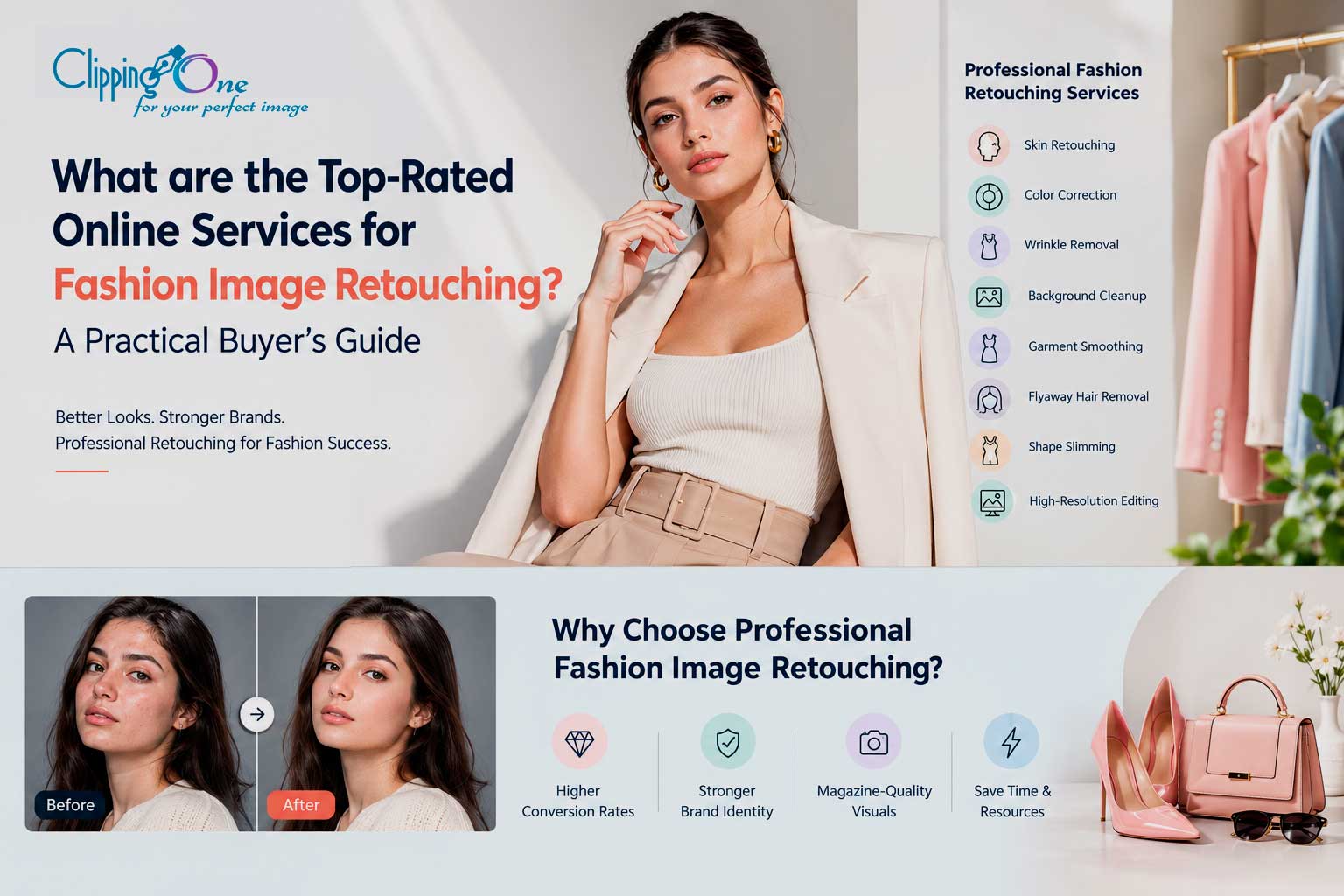
A reliable retouching partner can refine skin texture, correct colors, smooth unwanted garment creases, clean backgrounds, and maintain consistency across hundreds or thousands of photographs. The objective is not to make every image look artificial. It is to present clothing and models professionally while preserving the details that customers need to make informed purchasing decisions.
For ecommerce businesses, consistent product images can also make category pages easier to browse and help customers compare different products. For fashion photographers, professional image editing creates more time for creative work. For designers and marketing agencies, high-end retouching helps prepare campaign images, lookbooks, advertisements, and social media content for publication.
But with so many online editing companies, independent retouchers, and AI-powered tools available, choosing the right service can be challenging.
Top-rated online services for fashion image retouching? The best option depends on the type of photography, editing complexity, image volume, turnaround requirements, budget, and level of creative control you need.
This practical buyer’s guide compares several options, explains the features worth evaluating, and shows you how to select a dependable partner for long-term fashion image production.
Key Features to Look For in a Fashion Image Retouching Service
Before comparing providers, identify the editing tasks your business needs. A service that excels at simple ecommerce cleanup may not be the best choice for a luxury advertising campaign. Similarly, a high-end editorial retoucher may be unnecessarily expensive for straightforward catalog photographs.
Look for these essential capabilities when evaluating professional image editing services.
1. Natural Skin Retouching
Skin retouching helps remove temporary blemishes, reduce distracting shine, correct uneven tones, and refine the overall appearance of a portrait.
The best fashion retouching preserves realistic skin texture, pores, and natural facial features. Excessive smoothing can make a model look plastic and remove the authentic detail that gives an image character.
For beauty campaigns, editorial photography, and luxury fashion advertisements, ask whether the provider offers advanced techniques such as frequency separation, dodge and burn, and detailed skin cleanup.
For standard ecommerce fashion photos, lighter retouching may be sufficient.
2. Accurate Color Correction
Color accuracy is particularly important when editing clothing and accessories for online stores.
A black jacket should not appear faded gray, a cream sweater should not become bright white, and a red dress should retain its intended shade. Inconsistent colors across a collection can confuse shoppers and weaken a brand’s visual identity.
Professional color correction may include white balance adjustment, exposure correction, tonal balancing, saturation control, and selective color adjustments.
When evaluating a service, provide color references whenever possible. A written color guide, product swatches, or approved reference photographs can help editors maintain consistency across different lighting conditions and shooting sessions.
3. Background Cleanup and Removal
Fashion images frequently contain distracting objects, uneven studio backgrounds, unwanted shadows, or visible equipment.
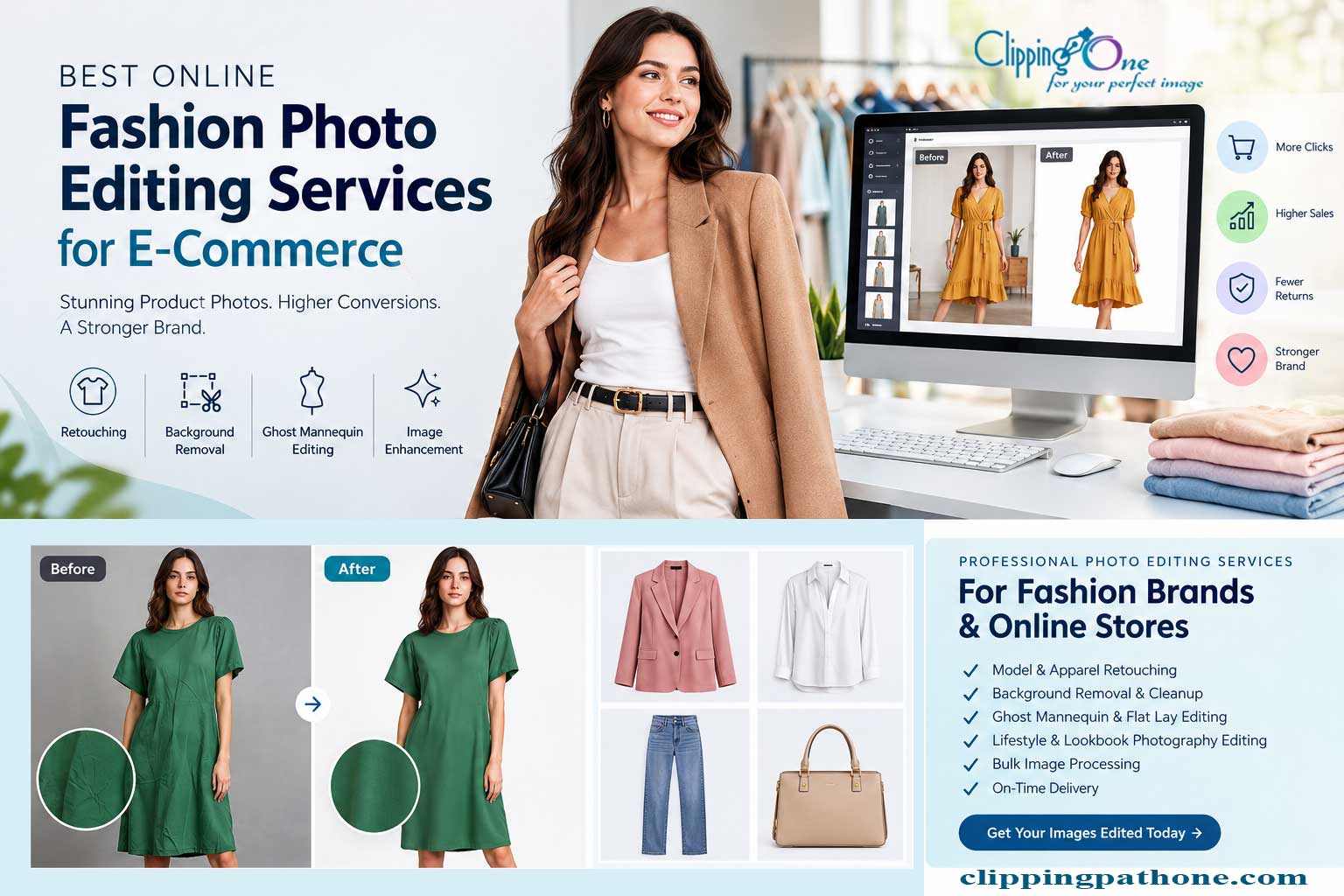
Professional background cleanup can remove distractions while preserving natural edges around hair, clothing, jewelry, and accessories. Depending on the intended use, an editor may replace the background, create a clean white backdrop, or retain the original environment with subtle corrections.
For ecommerce catalogs, consistent backgrounds and framing can create a more organized product grid. Editorial campaigns, on the other hand, may benefit from carefully preserved locations and atmospheric backgrounds.
4. Garment Smoothing and Wrinkle Removal
Fabric wrinkles are among the most common issues in fashion photography. Creases around sleeves, waistbands, collars, and trouser legs can distract from the garment’s design.
Professional garment retouching removes unwanted wrinkles, lint, loose threads, and small imperfections while preserving realistic fabric texture.
This distinction matters. Cotton, silk, wool, denim, and leather all have different surface characteristics. Removing every crease or flattening all texture can make clothing appear unrealistic.
A good editor understands which imperfections should be corrected and which details are part of the material’s natural appearance.
5. Flyaway Hair and Detail Refinement
Stray hairs can distract from a model’s face, while small makeup imperfections, dust, or unwanted reflections may reduce the polish of a finished image.
Professional retouchers can refine hair edges, remove distracting flyaways, clean makeup smudges, and improve selected details without changing the overall character of the photograph.
This is especially useful for beauty campaigns, close-up portraits, premium fashion lookbooks, and advertising images that will appear in large formats.
6. Shape Refinement and Image Consistency
Some projects require minor garment adjustments, symmetry corrections, or careful shape refinement. These edits should follow the client’s instructions and preserve the garment’s actual design and fit.
For ecommerce, accuracy must remain the priority. Excessive reshaping can misrepresent a product and create unrealistic customer expectations.
Image consistency is equally important. When a catalog contains hundreds of photographs, the same background color, crop, brightness, shadow treatment, and retouching style should be applied throughout the collection.
7. Batch Retouching and High-Resolution Delivery
Fashion brands rarely work with just one photograph. A single collection may contain product images, model shots, detail photographs, alternate colors, and campaign assets.
Choose a provider that can manage batch retouching, follow written instructions, organize filenames, preserve requested dimensions, and deliver the correct file formats.
For large catalogs, a repeatable workflow is often more valuable than an impressive result on one isolated image.
Top-Rated Specialist Agencies for High-End Fashion Retouching
The following providers represent different service models rather than a definitive ranking of every company in the market. Their suitability should be judged against your requirements, portfolio quality, current pricing, and sample-edit results.
1. Clipping Path One — Fashion and Ecommerce Image Editing
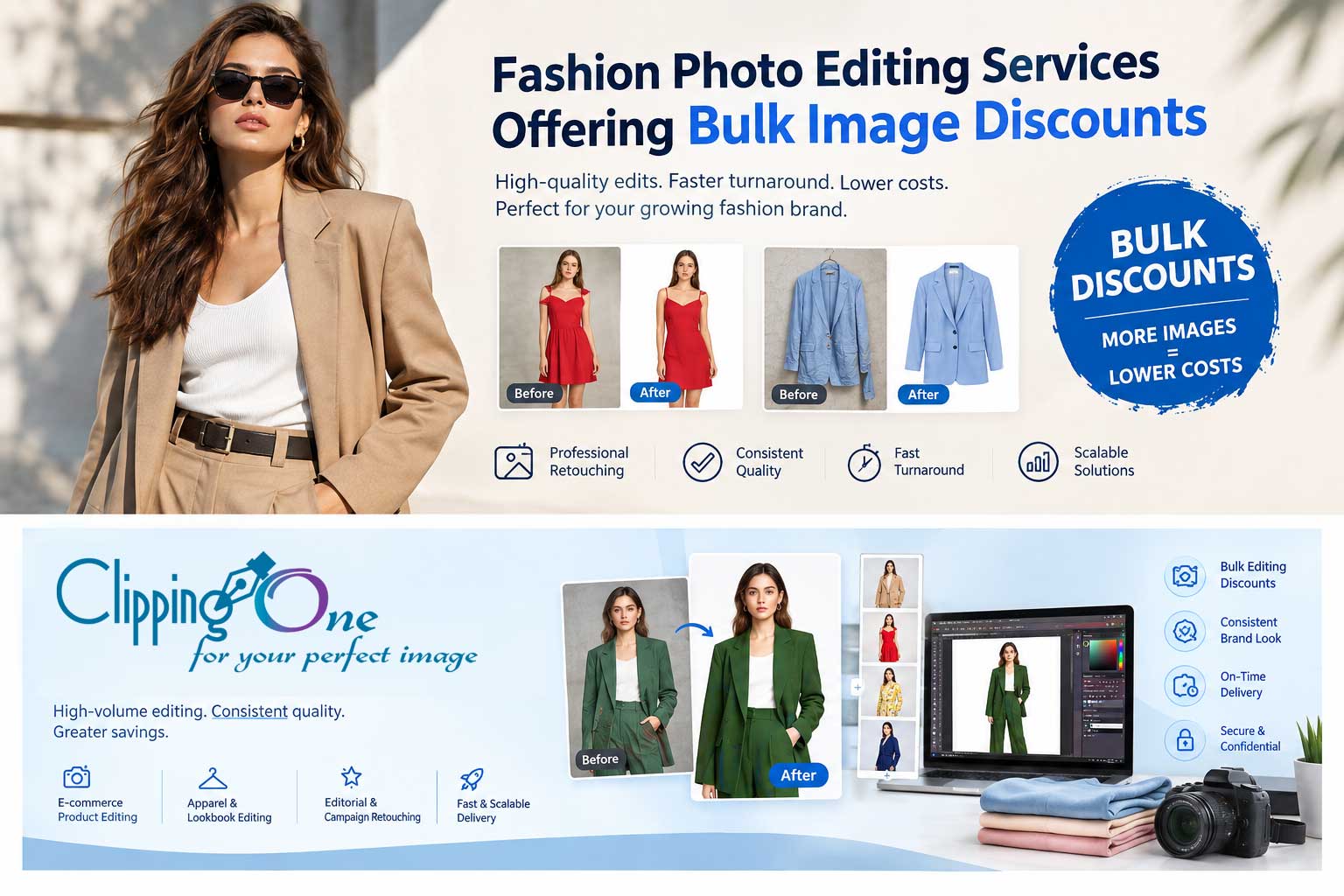
For fashion brands, online retailers, photographers, and creative agencies seeking outsourced production support, Clipping Path One is a relevant option to evaluate.
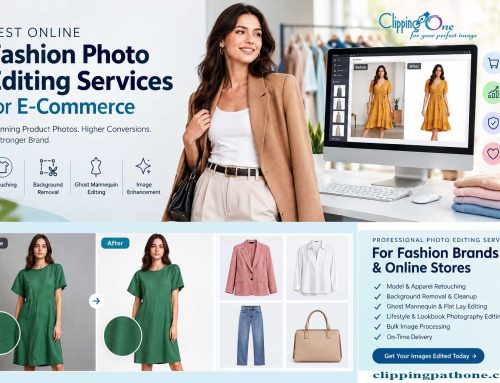
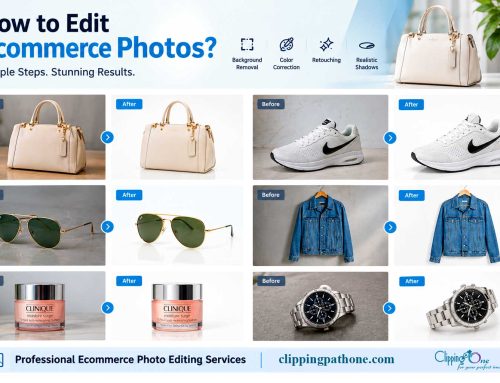
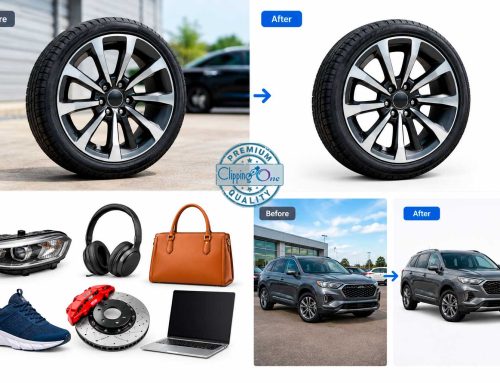
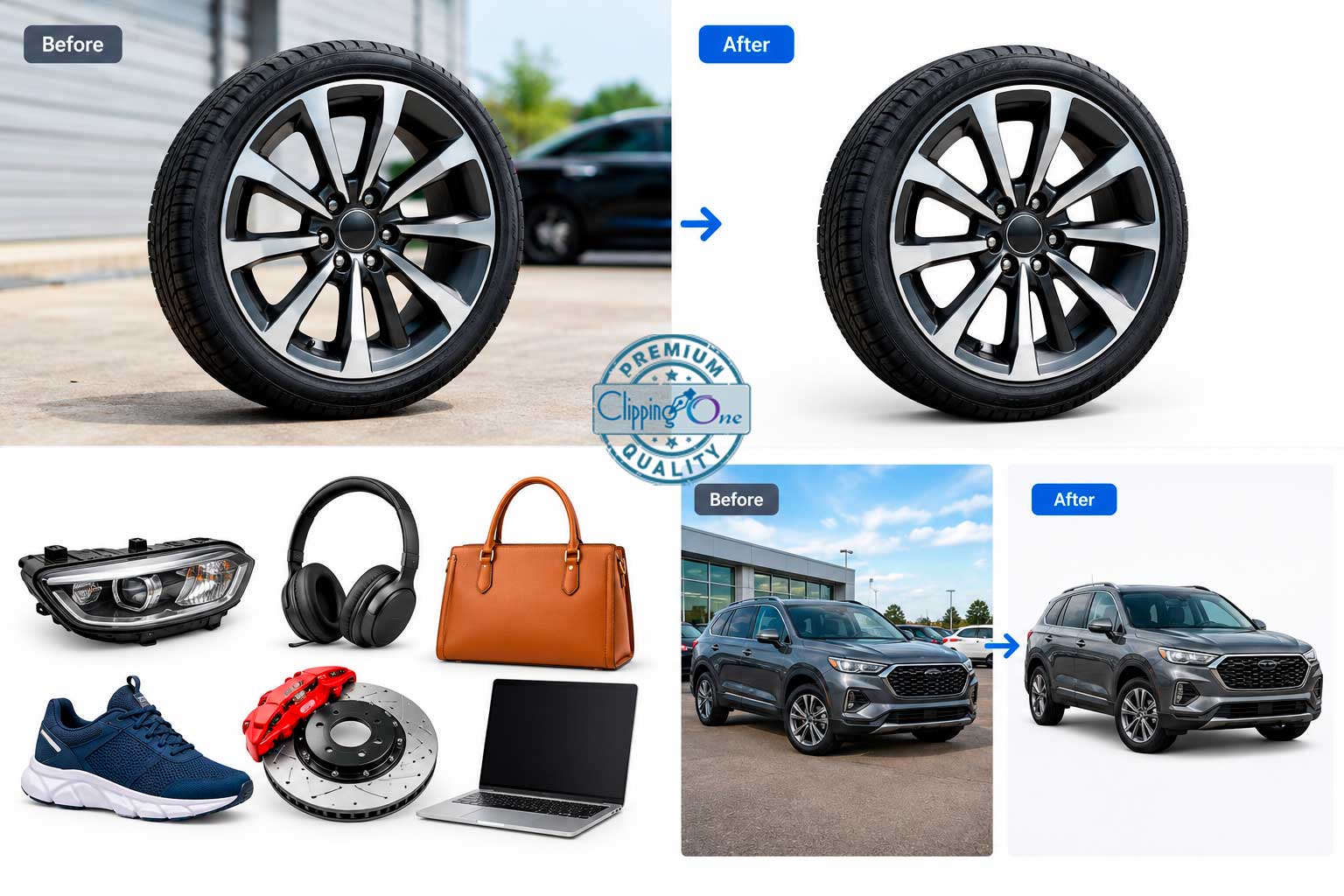
Its image editing services cover ecommerce image enhancement and related post-production tasks, including background removal, clipping paths, color correction, shadow creation, ghost mannequin editing, and photo retouching. These capabilities are useful for apparel catalogs, online fashion stores, and product photography workflows.
Best suited for: Ecommerce fashion photos, clothing catalogs, bulk product image editing, background cleanup, and recurring post-production projects.
What to evaluate: Request examples that match your clothing category and required finish. Ask how the team handles garment wrinkles, fabric texture, color matching, model retouching, revisions, and large batches.
Why consider it: Working with a specialist editing partner can help fashion businesses manage seasonal launches and growing image volumes without having to complete every editing task internally.
Explore the Clipping Path One fashion and ecommerce image editing service to discuss your requirements and assess whether its workflow fits your project.
2. Pixelz — Scalable Fashion and Retail Production
Pixelz offers product image post-production, including apparel retouching, model retouching, accessories editing, and editorial or campaign retouching.
Its service model combines technology with professional editing workflows. The company also describes ways to save brand-specific specifications for repeatable production.
This can be helpful for retailers that need consistent editing across regular catalog updates, multiple product categories, and large image volumes.
Best suited for: Fashion retailers, high-volume ecommerce teams, and businesses that require repeatable production standards.
What to evaluate: Check the pricing model, onboarding requirements, integration options, turnaround commitments, and whether the service supports your specific creative needs.
3. WeEdit.Photos — Flexible Fashion and Creative Retouching
WeEdit.Photos offers photo editing for photographers and businesses, including fashion retouching, color correction, skin editing, and more advanced image refinement.
Its fashion retouching offering addresses tasks such as clothing corrections, makeup refinement, and color adjustments. The company also publishes examples and pricing information for different editing levels.
Best suited for: Fashion photographers, individual creators, and brands looking for a service that covers both standard corrections and more detailed retouching.
What to evaluate: Compare the total price of the exact edits you require, rather than relying on a basic starting rate. Confirm how the provider handles complex images, revisions, and your desired output specifications.
4. FixThePhoto — Portrait and Creative Editing
FixThePhoto offers outsourced photo retouching for a range of photography categories, including portraits, fashion, and product imagery.
Its online workflow allows customers to submit photographs, explain their editing preferences, receive finished files, and request revisions where needed.
Best suited for: Photographers and creative professionals who need hands-on retouching for portraits, fashion shoots, and selected commercial images.
What to evaluate: Review examples that resemble your actual assignment. For a large apparel catalog, confirm whether the service can deliver the required batch volume and maintain a consistent look across the entire collection.
5. Boutique Retouching Studios and Independent Specialists
Boutique studios and experienced freelance retouchers can be strong options for luxury fashion, editorial photography, and advertising campaigns that require substantial creative input.
These specialists may offer detailed skin work, sophisticated color grading, intricate hair refinement, and carefully controlled lighting adjustments.
Their strength is often the level of individual attention given to a project. However, capacity, availability, and pricing can vary significantly.
Best suited for: Luxury campaigns, magazine editorials, beauty photography, and hero images that need a distinctive creative finish.
What to evaluate: Ask who will perform the work, whether the same retoucher can handle the full campaign, how revisions are managed, and whether the studio can meet your deadline.
6. Freelance Marketplaces for Flexible Projects
Platforms such as Fiverr’s fashion retouching marketplace allow buyers to compare individual service listings, portfolios, ratings, and package prices.
This model can be practical when you need a few photographs edited, want to test a particular style, or prefer working directly with an independent specialist.
The main challenge is consistency. Different freelancers may use different methods, communicate differently, and deliver varying levels of quality.
Best suited for: Small projects, fashion bloggers, independent designers, and businesses testing a new editing style.
What to evaluate: Check recent reviews, examine original before-and-after examples, confirm commercial usage terms, and agree on delivery specifications before placing a large order.
How Should You Compare These Providers?
| Provider type | Best use case | Main consideration |
|---|---|---|
| Clipping Path One | Ecommerce fashion and recurring image production | Batch consistency and service fit |
| Pixelz | High-volume retail workflows | Pricing and production integration |
| WeEdit.Photos | Fashion and creative retouching | Cost of the required editing level |
| FixThePhoto | Portrait and creative post-production | Capacity for catalog-scale projects |
| Boutique studios | Luxury and editorial campaigns | Creative fees and availability |
| Freelance marketplaces | Small or specialized assignments | Individual quality and consistency |
There is no universal winner. The right choice is the provider that repeatedly delivers the visual quality, accuracy, communication, and turnaround your project requires.
Best Online Platforms for Fast, Affordable Fashion Image Retouching
Not every fashion photograph requires advanced editorial work. For standard ecommerce images, speed, consistency, and predictable costs may be more important than complex creative manipulation.
Online photo retouching platforms generally fall into three categories.
Managed Image Editing Services
Managed services coordinate the editing process, follow client instructions, and deliver finished images through an established workflow.
They are useful when a business needs more than a single edit. A retailer might require the same background, crop, color correction, and garment cleanup for hundreds of new products.
Before selecting a provider, ask whether it can create a repeatable editing specification and maintain the same standards as your image volume grows.
On-Demand Editing Services
On-demand services allow customers to submit individual photographs or smaller batches as needed.
This approach can suit fashion bloggers, independent designers, social media creators, and photographers who have irregular workloads.
It can also be useful for testing a provider before committing to a recurring arrangement. However, confirm whether rush delivery, complex retouching, or additional revisions cost extra.
Budget and Bulk Retouching Services
Bulk retouching services are particularly relevant for fashion retailers that regularly upload new inventory.
The cost per image may become more competitive when a provider processes a consistent volume of photographs. The actual price depends on image complexity, the required editing level, order size, and delivery deadline.
When requesting a quotation, explain whether you need simple cleanup, detailed model retouching, ghost mannequin effects, color variations, or campaign-level finishing.
A clear scope helps you compare quotes fairly.
AI-Powered Fashion Image Retouching Tools vs. Human Editors
Artificial intelligence has changed the way many people approach photo editing. AI-powered tools can automate certain repetitive tasks, but they do not eliminate the need for judgment, especially when product accuracy and creative consistency matter.
What AI Fashion Photo Editors Do Well
AI tools can be useful for:
- Removing simple backgrounds.
- Detecting and correcting selected imperfections.
- Applying basic color or lighting adjustments.
- Smoothing skin for certain portrait styles.
- Processing repetitive edits across large numbers of images.
- Generating quick previews for creative experimentation.
For creators with limited budgets, these tools can provide a convenient starting point.
Where Human Retouching Still Matters
Complex fashion imagery often requires more careful decisions.
A human editor can inspect the difference between a genuine fabric texture and an unwanted crease, preserve delicate lace edges, refine individual hair strands, and ensure that color correction does not change the garment’s actual appearance.
Professional editors can also follow nuanced creative direction. A luxury campaign may require subtle skin refinement and controlled contrast, while an ecommerce catalog may prioritize realistic colors and uniform backgrounds.
AI-generated corrections can sometimes produce inconsistent edges, alter small details, or introduce visual artifacts. These issues become more noticeable when images are enlarged or used in high-visibility campaigns.
Which Approach Should You Choose?
| Requirement | AI tools | Professional human editing |
|---|---|---|
| Simple background removal | Often effective | Useful for difficult edges |
| Basic brightness correction | Fast and convenient | Helpful for precise matching |
| Detailed skin retouching | Depends on the tool | Greater manual control |
| Delicate fabrics and hair | May need review | Better suited to complex refinements |
| Large, repetitive batches | Useful for automation | Useful for quality control and consistency |
| Creative campaign finishing | Helpful for selected tasks | Better suited to nuanced direction |
For many businesses, a hybrid workflow offers the most practical solution: use automation for suitable repetitive tasks and professional retouchers for detailed corrections, exceptions, and final quality checks.
The decision should depend on actual results, not simply whether a provider advertises AI technology.
Comparing Pricing Models and Turnaround Times
Fashion image retouching prices vary widely because different assignments require different amounts of work.
A photograph that needs minor color correction is not comparable to a beauty portrait requiring detailed skin work, flyaway removal, complex background reconstruction, and advanced color grading.
Common Pricing Models
Per-image pricing: You pay for each photograph. This can make budgeting straightforward for small and medium-sized projects.
Tiered pricing: Basic, intermediate, and advanced packages offer different levels of editing. Read the inclusions carefully because a low-priced package may not cover every correction you need.
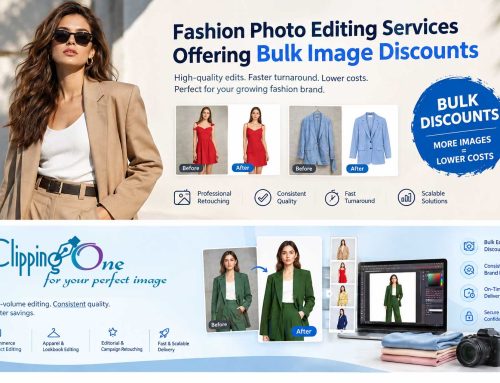
Bulk discounts: Providers may offer lower rates for large, repeatable orders. Ask whether the discount depends on volume, image complexity, or a recurring agreement.
Subscription or monthly plans: These may suit businesses that submit images regularly, provided the plan’s limits and included services match your workload.
Custom enterprise pricing: Large retailers and agencies may require dedicated production capacity, special workflows, or integration with internal systems. Custom quotations can account for these requirements.
What Do Fashion Retouching Services Cost?
There is no single standard price for fashion image retouching.
As an illustration of how providers structure their pricing, WeEdit Photos publishes different rates for basic, professional, and advanced editing, while Pixelz uses service and plan structures suited to retail production. Check their current pricing pages before comparing quotations.
The most useful comparison is the total cost of producing an approved, publish-ready image.
For example, a provider charging less per image may require additional revisions or manual corrections. Another provider with a higher initial rate may deliver files that need less follow-up work.
How to Compare Turnaround Times
Ask for realistic delivery estimates for your actual order size.
A provider may process a small sample quickly but require more time for a collection of several hundred images. Complex editorial work also needs more time than straightforward background cleanup.
Confirm these details before starting:
- Standard delivery time.
- Rush or same-day availability.
- Weekend and holiday coverage.
- Maximum daily processing capacity.
- Revision turnaround.
- Delivery schedule for large batches.
A dependable schedule is more useful than an ambitious promise that the provider cannot consistently meet.
Quality Control: Portfolios, Before-and-After Samples, and Style Matching
A polished website does not automatically guarantee excellent retouching. The strongest way to evaluate an editing provider is to inspect its work and test it with images similar to your own.
Review Relevant Portfolios
Look for examples from your specific category.
A provider may be excellent at portraits but less experienced in ghost mannequin editing or complex garment cleanup. A specialist in ecommerce product images may not offer the detailed creative work required for luxury magazine campaigns.
Inspect fabric texture, skin detail, hair edges, color accuracy, background transitions, and the realism of shadows.
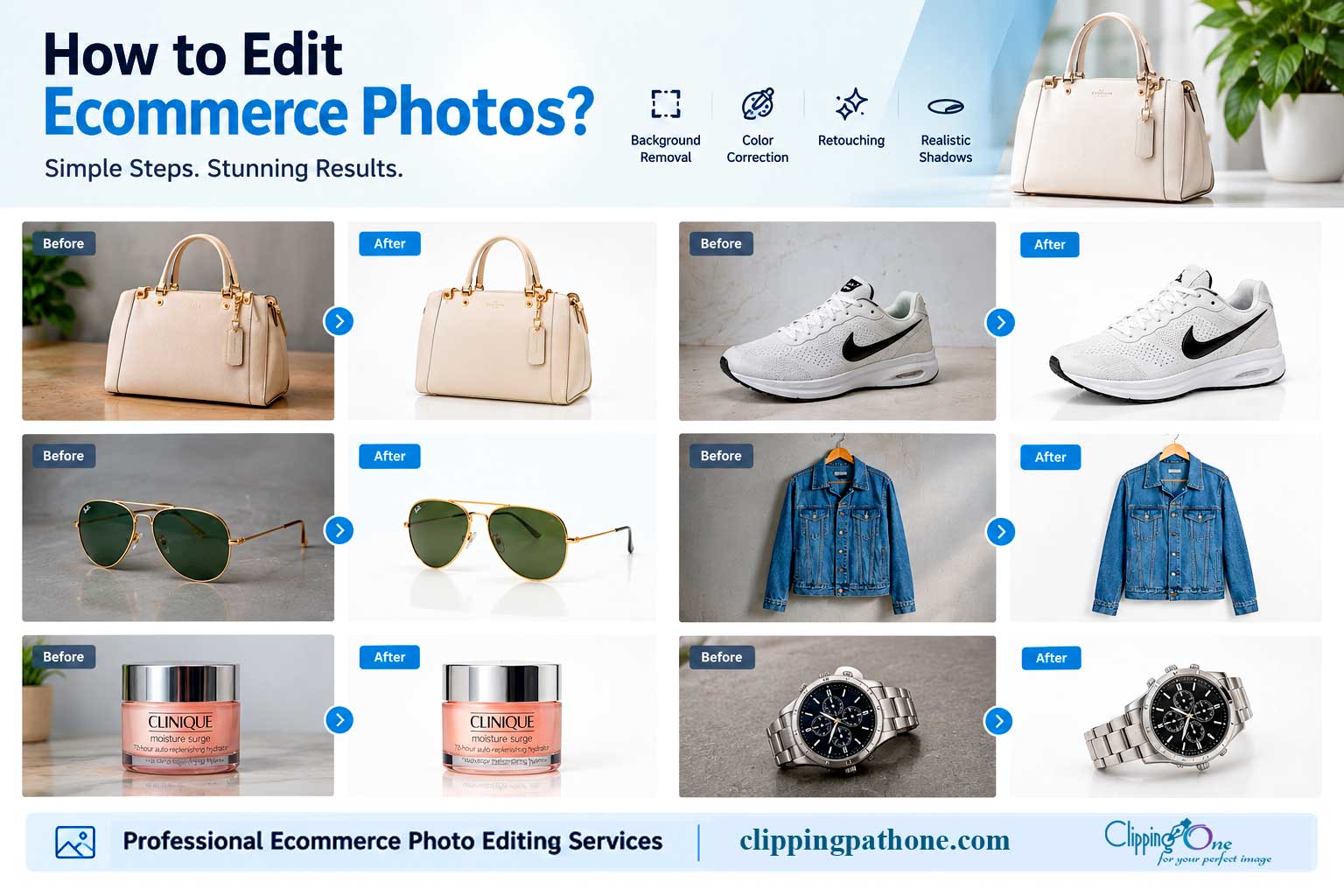
Request Before-and-After Samples
Whenever possible, provide a small set of representative images for a sample edit.
Include different challenges, such as dark garments, light-colored clothing, patterned fabrics, close-up portraits, and images with distracting backgrounds.
Compare the original and edited files at normal viewing size and at 100% zoom. Look for unnatural smoothing, distorted details, halos around the subject, color shifts, and inconsistent lighting.
Create a Written Retouching Guide
A written guide reduces repeated explanations and helps different editors follow the same visual standard.
Your guide can specify:
- Approved background colors.
- Desired crop and framing.
- Target garment colors.
- Skin retouching intensity.
- Rules for wrinkle and lint removal.
- Shadow direction and strength.
- File naming and output dimensions.
- Examples of acceptable and unacceptable results.
Include approved reference images so the editor can understand the intended style rather than relying only on written descriptions.
Measure Quality Across the Entire Batch
Do not approve a provider based on one impressive photograph. Review a representative selection from each batch and track recurring issues.
Useful quality indicators include color consistency, correct filenames, adherence to dimensions, edge quality, revision frequency, and delivery reliability.
This creates a measurable basis for deciding whether the partnership is working.
Workflow Integration: File Formats, Upload Methods, and Revisions
A good retouching service should fit into your existing production workflow instead of creating unnecessary administrative work.
Supported File Formats
Ask which input and output formats are supported.
Common formats include JPEG, PNG, TIFF, PSD, and camera RAW files. Not every project requires every format, so confirm what the provider accepts and what it will deliver.
For web publishing, JPEG or PNG may be appropriate depending on the image and platform requirements. Layered PSD or TIFF files can be useful when your team needs additional creative control or archival flexibility.
Always confirm the required color profile, dimensions, resolution, and compression settings.
File Upload and Delivery Methods
Small projects may work well through a web upload form or a cloud storage link. Larger projects may require shared folders, FTP, or a dedicated upload portal.
Before committing, test how files are organized, how completed work is returned, and how the team handles corrections or missing images.
A clear folder structure can prevent confusion when working with multiple collections, product colors, and seasonal campaigns.
Agree on a Revision Process
Revisions are a normal part of creative production, but the process should be defined in advance.
Ask how to submit feedback, whether revisions are included in the quotation, and how long corrections normally take.
When giving feedback, identify the exact file and issue. Instead of saying that a photograph looks wrong, specify that the fabric color is too warm, the background is uneven, or the shadow is stronger than the approved reference.
Specific feedback improves communication and makes the editing process more efficient.
Data Security, Usage Rights, and NDA Considerations
Fashion businesses may share unpublished collections, campaign photographs, model portraits, and commercially sensitive product information with external editing teams.
Before uploading files, review the provider’s privacy policy and contractual terms.
Image Confidentiality
Ask how files are transferred, who can access them, how long they are retained, and whether they are deleted after the project is complete.
For unreleased collections or confidential campaigns, request appropriate confidentiality protections and a non-disclosure agreement when necessary.
Copyright and Usage Rights
Clarify ownership of the original photographs and the rights associated with the edited deliverables.
Your agreement should explain whether the client retains the relevant image rights, whether the provider may display images in its portfolio, and whether any third-party assets or software restrictions apply.
Do not assume that every provider follows identical terms.
Secure File Transfer
For sensitive projects, use an agreed transfer method and restrict access to people who need the files.
If your business has specific security requirements, discuss them before production begins. This is especially important for agencies managing assets on behalf of multiple clients.
How to Choose the Right Fashion Retouching Service for Your Needs
The best fashion retouching service is the one that fits your business model, image volume, quality expectations, and budget.
Use the following practical approach to narrow your options.
For Ecommerce Fashion Brands
Prioritize color accuracy, garment cleanup, consistent backgrounds, batch processing, and dependable delivery.
If your store regularly launches new collections, choose a partner that can follow written specifications across repeat orders.
Start with the Clipping Path One ecommerce image editing service to explore options for outsourced fashion and product image production.
For Fashion Photographers and Lookbook Creators
Look for natural skin retouching, sophisticated color grading, fabric detail preservation, and reliable handling of high-resolution files.
A strong creative partner should understand your visual references and maintain a consistent look throughout the shoot.
For Luxury Brands and Advertising Agencies
Prioritize high-end retouching, detailed portfolio examples, experienced editors, confidentiality, and creative collaboration.
Campaign photographs often receive more scrutiny than routine product listings. Make sure the provider can handle complex edits without losing the original creative direction.
For Fashion Bloggers and Influencers
Flexible ordering, accessible pricing, and a recognizable editing style may be the most important considerations.
An on-demand service or individual retoucher may work well if your projects are small and irregular. Establish a consistent visual style before publishing a large volume of content.
For Large Catalogs and Seasonal Launches
Production capacity becomes especially important when hundreds or thousands of images must be completed within a defined period.
Ask the provider to process a pilot batch first. Use the results to establish editing standards, confirm realistic throughput, and identify problems before scaling the project.
Finding the Best Online Fashion Retouching Partner for Long-Term Success
Choosing among the top-rated online services for fashion image retouching requires more than comparing prices or reading a few customer reviews. The right partner should understand your photography, follow your visual standards, communicate clearly, and deliver consistent results at a cost your business can sustain.
Specialist agencies can be valuable for recurring ecommerce production. Boutique studios may be better suited to complex editorial and luxury campaigns. Freelancers offer flexibility for smaller assignments, while AI tools can accelerate suitable repetitive tasks.
For fashion retailers, the priority is to balance attractive presentation with accurate product representation. Colors should remain faithful to the original garments, fabric texture should look natural, and images across a collection should feel consistent.
The most reliable way to choose is to define your requirements, compare relevant portfolios, test a representative sample, and evaluate the finished images before committing to a large order.
If your business needs support with clothing catalogs, product retouching, background cleanup, or ongoing ecommerce image production, explore Clipping Path One’s fashion image retouching services.
A carefully selected retouching partner can help reduce editing workloads, improve visual consistency, and give your team more time to focus on design, merchandising, marketing, and growth.
Frequently Asked Questions About Online Fashion Image Retouching
What are the top-rated online services for fashion image retouching?
Options worth comparing include Clipping Path One for fashion and ecommerce image editing, Pixelz for scalable retail production, WeEdit Photos for fashion and creative retouching, FixThePhoto for portrait and creative editing, boutique retouching studios for premium campaigns, and freelance marketplaces for flexible projects. The best choice depends on your specific requirements, sample results, and budget.
How much do professional fashion photo retouching services cost?
Pricing depends on the number of images, complexity of the edits, required output quality, and delivery deadline. Basic corrections generally cost less than detailed skin retouching or high-end campaign work. Request an itemized quotation based on your actual editing requirements.
What does fashion image retouching include?
Fashion image retouching can include skin cleanup, color correction, garment wrinkle removal, flyaway hair removal, background cleanup, lighting adjustments, lint removal, and selected detail refinements. Advanced projects may also require detailed color grading and complex image manipulation.
Are online fashion retouching services suitable for bulk orders?
Yes. Many professional editing companies support bulk orders and recurring catalogs. Before placing a large order, confirm processing capacity, batch consistency, file organization, quality checks, and delivery schedules.
Is AI better than human fashion photo retouching?
AI is useful for quick, repetitive tasks such as simple background removal and selected automatic corrections. Human editors offer greater control over complex details, nuanced creative direction, and careful quality checks. A combination of both may be suitable for some workflows.
How can I ensure my clothing colors remain accurate after editing?
Provide color references, approved sample photographs, and clear instructions. Ask the retoucher to avoid unnecessary hue or saturation changes and review the final images on a reasonably calibrated display.
Can a retoucher remove wrinkles without damaging fabric texture?
Yes. An experienced editor can reduce unwanted creases while preserving the material’s natural weave, folds, and surface details. Review close-up samples to make sure the result looks realistic.
How long does professional fashion image retouching take?
Turnaround depends on image volume, editing complexity, and the provider’s workload. Simple batches may be completed faster than detailed editorial assignments. Confirm the delivery schedule and revision time before starting.
What file formats should I send to an online retouching service?
JPEG, PNG, TIFF, PSD, and RAW files may be supported, depending on the provider. Use the highest-quality source files available and confirm the preferred format before uploading.
How can I test a fashion retouching service before placing a large order?
Submit a small, representative sample that includes several different garments, lighting conditions, and editing challenges. Evaluate color accuracy, fabric texture, skin detail, background quality, communication, and delivery time before approving a larger batch.
What is the difference between ecommerce retouching and high-end fashion retouching?
Ecommerce retouching generally emphasizes accurate product presentation, consistent backgrounds, clear garment details, and repeatable output. High-end fashion retouching may involve more detailed skin work, creative color grading, sophisticated lighting adjustments, and extensive image refinement for campaigns or editorials.
How do I choose a long-term fashion retouching partner?
Look for relevant experience, consistent sample results, transparent pricing, reliable communication, appropriate confidentiality practices, and capacity for your expected workload. Begin with a pilot batch, document your visual standards, and evaluate performance over several orders.