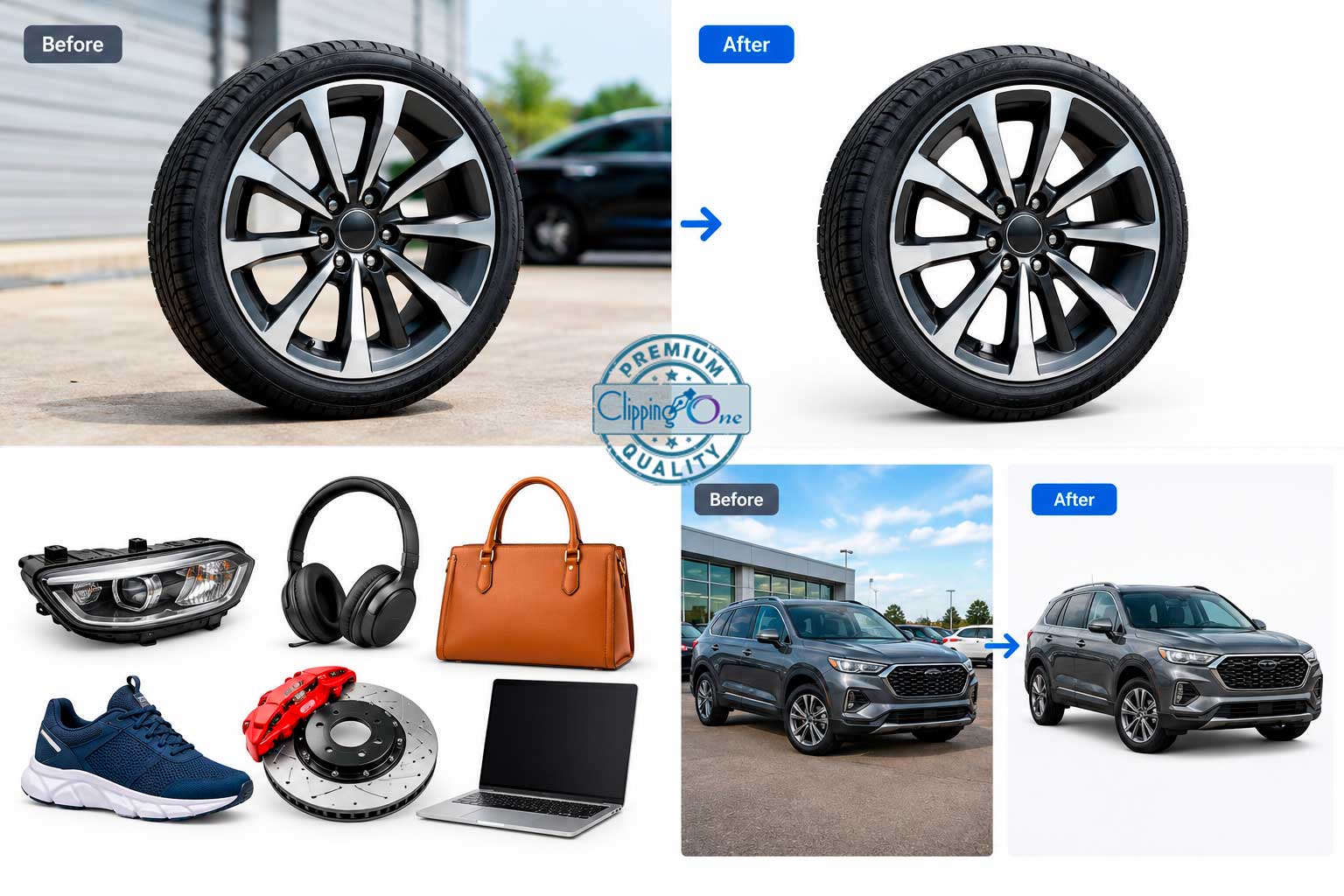
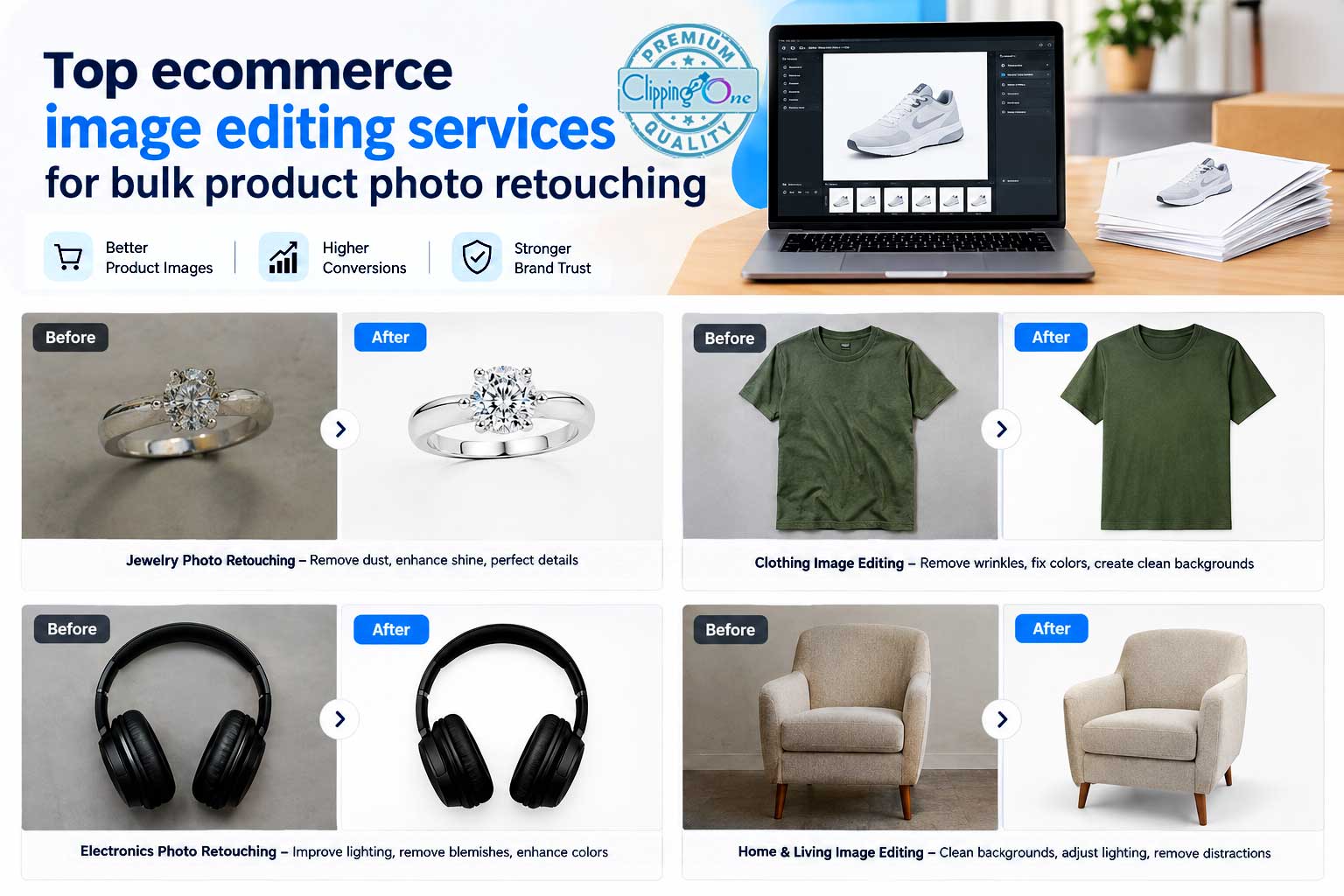
Top Ecommerce Image Editing Services for Bulk Product Photos
Running an ecommerce business means competing with thousands of products that are only one click away from your customer. Before shoppers read your product description, compare your price, or look at your reviews, they usually notice one thing first: your product images.
A high-quality product photo can make an item look trustworthy, desirable, and ready to buy. A poorly edited image can have the opposite effect. Uneven backgrounds, distracting objects, inaccurate colors, dust, wrinkles, poor cropping, unwanted reflections, and inconsistent image sizes can make even a high-quality product look unprofessional.
This is why professional image editing for ecommerce has become such an important part of online retail.
For a small online store with a few dozen products, editing images internally may seem manageable. But when a catalog grows to hundreds or thousands of SKUs, product image editing can quickly become a major production challenge.
A fashion brand may have thousands of clothing images across multiple colors and sizes. A jewelry company may need detailed retouching for hundreds of reflective products. An Amazon seller may need consistent white-background images for a large catalog. A furniture retailer may require background removal, color correction, shadow creation, and perspective adjustments across an entire collection.
This is where professional image editing services for ecommerce become valuable.
Instead of spending hours editing product photographs internally, businesses can outsource the work to a professional ecommerce image editing company with experienced editors, quality-control processes, production capacity, and dedicated workflows for handling large image volumes.
In this guide, we will explore the top ecommerce image editing services for bulk product photo retouching, what these companies offer, how much ecommerce photo editing can cost, which businesses benefit most from outsourcing, how to compare providers, and what you should check before sending thousands of product images to an editing company.
What Is Ecommerce Image Editing?
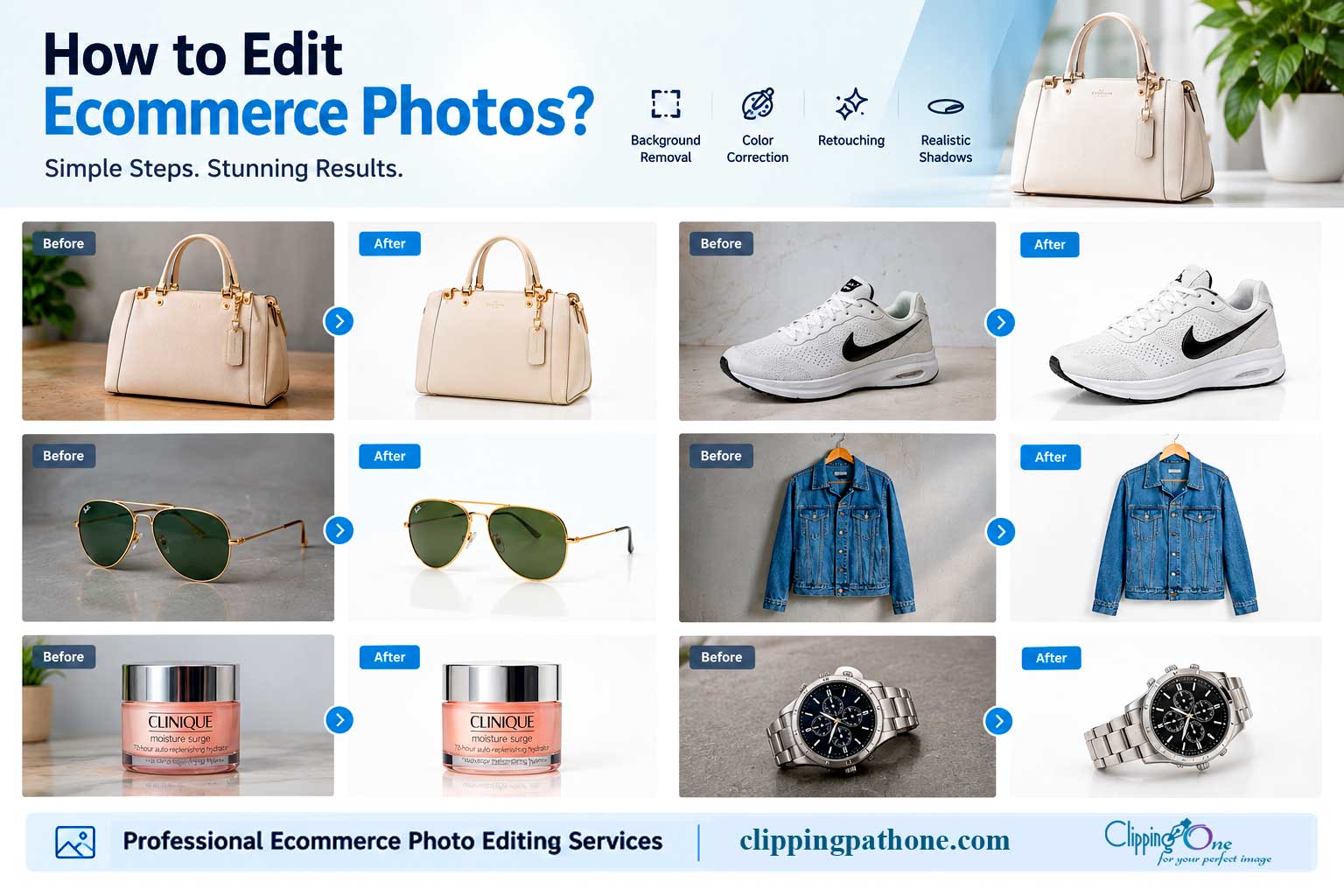
Ecommerce image editing is the process of enhancing, retouching, correcting, resizing, and preparing product photographs for online stores, marketplaces, catalogs, advertising campaigns, and other digital sales channels.
The goal is not simply to make a photograph look attractive.
The goal is to make the product look:
- Clear
- Accurate
- Professional
- Consistent
- Visually appealing
- Ready for online publication
- Appropriate for the brand
- Suitable for the intended marketplace or website
Professional ecommerce image editing services can include everything from simple background removal to advanced product retouching.
Common services include:
- Background removal
- Clipping path
- Image masking
- White background creation
- Transparent background creation
- Product retouching
- Color correction
- Color replacement
- Shadow creation
- Reflection creation
- Ghost mannequin editing
- Wrinkle removal
- Dust and scratch removal
- Object removal
- Image resizing
- Image cropping
- Symmetry correction
- Product shape enhancement
- Image compositing
- High-end product retouching
The exact services required depend on the product category, photography style, sales platform, and visual guidelines of the business.
Why Ecommerce Product Images Matter
Online customers cannot physically touch a product before purchasing it.
They cannot pick up a handbag, inspect the stitching on a jacket, hold a piece of jewelry, examine the surface of a table, or compare the finish of an electronic device.
Product photography therefore becomes one of the most important communication tools in an online store.
Good product images help shoppers understand:
- What the product looks like
- Its shape and proportions
- Its color
- Its texture
- Its details
- Its quality
- How it is presented
- How it compares with alternatives
When product images are inconsistent, customers may become uncertain about what they are actually buying.
Professional ecommerce product image editing helps create a more consistent visual shopping experience.
For example, imagine an online fashion store where one product has a gray background, another has a pure white background, another has a yellowish background, and every product is cropped at a different size.
Even if all of the photographs were technically good, the store would not look professionally managed.
Now imagine the same catalog with:
- Consistent backgrounds
- Matching product scale
- Accurate colors
- Similar cropping
- Natural shadows
- Clean edges
- Consistent retouching
The entire store immediately looks more professional.
That consistency is one of the biggest reasons businesses invest in professional ecommerce image editing.
What Services Are Included in Ecommerce Image Editing?
A professional ecommerce image editing service provider should be able to handle different types of product images and different levels of editing.
Let’s look at the most common services.
1. Ecommerce Product Background Removal
Background removal is one of the most frequently requested ecommerce editing services.
The original background is removed so the product can be displayed on:
- White
- Transparent
- Gray
- Brand-specific
- Custom
- Lifestyle
backgrounds.
A clean background makes it easier for customers to focus on the product.
Background removal is particularly common for:
- Amazon products
- Shopify stores
- Fashion catalogs
- Jewelry
- Cosmetics
- Electronics
- Furniture
- Shoes
- Bags
- Accessories
A professional background removal should preserve the natural shape and fine details of the product.
The editor should avoid:
- Rough edges
- White halos
- Missing details
- Jagged outlines
- Unwanted pixels
- Incorrect shadows
2. Clipping Path for Ecommerce
A clipping path is a precise vector path created around a product.
It allows editors to separate the product from its background and is particularly useful for products with clearly defined edges.
Common examples include:
- Shoes
- Bags
- Bottles
- Furniture
- Electronics
- Appliances
- Packaging
- Watches
- Accessories
Clipping paths can also be useful when the client wants editable source files for future design work.
For large catalogs, professional clipping path services ecommerce image editing can help maintain consistent product cutouts across hundreds or thousands of images.
3. Image Masking
Not every product can be separated using a basic clipping path.
Some products have complicated edges that require more advanced masking techniques.
Examples include:
- Hair
- Fur
- Feathers
- Lace
- Transparent glass
- Fine fabric
- Mesh
- Jewelry
- Semi-transparent products
Image masking allows editors to preserve difficult details that might disappear when a simple path is used.
For high-end catalogs, this can make a major difference in the final result.
4. Product Photo Retouching
Product photo retouching focuses on cleaning and improving the product photograph.
Editors may remove:
- Dust
- Scratches
- Fingerprints
- Small stains
- Unwanted reflections
- Minor surface imperfections
- Sensor spots
- Wrinkles
- Packaging defects
Retouching should be performed carefully.
The purpose is to improve presentation without changing the product into something unrealistic.
For ecommerce businesses, natural-looking retouching is especially important because the photograph should accurately represent the physical product.
5. Color Correction and Color Matching
Color accuracy is extremely important in ecommerce.
A product may look blue in the original photograph but appear slightly purple because of poor lighting or camera settings.
Similarly, white products may appear yellow, gray products may appear green, and black products may lose their true depth.
Professional color correction can address:
- Exposure
- White balance
- Hue
- Saturation
- Brightness
- Contrast
- Color temperature
- Product color consistency
For brands selling multiple product variants, color matching is particularly important.
If a company sells the same shirt in ten colors, customers should be able to recognize each color accurately.
6. Ecommerce Shadow Creation
A product displayed on a completely white background can sometimes appear to float.
A realistic shadow creation helps establish depth and gives the product a more natural visual presence.
Professional editors may create:
- Drop shadows
- Natural shadows
- Cast shadows
- Contact shadows
- Reflection shadows
- Mirror effects
The style of shadow should depend on the product and brand.
A luxury jewelry catalog may require a very subtle shadow, while furniture may need stronger grounding.
7. Ghost Mannequin Editing
Fashion brands frequently use ghost mannequin editing to show the shape and structure of clothing without displaying the mannequin.
The editor combines different photographs and removes the mannequin or model where appropriate.
Ghost mannequin editing is commonly used for:
- Shirts
- Jackets
- Dresses
- T-shirts
- Hoodies
- Sweaters
- Pants
- Coats
- Sportswear
- Fashion accessories
The result gives customers a better understanding of the garment’s shape while maintaining a clean catalog appearance.
Why Bulk Ecommerce Image Editing Is Different
Editing ten product images is relatively simple.
Editing 10,000 images is a completely different challenge.
Bulk ecommerce image editing requires a production system.
When hundreds or thousands of images are processed, the editing company must maintain consistency across the entire catalog.
For example:
- Every background should follow the same standard.
- Every product should have similar positioning.
- Every product should have consistent scale.
- Shadows should follow the same visual style.
- Colors should remain accurate.
- File names should be organized.
- Image dimensions should match.
- Instructions should be followed.
- Completed files should be checked before delivery.
One excellent image does not necessarily mean a provider can handle a 5,000-image catalog.
For bulk work, you need to evaluate production consistency.
This is why businesses should test providers with a representative sample batch before assigning a large project.
Who Needs Ecommerce Image Editing Services?
Almost every business selling physical products online can benefit from professional image editing.
However, some industries have significantly higher requirements.
Fashion and Apparel Brands
Fashion companies frequently need:
- Ghost mannequin
- Background removal
- Wrinkle removal
- Color changes
- Clothing retouching
- Symmetry correction
- Product cleanup
Fashion catalogs can contain thousands of images, making outsourcing especially useful.
Jewelry Brands
Jewelry is one of the most difficult categories to edit.
Gold, silver, diamonds, gemstones, glass, and polished surfaces can create complicated reflections.
Professional jewelry editing may include:
- Dust removal
- Scratch removal
- Reflection control
- Metal enhancement
- Gemstone enhancement
- Background removal
- Shadow creation
- High-end retouching
Cosmetics Brands
Cosmetic packaging needs to look clean and premium.
Editing may include:
- Label cleanup
- Dust removal
- Reflection correction
- Color correction
- Background removal
- Product retouching
- Shadow creation
Furniture Retailers
Furniture photography often requires:
- Background removal
- Color correction
- Perspective correction
- Shadow creation
- Object cleanup
- Background replacement
Large furniture catalogs can contain hundreds of similar products, making consistency essential.
Electronics Companies
Electronics products frequently have reflective surfaces.
Professional editing can improve:
- Screen reflections
- Dust
- Scratches
- Product edges
- Color
- Contrast
- Backgrounds
Amazon Sellers
Marketplace sellers often need consistent, clean product images that follow platform requirements.
When a seller has hundreds of SKUs, outsourcing can save substantial production time.
Shopify Businesses
Shopify stores often use a mixture of:
- White-background product photos
- Lifestyle images
- Product composites
- Detail images
- Promotional graphics
A full-service provider can therefore become a useful extension of the internal marketing team.
Top Ecommerce Image Editing Services for Bulk Product Photo Retouching
There is no single company that is automatically the best choice for every ecommerce business.
The best provider depends on:
- Image volume
- Product complexity
- Budget
- Turnaround
- Quality expectations
- Required services
- Communication
- Workflow
- Scalability
Below are several providers and service models worth considering.
1. Clipping Path One
Clipping Path One is a professional image editing and post-production company serving ecommerce businesses, retailers, photographers, studios, agencies, and other commercial clients.
Its ecommerce offering includes:
- Product image editing
- Background removal
- Clipping path
- Image masking
- Shadow creation
- Product retouching
- Color correction
- Color changes
- Ghost mannequin editing
- Cropping and resizing
- Ecommerce-ready image preparation
The company specifically promotes bulk ecommerce image editing, hand-edited production, quality control, and quick turnaround.
Clipping Path One also provides a free trial so potential customers can evaluate the quality before committing to a larger order.
Best for
- Ecommerce brands
- Online retailers
- Amazon sellers
- Shopify stores
- Fashion brands
- Product photographers
- Creative agencies
- Bulk image editing
Why consider it?
The major advantage is the breadth of ecommerce editing services.
A business does not necessarily need separate providers for background removal, retouching, color changes, shadows, and ghost mannequin work.
A single editing partner can manage multiple stages of the product image workflow.
For businesses processing large quantities of product images, this can simplify communication and project management.
2. Pixelz
Pixelz is an established ecommerce post-production company focused heavily on large-scale product image production.
Its service offering includes:
- Product photo retouching
- Background removal
- Clipping
- Color correction
- Ghost mannequin
- Shadow creation
- Product image production
- AI-assisted workflows
Pixelz also combines professional retouchers with automated technology in its Specialist Assisted Workflow.
This type of hybrid production can be useful for brands that need to process large volumes while maintaining consistent quality.
Best for
- Enterprise ecommerce brands
- Large retailers
- High-volume product catalogs
- Fashion companies
- Brands with structured production workflows
Why consider it?
Scale is one of its major strengths.
Businesses processing large catalogs can benefit from a structured platform and workflow designed around high-volume ecommerce production.
3. Path
Path is another established image editing provider serving ecommerce companies, photographers, agencies, and businesses requiring bulk image processing.
Its services cover areas such as:
- Background removal
- Clipping paths
- Product retouching
- Ghost mannequin
- Image masking
- Color correction
- Shadow creation
- Ecommerce image editing
Best for
- Ecommerce stores
- Product photographers
- Agencies
- Bulk image editing
- Recurring production work
Why consider it?
Its broad service range makes it useful for businesses that require multiple types of photo editing rather than a single specialized task.
4. Retouching Zone
Retouching Zone specializes in product photo editing and ecommerce post-production.
Its services include:
- Clipping path
- Ghost mannequin
- Product retouching
- Background removal
- Color correction
- Shadow creation
- Bulk image editing
The company also promotes dedicated workflows for high-volume clients.
Best for
- Ecommerce stores
- Apparel brands
- Product photographers
- Cosmetics
- Footwear
- Jewelry
- Bulk catalogs
Why consider it?
It is particularly relevant for businesses that need recurring product photo editing rather than one-time retouching.
5. Flatworld Solutions
Flatworld Solutions provides ecommerce image editing and bulk photo editing services for businesses that need managed outsourcing.
Its image editing capabilities include services such as:
- Background removal
- Image masking
- Clipping paths
- Product retouching
- Color correction
- Shadow creation
- Product image cleanup
- Batch photo editing
Best for
- Large product catalogs
- Ecommerce businesses
- Companies requiring managed outsourcing
- Recurring image production
Why consider it?
A managed outsourcing model can be useful for businesses that do not want to manage multiple freelance editors.
6. FixThePhoto
FixThePhoto is known primarily for professional photo editing and retouching.
It can be considered when ecommerce businesses need editing that goes beyond basic background removal.
Best for
- High-end retouching
- Product photography
- Fashion
- Commercial images
- Creative product presentation
Why consider it?
Some products need more artistic or detailed treatment than a standard ecommerce workflow.
For those projects, detailed retouching capability can be more important than simple bulk processing.
7. Specialist Freelancers
Freelancers can also be useful for ecommerce image editing.
A freelancer may be a good option when:
- Your monthly volume is low
- You need a dedicated editor
- Your editing style is highly customized
- You want direct communication
- You have enough time for project management
However, freelancers may have limited capacity.
If a freelancer becomes unavailable during a major product launch, your entire production schedule could be affected.
Ecommerce Image Editing Company vs Freelancer
This is one of the most important decisions for ecommerce businesses.
Freelancer Advantages
- Direct communication
- Flexible arrangements
- Potentially low cost
- Personal editing style
- Suitable for smaller projects
Freelancer Disadvantages
- Limited capacity
- Single-person dependency
- Potential availability issues
- Less structured quality control
- More difficult scaling
Company Advantages
A professional ecommerce image editing company may provide:
- Multiple editors
- Quality-control teams
- Dedicated project managers
- Backup production capacity
- Scalable workflows
- Consistent production
- Faster bulk processing
For large catalogs, company-based outsourcing is often easier to scale.
What Makes a Good Ecommerce Image Editing Service Provider?
Choosing an ecommerce image editing service provider requires more than looking at a portfolio.
Here are the most important criteria.
1. Image Quality
Check:
- Edges
- Backgrounds
- Colors
- Shadows
- Retouching
- Product details
2. Consistency
The most important question for bulk work is:
Can they make 1,000 images look like they belong to the same catalog?
3. Turnaround Time
Ask about:
- Standard turnaround
- Rush delivery
- Weekend availability
- Seasonal capacity
- Large-batch deadlines
4. Scalability
A company should be able to handle an increase in your workload.
For example, if you normally send 500 images per month but launch a new collection containing 5,000 images, can the provider scale with you?
5. Communication
You should have an easy way to:
- Send instructions
- Upload images
- Review samples
- Request revisions
- Ask questions
- Track production
6. Quality Control
Ask whether edited images are checked before delivery.
7. File Security
Product photographs may be commercially sensitive.
Understand how the provider handles:
- File transfers
- Storage
- Access
- Confidentiality
- File deletion
How Much Does Ecommerce Image Editing Cost?
There is no fixed price for ecommerce image editing jobs.
Pricing depends on the complexity of the work.
A simple background removal might be inexpensive.
A complex jewelry retouching job may require significantly more time.
Typical pricing factors include:
- Image complexity
- Number of images
- Editing requirements
- Product category
- Turnaround time
- Quality requirements
- Retouching level
- Masking requirements
- Shadow requirements
- File requirements
A simple project might include only:
Background removal + cropping + resizing.
A more advanced project might include:
Background removal + color correction + product cleanup + shadow + reflection correction + high-end retouching.
These two projects should not be expected to have the same price.
Bulk volume can also reduce the per-image cost.
Many providers offer volume discounts for large orders.
Why Bulk Orders Can Be More Affordable
Professional editing companies can establish a workflow when they receive a large batch of similar images.
For example, suppose a retailer sends 2,000 images of shoes.
The editing team can establish:
- Background standard
- Crop
- Product scale
- Shadow
- Color treatment
- Output size
- File naming
Once these standards are approved, the same workflow can be applied across the catalog.
This improves efficiency.
It can also reduce the average cost per image.
However, businesses should always ask for a custom quote based on actual images.
How to Prepare Your Ecommerce Images Before Editing
A professional editor can do much more with a well-organized project.
Use Clear File Names
Instead of:
IMG_0001.jpg
consider:
SKU1001-black-front.jpg
This makes production easier.
Organize by SKU
For example:
Ecommerce Catalog
│
├── SKU1001
│   ├── front.jpg
│   ├── side.jpg
│   └── detail.jpg
│
├── SKU1002
│   ├── front.jpg
│   ├── side.jpg
│   └── detail.jpg
Provide a Style Guide
Your guide should explain:
- Background color
- Image size
- Crop
- Product position
- Shadow style
- Color requirements
- Retouching level
- File format
- Naming convention
Provide Reference Images
A reference image can communicate your desired style very quickly.
If you want every product to have a specific shadow or crop, provide one approved example.
The Ideal Bulk Ecommerce Editing Workflow
A professional workflow should be simple and repeatable.
Step 1: Upload
The client uploads original images.
Step 2: Requirements Review
The editing company checks:
- Number of images
- Complexity
- Instructions
- Deadline
- Output requirements
Step 3: Sample Editing
A small group of images is edited.
Step 4: Approval
The client reviews the sample.
Step 5: Bulk Production
The approved style is applied to the remaining images.
Step 6: Quality Control
The completed images are checked.
Step 7: Delivery
Final images are delivered.
Step 8: Revision
Any approved corrections are completed.
This workflow prevents an expensive problem: discovering after editing thousands of images that the entire batch followed the wrong style.
AI vs Human Ecommerce Image Editing
AI has changed how product photographs can be processed.
Automated systems can be very useful for:
- Background removal
- Simple cropping
- Resizing
- Basic color correction
- Format conversion
- Repetitive processing
But some images require human judgment.
For example:
- Jewelry
- Transparent glass
- Fur
- Lace
- Reflective products
- Complex clothing
- Fine textures
- Product reflections
- Difficult shadows
A hybrid workflow can therefore be useful.
AI can handle repetitive operations while professional editors perform quality-sensitive work.
The most important question is not whether a company uses AI.
The important question is:
Does the final image meet your quality requirements?
Common Problems With Cheap Ecommerce Image Editing
Choosing the lowest price may seem attractive.
But low-quality editing can create hidden costs.
Poor Cutouts
You may receive products with:
- Rough edges
- Halos
- Missing details
- Unwanted pixels
Inconsistent Backgrounds
Every product may have a slightly different background.
Incorrect Colors
The product may not accurately represent what customers receive.
Heavy Retouching
The product may look unrealistic.
Poor Shadows
The product may appear to float.
Missed Instructions
Important client requirements may be ignored.
Slow Revisions
Small corrections can take several days.
The result is that a low-cost provider may actually become more expensive when your team has to spend hours fixing the output.
How to Compare Ecommerce Image Editing Services
Create a simple comparison table before selecting a provider.
| Factor | What to Check |
|---|---|
| Image Quality | Are edits clean and natural? |
| Consistency | Do all images match? |
| Price | Is bulk pricing available? |
| Turnaround | Can deadlines be maintained? |
| Scalability | Can they process thousands of images? |
| Communication | Is support responsive? |
| Quality Control | Are images reviewed? |
| Revisions | How quickly are corrections made? |
| Security | How are files protected? |
| Trial | Can you test real images? |
Do not choose based on price alone.
The best provider is the one that delivers the right balance between:
Quality + Consistency + Speed + Price + Scalability.
10 Questions to Ask Before Hiring an Ecommerce Image Editing Company
Before starting a long-term contract, ask:
1. Do you provide a free sample?
A sample allows you to test actual quality.
2. Can you process bulk orders?
Ask specifically about your monthly image volume.
3. What is your normal turnaround?
Get a realistic answer.
4. Do you have quality control?
Ask who checks the finished images.
5. Can you follow a custom editing guide?
This is critical for brand consistency.
6. Can you edit difficult products?
Test glass, jewelry, fur, fabric, or reflective products if those are part of your catalog.
7. What file formats do you support?
Confirm JPG, PNG, TIFF, PSD, WebP, or other required formats.
8. How are revisions handled?
Understand the revision process before production.
9. Can you handle seasonal volume?
Your editing partner should be prepared for peak periods.
10. Do you offer bulk discounts?
Ask for pricing based on your real monthly volume.
Ecommerce Image Editing for Amazon and Shopify
Different ecommerce platforms can have different requirements and visual expectations.
Marketplace product images generally need clean, professional presentation.
Your own Shopify website may allow greater creative freedom.
You may use:
- White-background product photos
- Lifestyle images
- Detail shots
- Infographics
- Product composites
- Promotional graphics
- Color variants
This means your editing partner should understand more than simple background removal.
A good ecommerce image editing service should be capable of supporting your broader visual content workflow.
Ecommerce Image Editing for Fashion Brands
Fashion is one of the largest categories for ecommerce image editing.
A single collection may contain:
- 100 products
- 5 colors per product
- Multiple sizes
- Multiple angles
- Model photographs
- Ghost mannequin photographs
- Detail photographs
That can quickly create thousands of images.
Professional editing can help with:
- Wrinkle removal
- Color matching
- Background removal
- Ghost mannequin
- Neck joint
- Symmetry
- Fabric cleanup
- Skin retouching
- Product shape correction
Consistency is particularly important.
Customers should be able to browse an entire collection without feeling that every product was photographed and edited by a different team.
Ecommerce Image Editing for Jewelry
Jewelry requires a different editing approach.
The goal is not simply to remove the background.
Jewelry images often require detailed work around:
- Diamonds
- Gemstones
- Metal edges
- Reflections
- Fine chains
- Small details
- Transparency
- Polished surfaces
High-end retouching may be necessary to make the product look premium while preserving its actual appearance.
A professional provider should be able to handle complex masking and detailed retouching without destroying the natural characteristics of the jewelry.
Ecommerce Image Editing for Cosmetics and Beauty Products
Cosmetics photography often focuses heavily on packaging.
Small defects can become highly visible in close-up product photographs.
Editing may include:
- Removing dust
- Correcting scratches
- Cleaning packaging
- Fixing reflections
- Improving contrast
- Correcting color
- Removing unwanted objects
- Creating realistic shadows
The final image should look polished without making the packaging appear artificial.
Ecommerce Image Editing for Furniture
Furniture products require careful attention to scale, perspective, and shadows.
A furniture retailer may need:
- Background removal
- Color correction
- Shadow creation
- Perspective correction
- Object cleanup
- Image compositing
Because furniture products are often large, the relationship between the product and its background is particularly important.
A good editor should make the product look naturally grounded.
Outsourcing Ecommerce Image Editing vs In-House Editing
Many businesses initially consider hiring an internal editor.
This can make sense in some circumstances.
However, internal editing involves more than an employee’s salary.
You may also need:
- Computer hardware
- Photoshop or editing software
- Training
- Management
- Backup staff
- Quality control
- Employee benefits
- Office resources
- Recruitment
- Production management
Outsourcing can provide access to professional editors without requiring the business to build an entire production department.
It can also make scaling easier.
If your business needs 300 edited images this month and 3,000 next month, outsourcing can provide more flexibility than maintaining a fixed-size internal team.
When Should You Outsource Ecommerce Image Editing?
You should consider outsourcing when:
- Your editing backlog keeps growing
- Your team spends too much time on repetitive tasks
- Product launches are being delayed
- You need hundreds of images every month
- Your business is expanding
- You are adding new marketplaces
- You have seasonal spikes
- Your team lacks advanced Photoshop skills
- You need consistent editing across a large catalog
Outsourcing lets your internal team focus on higher-value activities such as:
- Marketing
- Product launches
- Merchandising
- Advertising
- SEO
- Customer acquisition
- Brand strategy
Instead of spending hours removing backgrounds, your team can concentrate on growing the business.
How to Choose the Best Ecommerce Image Editing Service Provider
There is no universal answer to the question:
What is the best ecommerce image editing service provider?
The answer depends on your requirements.
For a small seller, affordability may be the most important factor.
For an enterprise retailer, scalability may matter more.
For a jewelry company, high-end retouching may be critical.
For a fashion brand, ghost mannequin editing may be the priority.
For an agency, deadline reliability and white-label production may be more important.
Therefore, create a scorecard.
For example:
| Category | Suggested Weight |
|---|---|
| Image Quality | 30% |
| Consistency | 20% |
| Turnaround | 15% |
| Price | 15% |
| Scalability | 10% |
| Communication | 5% |
| Security & Workflow | 5% |
Then test each provider using the same images.
This gives you a more objective comparison.
Why a Free Trial Matters
A portfolio shows what a company can do.
A trial shows what the company can do for your business.
This is an important distinction.
Send several representative images.
For example:
- Simple product
- Dark product
- Reflective product
- Transparent product
- Fabric product
- Jewelry
- Apparel
- Complex product
Then compare:
- Edge quality
- Background
- Color
- Retouching
- Shadows
- Crop
- Product scale
- File naming
- Delivery speed
- Communication
- Revision handling
If a provider cannot meet your expectations with a small trial, sending thousands of images is unlikely to solve the problem.
Final Checklist for Bulk Product Photo Retouching
Before approving your final images, check the following.
Product
- Is the product shape accurate?
- Are product details preserved?
- Has unnecessary distortion been avoided?
Background
- Is the background clean?
- Is it consistent?
- Are there halos?
Color
- Is the product color accurate?
- Are variants consistent?
- Is the image over-saturated?
Retouching
- Are dust and scratches removed?
- Are imperfections handled naturally?
- Is product texture preserved?
Shadow
- Does the product look grounded?
- Is the shadow realistic?
- Is the shadow consistent?
Composition
- Are products aligned?
- Are crops consistent?
- Is product scale consistent?
Technical
- Correct file format?
- Correct dimensions?
- Correct compression?
- Correct naming?
- Correct color profile?
Batch
- Does the entire catalog look consistent?
- Were all instructions followed?
- Were all files delivered?
- Was quality control completed?
Ecommerce Image Editing Pricing: What Should You Actually Pay For?
When comparing providers, it is tempting to compare only the price per image.
That can be misleading.
A $0.30 image that requires extensive correction may be more expensive than a $0.80 image that is ready to publish.
Instead, calculate your total production cost.
Consider:
Editing price + revisions + internal checking + correction time + delivery delays.
For example, if your internal team needs to spend 10 minutes correcting every image from a cheap provider, the real cost can quickly exceed the price of a higher-quality provider.
The better metric is:
Cost per final, publish-ready image.
This is particularly important for large ecommerce catalogs.
How Bulk Editing Improves Ecommerce Operations
Professional ecommerce image editing services are not only about making pictures look better.
They can improve the overall production workflow.
A structured outsourcing partner can help businesses:
- Process more products
- Publish products faster
- Maintain consistent presentation
- Reduce internal workload
- Handle seasonal demand
- Improve catalog quality
- Reduce production bottlenecks
For a rapidly growing ecommerce company, these operational benefits can be more valuable than the editing itself.
The Future of Ecommerce Image Editing
Ecommerce image production is changing quickly.
AI-assisted editing is becoming increasingly common.
Automated systems can help with:
- Background removal
- Image segmentation
- Object detection
- Basic retouching
- Color correction
- Image generation
- Product scene creation
However, human judgment remains important.
A product image represents something that a customer expects to receive.
If an editing system changes the shape, color, texture, or important characteristics of the product, it can create misleading expectations.
The future of ecommerce image editing will likely combine:
Automation + Human Expertise + Quality Control.
Automation can improve speed.
Professional editors can handle complexity.
Quality-control teams can protect consistency.
The businesses that combine all three effectively can produce large volumes of high-quality product imagery without creating massive internal production teams.
Why Clipping Path Services Are Still Important for Ecommerce
Even as AI-based background removal becomes more common, clipping paths remain useful for professional ecommerce production.
A clipping path provides a precise editable boundary around a product.
It can be used for:
- Background removal
- Product composites
- Packaging design
- Advertising
- Catalog design
- Color changes
- Print production
- Future editing
For businesses that want reusable product assets, clipping paths can be especially valuable.
This is why clipping path services ecommerce image editing continues to be an important part of professional product image production.
How Professional Retouching Can Reduce Catalog Inconsistency
Imagine receiving 500 product images from five different photographers.
Each photographer used:
- Different lighting
- Different backgrounds
- Different camera settings
- Different product positioning
- Different color temperatures
Without post-production, the catalog could look inconsistent.
Professional editing can bring these images closer together.
Editors can standardize:
- Exposure
- Color
- Crop
- Product scale
- Background
- Shadows
- Contrast
This creates a more unified catalog.
For large brands, that consistency can be extremely important.
Best Ecommerce Image Editing Services: Final Recommendation
There is no single ecommerce editing provider that will be perfect for every company.
Instead, start by identifying your priorities.
If you need enterprise-scale production
Look at providers with structured high-volume workflows and production platforms.
If you need broad ecommerce editing
Choose a provider that handles backgrounds, clipping paths, masking, shadows, retouching, color changes, and ghost mannequin work.
If you need high-end retouching
Prioritize providers with experienced professional retouchers.
If you need affordability
Compare bulk pricing rather than individual-image rates.
If you need rapid turnaround
Ask specifically about rush capacity and peak-season support.
If you need thousands of images
Test scalability before signing a long-term agreement.
Final Thoughts
High-quality product photography is one of the most important visual assets an ecommerce business can have.
But taking the photograph is only the beginning.
For a growing online store, hundreds or thousands of product photographs may need to be processed before they are ready for publication.
Backgrounds need to be removed.
Colors need to be corrected.
Dust and scratches need to be cleaned.
Wrinkles need to be reduced.
Shadows need to be created.
Products need to be aligned.
Images need to be cropped and resized.
And everything needs to look consistent.
That is why professional image editing services for ecommerce have become an important part of modern online retail operations.
The right ecommerce image editing company can become an extension of your internal team, allowing you to process larger catalogs without hiring a large in-house editing department.
Whether you choose Clipping Path One, Pixelz, Path, Retouching Zone, Flatworld Solutions, FixThePhoto, a specialized freelancer, or another provider, the selection process should be based on your actual requirements.
Do not choose solely because a company has a beautiful website.
Do not choose solely because it has the lowest price.
And do not choose solely because it promises the fastest turnaround.
Instead, send a representative trial batch.
Check the edges.
Check the colors.
Check the shadows.
Check the retouching.
Check consistency.
Check turnaround.
Check communication.
Then calculate the total cost of producing a publish-ready image.
The best ecommerce image editing service provider is the one that can consistently deliver the quality you need, at a price that makes sense, within the timeframe your business requires.
Frequently Asked Questions About Ecommerce Image Editing
What is ecommerce image editing?
Ecommerce image editing is the process of enhancing and preparing product photographs for online stores, marketplaces, catalogs, advertising, and other digital sales channels. It may include background removal, clipping paths, masking, retouching, color correction, shadow creation, cropping, resizing, and image optimization.
What are ecommerce image editing services?
Ecommerce image editing services are professional post-production services designed specifically for online product photography. They help businesses create clean, consistent, attractive, and publication-ready product images.
What is included in ecommerce product image editing?
Depending on the provider, ecommerce product image editing can include background removal, clipping paths, masking, product retouching, color correction, shadow creation, ghost mannequin editing, color changes, resizing, cropping, reflection removal, and image compositing.
Can an ecommerce image editing company process thousands of images?
Yes. Professional bulk editing providers are designed to handle large image volumes. However, businesses should confirm production capacity, turnaround time, quality control, and workflow requirements before assigning a large catalog.
Is clipping path still useful for ecommerce?
Yes. Clipping paths are useful for accurately isolating products, creating clean backgrounds, preparing images for composites, and maintaining editable product assets.
Is AI better than human ecommerce image editing?
AI is excellent for many repetitive tasks, while human editors are often better suited to complicated edges, reflections, transparent products, fine details, advanced retouching, and quality-sensitive work. A hybrid workflow can combine the strengths of both.
How much does ecommerce image editing cost?
Pricing varies according to the type of editing, product complexity, image volume, turnaround, and quality requirements. Basic background removal generally costs less than advanced retouching, jewelry editing, complex masking, or ghost mannequin work.
Should ecommerce businesses outsource image editing?
Outsourcing can be useful when a business has a large catalog, recurring image editing requirements, seasonal volume increases, limited internal resources, or a need for specialized editing skills.
How do I find the best ecommerce image editing service provider?
Start with your actual images and requirements. Request a sample batch, compare quality and turnaround, check revision procedures, evaluate communication and scalability, and then compare the total cost of producing publish-ready images.
What is the most important factor when choosing an ecommerce image editing service?
For bulk production, consistency is one of the most important factors. A provider should be able to produce hundreds or thousands of images that follow the same visual standards while maintaining accurate product details.
Can ecommerce photo editing reduce product returns?
Accurate product images can help customers understand what they are buying. Correct color, clear product details, realistic presentation, and consistent photography can help reduce confusion caused by misleading or poor-quality visuals.
What is bulk ecommerce image editing?
Bulk ecommerce image editing means processing large numbers of product images according to a standardized editing specification. It is commonly used by ecommerce retailers, fashion brands, marketplaces, product photographers, agencies, and large online catalogs.