Invisible mannequin photo editing strips away the mannequin from a clothing shot but keeps the garment’s living shape, fit, and drape. The result is a clean, “floating” product image that tells a shopper exactly how a piece will look on a body. Clipping Path One delivers this exacting craft for fashion brands that want higher conversions and fewer returns.
What Is Invisible Mannequin Photo Editing?
Invisible mannequin photo editing is a post-production technique that removes the mannequin from apparel images while preserving the garment’s natural three-dimensional form. Also called ghost mannequin or hollow-man editing, it gives clothes a lifelike shape as if worn by an invisible person without any distracting props.
Fashion ecommerce runs on visual trust. A buyer cannot touch the fabric or try the item on. So the product image must do all the heavy lifting. Flat lay shots show design but miss shape. Model shots are expensive and inconsistent. Invisible mannequin editing sits in the sweet spot: it reveals how a collar sits, how a sleeve falls, how a torso tapers. Global retailers including Zara, ASOS, and H&M use this style daily. It has become the quiet backbone of professional online apparel presentation.
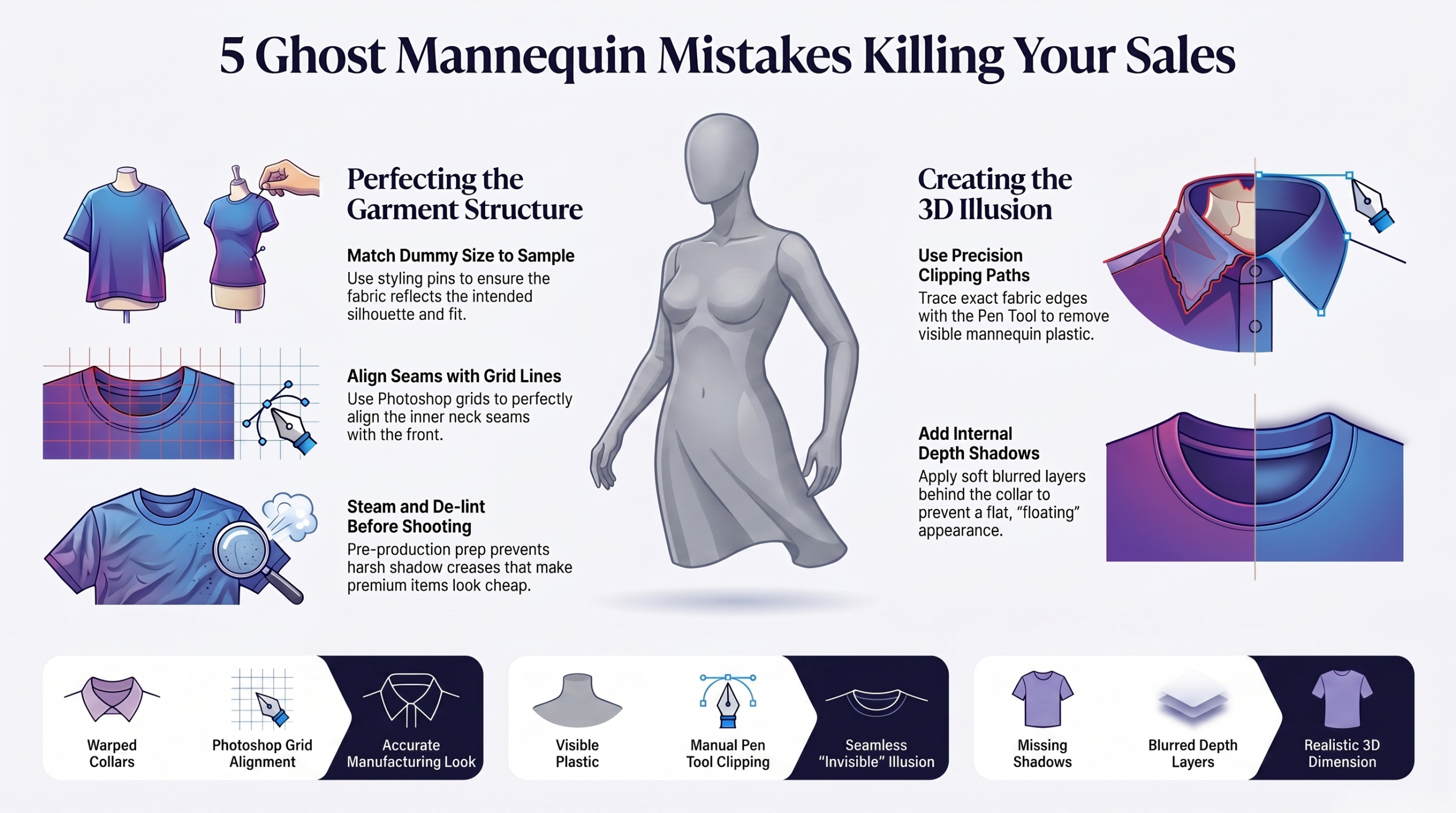
The technique is not a single-click filter. It fuses multiple photographs—a front shot, a back shot, and interior neck or cuff views—into one seamless composite. The mannequin vanishes. The garment remains, full of structure and storytelling.
Why Do Fashion Brands Need Invisible Mannequin Photo Editing?
Because it directly lifts revenue and slashes return rates. Fashion ecommerce lives or dies by how clearly a customer can imagine wearing the item. Blurry, flat, or busy images kill confidence. Invisible mannequin editing replaces doubt with clarity.
Brands adopt ghost mannequin imagery for four hard-nosed business reasons:
Higher conversion rates. Polished ghost mannequin images drive up to 30% higher conversions than flat lays or poorly-edited mannequin shots.
Lower return rates. Fashion ecommerce return rates average 20–30%, and ghost mannequin photography can reduce returns by 20–30% because it shows the garment’s true proportions.
Catalog consistency. Every product shares the same angle, lighting, and background, which builds a professional brand look shoppers trust.
Cost efficiency. Compared to full model shoots with stylists and location fees, ghost mannequin photography slashes production costs while delivering clean, reusable assets.
How Much Can It Boost Conversion Rates?
The numbers are decisive. Multiple studies report conversion lifts of 20–45% when brands switch from flat lay to ghost mannequin imagery. Structured garments like blazers and coats see the highest impact because shape is the primary purchase signal.
Can It Really Reduce Return Rates?
Yes. The biggest driver of apparel returns is “product not as expected.” Ghost mannequin editing closes the gap between expectation and reality by showing the garment’s actual drape, sleeve length, collar shape, and torso structure. One case study recorded a 22% drop in returns after switching to ghost mannequin images. For a brand doing €10M in annual revenue with a 25% return rate, that kind of reduction saves roughly €500,000 a year in processing, logistics, and lost inventory value.
How Does the Invisible Mannequin Editing Process Work?
The process blends precise studio photography with skilled Photoshop compositing. It is not an AI push-button trick. As of 2026, high-quality invisible mannequin editing remains a manual, skill-intensive craft.
Here is the step-by-step workflow a professional studio like Clipping Path One follows:
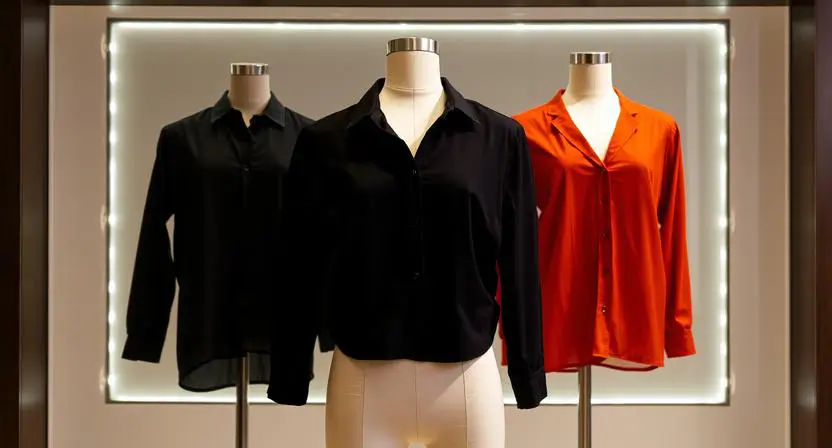
Front and back photography. The garment is dressed on a physical mannequin and photographed from multiple angles. The mannequin supplies the 3D form.
Interior detail shots. The garment is removed or turned to capture inner collars, necklines, cuffs, and hems. These images fill the voids left when the mannequin is deleted.
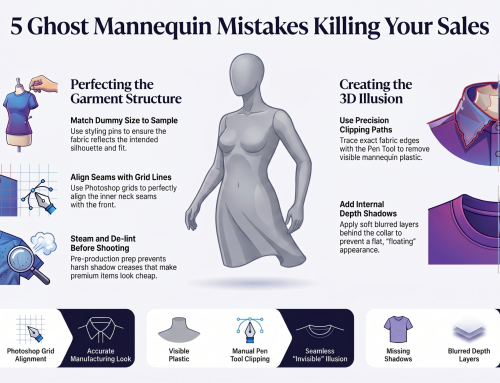
Clipping path isolation. An editor draws precise hand-drawn paths around the garment to separate it from the mannequin and background.
Mannequin removal and neck join. The outer and inner shots are merged. The editor carefully composites the neck area, inner labels, and any visible lining into a single hollow-body image.
Retouching and cleanup. Wrinkles are smoothed, dust and lint removed, stitching sharpened, and shadows added for depth—all without losing fabric texture.
Color correction and export. Brightness, contrast, and white balance are adjusted to match the catalog. Files are delivered in platform-ready formats (300 DPI, pure white background, 2000px+).
The entire sequence takes a skilled retoucher about 5–10 minutes per image; a beginner might spend 20–40 minutes.
Invisible Mannequin vs. Flat Lay vs. Model Photography: Which Wins?
The table below compares the three main apparel photography styles across the factors that matter most for ecommerce performance.
| Factor | Ghost Mannequin | Flat Lay | Model Photography |
|---|---|---|---|
| Fit clarity | Excellent—shows 3D shape | Poor—2D top-down only | Good—but model body varies |
| Conversion lift | 20–45% over flat lay | Baseline | High, but inconsistent |
| Cost per image (editing) | Moderate | Low | Very high |
| Scalability | Excellent | Excellent | Poor |
| Brand consistency | Very high | Moderate | Low |
| Amazon compliance | Fully compliant | Compliant | Not for main image |
| Best for | Jackets, dresses, shirts, structured garments | Accessories, casual tees, social content | Campaigns, lookbooks |
Ghost mannequin wins on the metrics that drive revenue: clarity, consistency, and cost at scale. Flat lay is cheaper but sacrifices the shape signal shoppers rely on. Model photography delivers emotional punch but breaks down when you need hundreds of SKUs shot identically. This is why most top-selling fashion brands on Amazon and Shopify default to invisible mannequin images for their main product pages.
Which Clothing Types Benefit Most from Ghost Mannequin Editing?
Structured garments—the ones where fit and silhouette make or break the sale—gain the most. The technique highlights how a piece drapes, tapers, and sits on a body.
Top categories for invisible mannequin editing include:
Blazers, suits, and tailored jackets. Shoulder structure, lapel roll, and waist suppression become instantly readable.
Dresses and formal gowns. Bodice shape and skirt volume demand 3D presentation.
Shirts and blouses. Collar fit, sleeve set, and button stance are critical purchase details.
Outerwear and coats. Heavy fabrics and layered construction need depth to look convincing.
Denim and trousers. Waistband construction and leg silhouette influence the buy decision.
Accessories like scarves, bags, and jewelry can work well with flat lay or simple cutouts, but any garment where “how it fits” matters should lean on ghost mannequin editing.
Should You DIY or Hire a Professional Service Like Clipping Path One?
For small batches, DIY is doable. For scale, consistency, and speed—outsourcing wins. Invisible mannequin editing demands patience, Photoshop fluency, and a meticulous eye. Learning the workflow is achievable. But when you face 500 SKUs with a tight launch deadline, in-house editing often buckles.
Outsourcing to a dedicated provider like Clipping Path One brings three advantages:
Speed. Professional studios deliver 24-hour turnaround on standard volumes, with rush options available.
Consistency. A trained team applies identical standards across every image, so your catalog looks cohesive.
Cost predictability. Per-image pricing (often starting around 0.75–1.50) lets you forecast expenses precisely and frees your team to focus on design, marketing, and sales.
When Should You Choose Clipping Path One?
When fashion ecommerce editing becomes a bottleneck instead of a growth lever. Clipping Path One specializes in hand-drawn clipping paths and manual ghost mannequin compositing—no automated shortcuts that leave rough edges. The service suits brands that need Amazon- and Shopify-ready imagery, fast turnaround, and rigorous quality control. If your product pages are the engine of your revenue, the images on those pages deserve professional-grade precision.
How to Choose the Best Invisible Mannequin Editing Partner
Look beyond price per image. The cheapest quote often costs more in the long run—through revision cycles, inconsistent quality, or missed platform requirements.
Evaluate a potential editing partner on these five criteria:
Manual vs. automated editing. Ask whether the studio uses hand-drawn clipping paths or AI auto-masking. Manual paths yield clean, accurate edges; AI often produces jagged or unnatural contours.
Portfolio and samples. Request before-and-after images for garments similar to yours. Check neck joints, shadow realism, and fabric texture retention.
Turnaround time and capacity. Confirm the studio can handle your volume within your deadlines. Ask about rush delivery and batch processing capabilities.
Revision policy. Understand how many revisions are included and how quickly they are processed. A studio confident in its quality will offer unlimited or generous revisions.
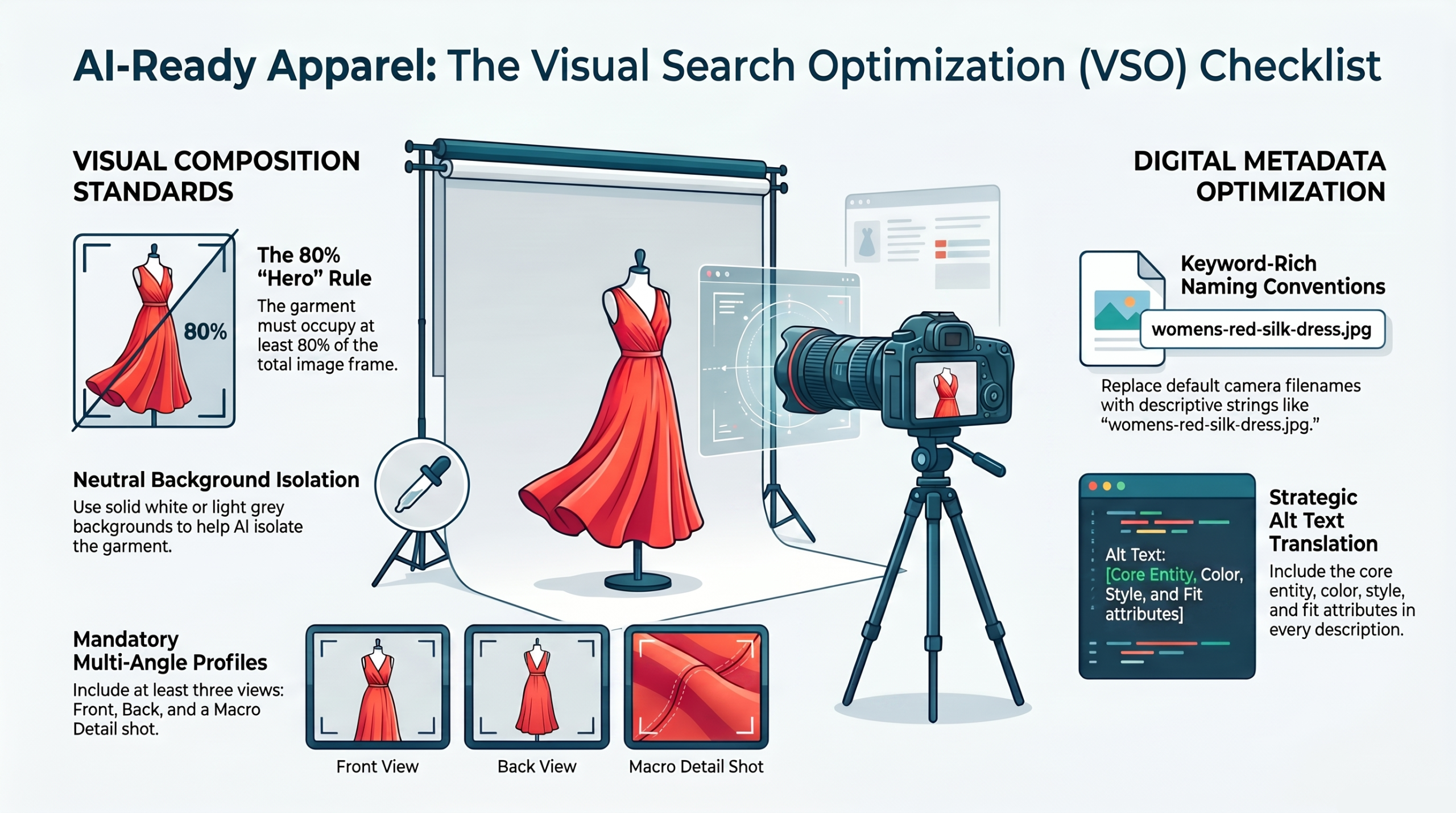
Platform compliance. Ensure the final files meet marketplace standards: 300 DPI, pure white background (RGB 255,255,255), and minimum 2000px on the longest side.
Clipping Path One checks all five boxes, with a workflow built explicitly for fashion ecommerce editing at scale.
Conclusion: The Invisible Edge for Fashion Brands
Invisible mannequin photo editing is not a luxury—it is a proven revenue driver. It answers the shopper’s deepest question before they even ask it: “How will this look on me?” By removing the mannequin and keeping the garment’s true shape, this technique turns hesitation into action and browsing into buying.
The data is not subtle. Conversion rates jump 20–45%. Returns fall by a fifth to a third. Catalog consistency sharpens. Brand trust deepens. These numbers compound across every season and every collection.
Clipping Path One delivers invisible mannequin photo editing with precision, speed, and the kind of obsessive detail that makes a product page stand out in a crowded grid. When every pixel on that page works to close the sale, you are not just selling clothes. You are selling confidence.
FAQ: Invisible Mannequin Photo Editing
1. What is invisible mannequin photo editing?
Invisible mannequin photo editing is a post-production process that removes the mannequin from clothing images while keeping the garment’s 3D shape. It creates a clean, floating look that shows fit and structure—often called ghost mannequin or hollow-man editing. Fashion brands use it to present apparel clearly and professionally.
2. How much does ghost mannequin editing cost per image?
Professional ghost mannequin editing typically ranges from 0.75to5.00 per image, depending on complexity, turnaround speed, and volume. Bulk orders usually receive discounted rates. Studios like Clipping Path One offer transparent, per-image pricing with no hidden fees.
3. Can ghost mannequin editing really reduce return rates?
Yes. Fashion ecommerce return rates average 20–30%, with some categories hitting 50%. Ghost mannequin imagery reduces returns by 20–30% because it accurately represents garment proportions, structure, and silhouette—closing the expectation-reality gap that drives most clothing returns.
4. Is invisible mannequin editing the same as flat lay photography?
No. Flat lay photography places the garment on a flat surface and photographs it from above, showing design but not 3D shape. Invisible mannequin editing preserves the garment’s form as if worn, giving shoppers a clear sense of fit, drape, and proportion. The two styles serve different purposes.
5. How long does invisible mannequin photo editing take?
For a professional retoucher, a single image takes about 5–10 minutes using reusable templates and actions. A beginner may spend 20–40 minutes per image. Most service providers deliver standard batches within 24 hours, with rush delivery available for urgent projects.