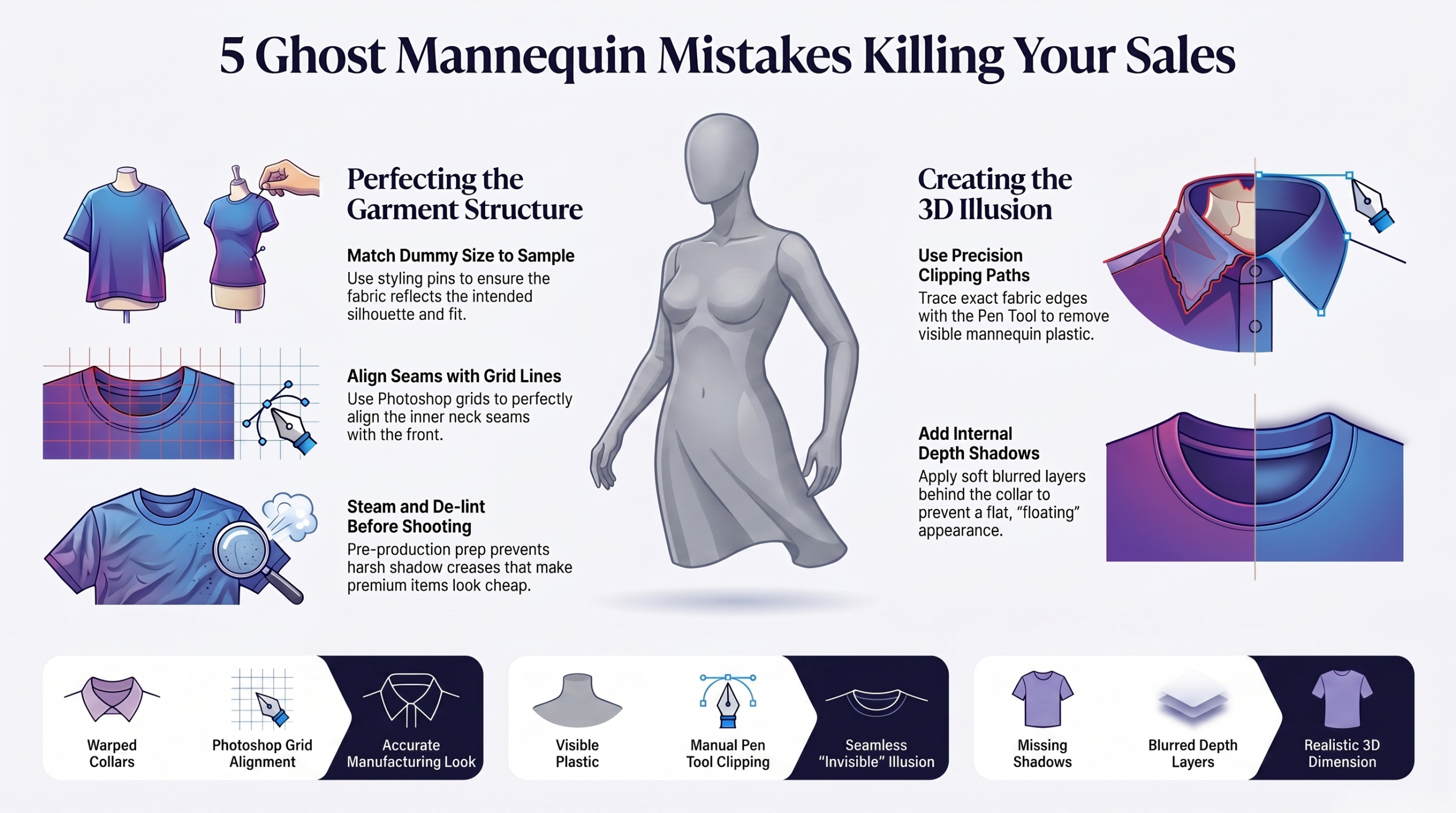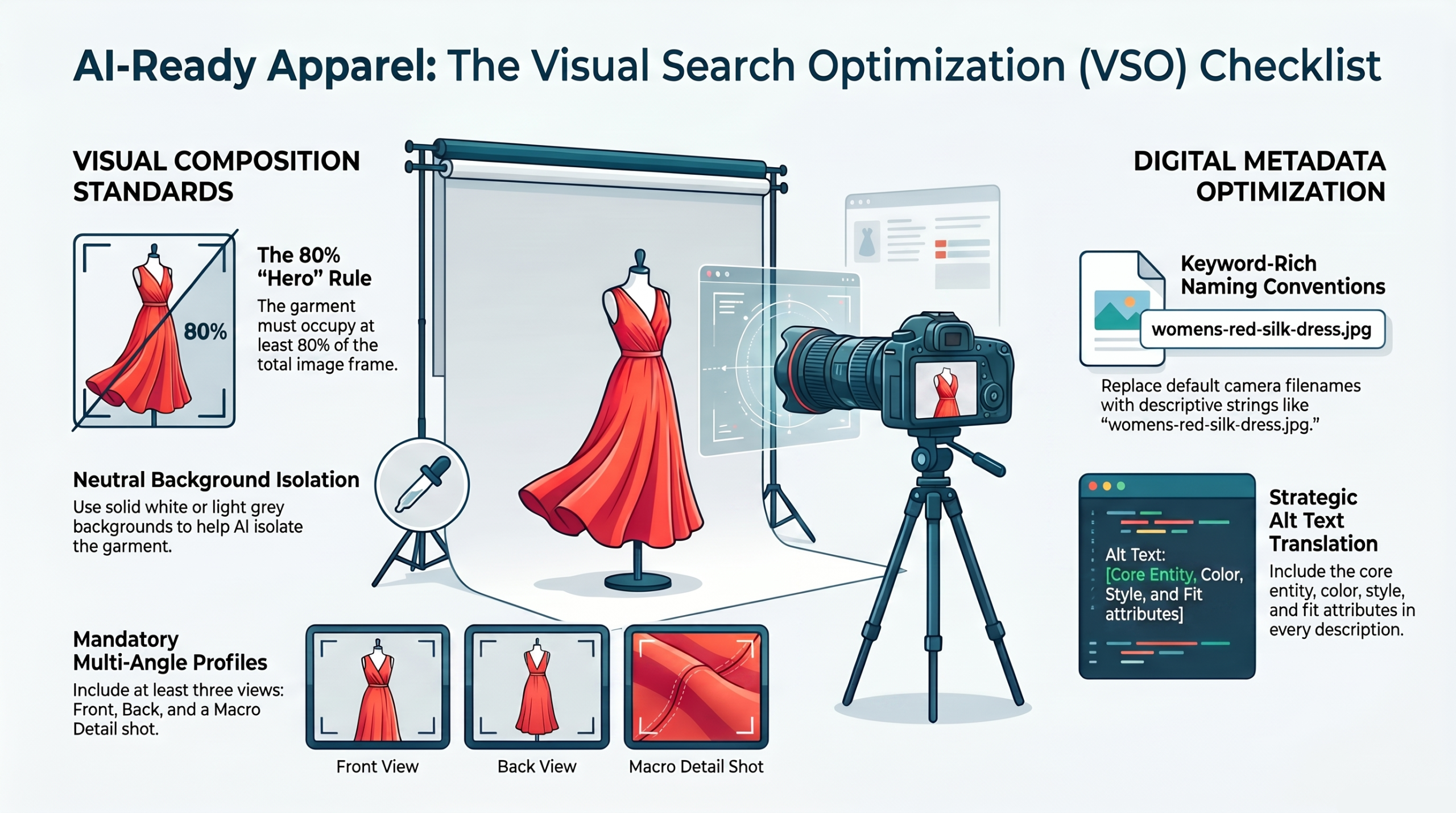
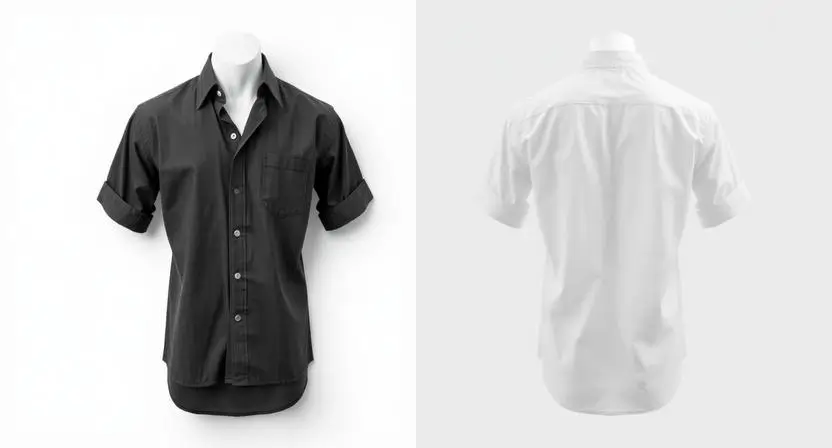
Ghost mannequin services transform ordinary apparel photos into clean, three-dimensional product images by digitally removing the mannequin leaving only the garment, perfectly shaped and ready to sell. This technique creates the hollow, “floating” look you see on every major fashion site. It is the fastest path to a polished, trustworthy storefront.
What Are Ghost Mannequin Services?
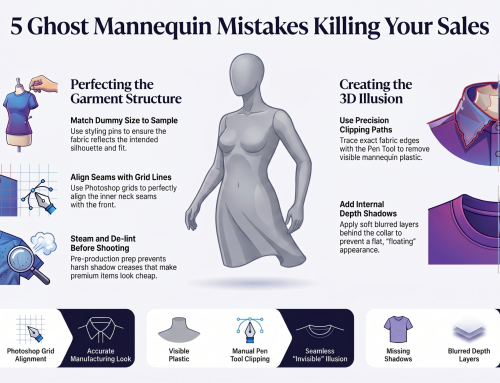
A ghost mannequin service removes the mannequin from your clothing photos. Editors combine multiple shots of a garment front, back, and inner collar into one seamless image. The result? A 3D, hollow-body look that shows shape, drape, and structure without distraction.
Think of it this way: flat lay is a shirt lying on the ground. Ghost mannequin is that same shirt on an invisible body. You see the shoulders. You see the sleeves fall. You understand how it fits. That difference is everything.
How Does the Invisible Mannequin Effect Work?
The process relies on a multi-shot composite technique. A garment is photographed on a mannequin from several angles. Separate “insert” shots capture the inside of the neck, sleeves, or hem. A skilled retoucher then combines these files in Photoshop, digitally erasing the mannequin and stitching the interior views into place. A single finished image requires two to four individual photographs and fifteen to thirty minutes of skilled retouching. When done well, the edit is invisible. That is the art.
Why Do Shopify & Amazon Sellers Need Ghost Mannequin Images?
Online shoppers cannot touch the fabric. They cannot try anything on. All they have are your images. If those images fail to communicate shape and structure, doubt creeps in. Doubt kills sales.
Ghost mannequin photos eliminate that doubt. They show the garment’s true silhouette. They communicate quality without saying a word. For Shopify clothing images and Amazon apparel photos alike, this technique has become the gold standard.
Conversion Rates That Speak for Themselves
The numbers are striking. Data from over 2.3 million product listings shows ghost mannequin images lift conversion rates by 20–45% compared to flat lay photography. The lift is highest for structured garments: outerwear sees up to 45% improvement, formalwear around 41%, and casualwear approximately 29%.
Another study by Econsultancy found that switching from basic images to professional product photography increased average conversion rates by 35%. When shoppers can visualize fit clearly, purchasing confidence soars. Higher confidence means fewer abandoned carts and more completed checkouts.
Fewer Returns, Healthier Margins
Returns are the silent killer of apparel ecommerce. Industry averages sit at 20–30%, with some categories reaching 50%. The primary reason? Products look different in person than they did online.
Ghost mannequin photography reduces return rates by 20–30%. It accurately represents proportions, structure, and silhouette before the customer buys. For a brand doing 10Minannualrevenuewitha25500,000 per year in processing, logistics, and lost inventory value. That is not a rounding error. That is a business model shift.
Ghost Mannequin vs. Flat Lay vs. Model Photography — Which Converts Best?
Not all product photography is created equal. Each style serves a purpose. But for product pages especially on Amazon and Shopify one style consistently outperforms.
| Photography Style | Shows Fit? | Cost per Image | Production Speed | Best For |
|---|---|---|---|---|
| Flat Lay | No (2D only) | Low (5–15) | Fast | Social media, accessories, budget lines |
| Ghost Mannequin | Yes (3D structure) | Moderate (15–30) | Moderate | Product pages, Amazon, catalog grids |
| Model Photography | Yes (real body) | High (100–500+) | Slow | Lookbooks, branding, homepage hero shots |
Flat lay is cheap and fast. It works for casual, print-focused garments. But it cannot show how a blazer drapes across the shoulders or whether a dress tapers at the waist.
Model photography creates emotional connection. It tells a story. Yet it is expensive, slow, and difficult to keep consistent across hundreds of SKUs.
Ghost mannequin sits in the sweet spot. It provides the dimensional clarity of model shots without the cost, inconsistency, or distraction of a human face. For structured garments at mid-to-high price points, it generally converts better than either alternative.
The smartest brands use all three in a hybrid approach. Ghost mannequin for product pages. Flat lay for detail and fabric shots. Model photography for social media and brand storytelling.
Amazon Apparel Photos What’s Allowed and What’s Not
Amazon sellers face a unique challenge. The platform has strict image requirements, and not every ghost mannequin image is compliant.
The Main Image Rule Every Seller Must Know
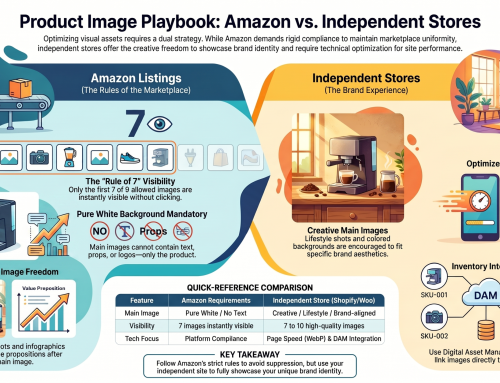
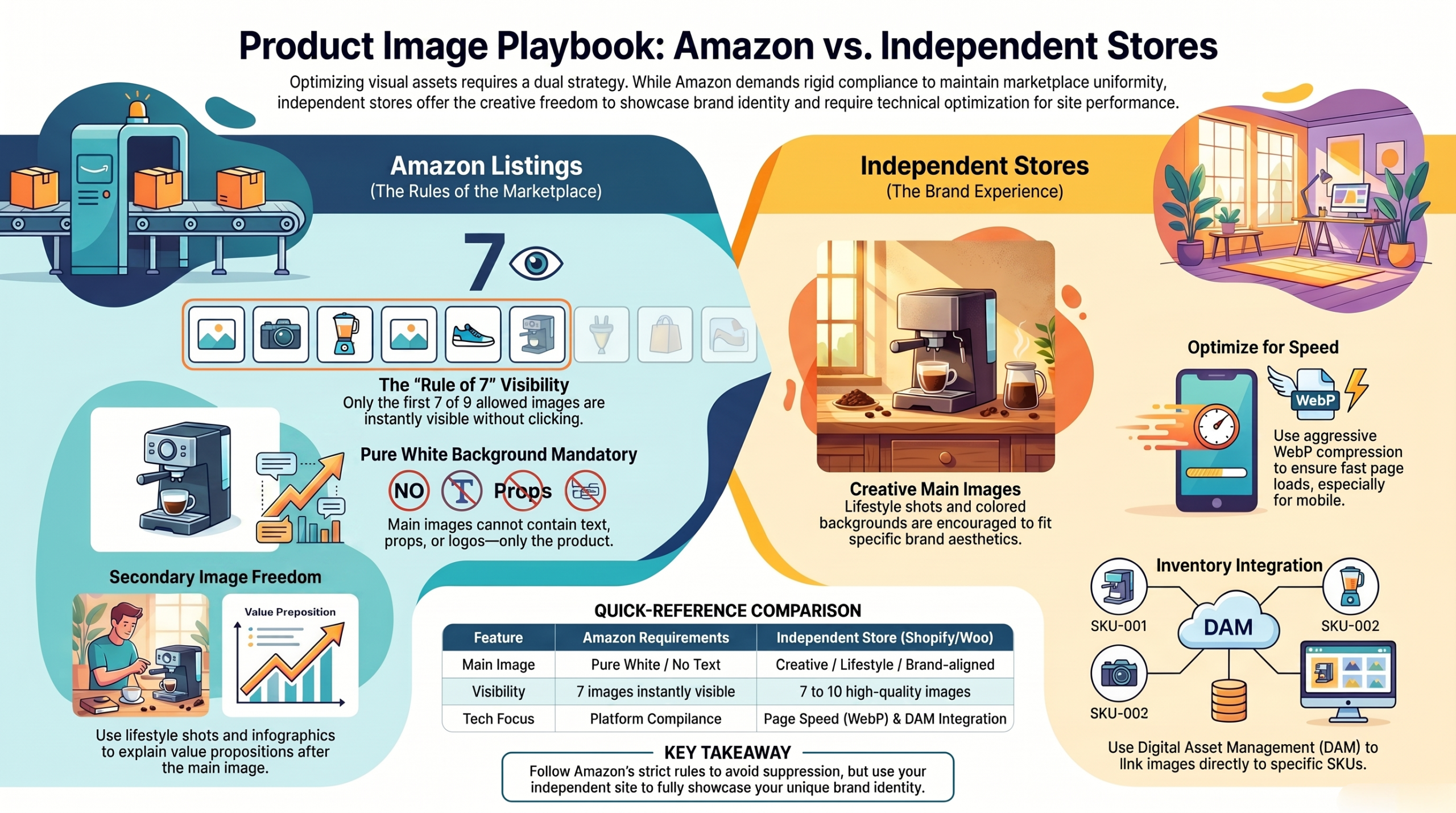
Amazon’s main image policy prohibits visible mannequins in apparel listings except for stockings and socks. The product must be photographed on a live model standing, facing forward or as a flat lay against a pure white background.
Here is the crucial nuance: a properly edited ghost mannequin image where the mannequin has been completely removed is generally acceptable as a secondary image. It shows fit and structure beautifully. But your main image cannot contain any trace of a mannequin, physical or digital.
For Amazon apparel photos, the winning formula is clear. Use a flat lay or live model shot as your main image. Then populate your secondary image slots with ghost mannequin views front, back, side, and detail close-ups. This strategy satisfies Amazon’s compliance team while giving shoppers the dimensional clarity they crave.
Shopify stores face no such restriction. You have full creative freedom. Ghost mannequin images can anchor your product pages, collection grids, and even your homepage without a second thought.
How Much Do Ghost Mannequin Services Cost in 2026?
Pricing varies widely based on volume, complexity, and geography. Here is what the current market looks like:
| Service Type | Average Cost per Image |
|---|---|
| Basic ghost mannequin (edit only) | 0.75–1.50 |
| Neck joint / sleeve joint edits | 1.50–3.00 |
| Full 3D / 360° ghost mannequin | 3.00–5.00+ |
| Full-service studio shoot (US/UK) | 25–30 per garment view |
| AI-powered ghost mannequin tools | 0.10–0.50 per image (subscription-based) |
If you handle photography yourself and outsource only the editing, costs drop dramatically. Many offshore studios offer bulk pricing as low as $0.40 per image for enterprise volumes (2,000+ images monthly).
Full-service studios in the US or UK charge more around 25–30 per garment for a single front view. But they handle everything: steaming, pinning, lighting, shooting, and retouching. For brands without in-house photography capability, this is often the smarter choice.
How to Choose the Right Ghost Mannequin Service Provider
The market is crowded. Quality varies enormously. A cheap edit that looks “off” will erode trust faster than no ghost mannequin at all.
A Quick Vetting Checklist
Realism above all. Neck joints should look natural. Shadows should match. Colors must be calibrated. If the image looks edited, it fails.
Turnaround time. Standard delivery is 24–48 hours. Rush options exist for 6–12 hours. Ask about batch handling.
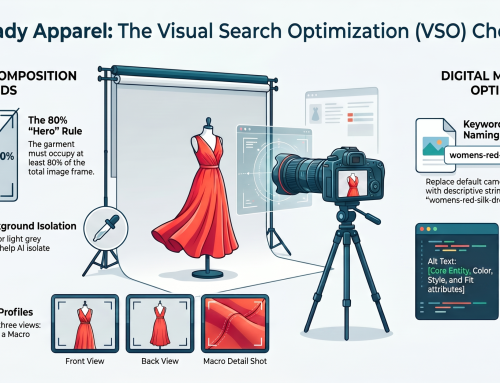
File formats and specs. Insist on 300 DPI, 2000px+ on the longest side, pure white backgrounds (RGB 255,255,255), and delivery in JPG, PNG, TIFF, or PSD.
Revision policy. Unlimited revisions sound generous. But needing many revisions signals a deeper quality problem.
Platform expertise. The provider should understand Amazon’s image guidelines and Shopify’s best practices. Not all do.
Bulk capability. If you launch new collections seasonally, can they handle 500 images in a week without quality slipping?
Request a free trial. Most reputable providers offer 1–5 test images at no cost. Compare results side by side. The differences will be obvious.
AI Ghost Mannequin Tools The New Frontier
AI is reshaping this space fast. Tools like Photoroom’s AI Ghost Mannequin Generator can now convert a simple flat lay or hanging garment photo into a realistic ghost mannequin image in seconds no studio, no mannequin, no manual editing required.
The implications are significant. Brands report up to 96% boost in sales, 93% reduction in photo editing costs, and 56% uplift in sell-through rate using AI-powered product photography. Batch processing can refresh an entire catalog in hours rather than weeks.
But AI has limits. Structured garments with complex collars, hoods, or linings still trip up the algorithms. The hollow neck area where most ghost mannequin composites look fake remains a challenge for pure AI workflows. The best results come from a hybrid approach: AI for speed and volume, human retouchers for quality control and complex pieces.
Frequently Asked Questions
What exactly is a ghost mannequin service?
A ghost mannequin service is a professional photo editing process that removes the mannequin from apparel product photos. Editors composite multiple images front views and interior insert shots into a single, clean, 3D hollow-body image that shows the garment’s true shape and structure without any visible mannequin or model.
Can I use ghost mannequin images as my Amazon main image?
No. Amazon’s main image policy prohibits mannequins in apparel listings. Only live models standing, facing forward or flat lay photography are permitted for main images. Ghost mannequin images are excellent as secondary images, where they show fit and structure without violating platform rules.
How much do ghost mannequin services cost per image?
Basic editing-only services start at 0.75–1.50 per image. Neck joint and sleeve joint edits range from 1.50–3.00. Full-service studio photography including shooting and retouching costs 25–30 per garment view in the US or UK. AI-powered tools offer the lowest per-image cost at 0.10–0.50 through subscription plans.
Which types of clothing benefit most from ghost mannequin photography?
Structured garments benefit the most: blazers, coats, dresses, button-down shirts, and tailored trousers. These items rely on silhouette and drape to communicate value. Simple, loose-fitting garments like basic t-shirts or scarves gain less from the technique.
How long does ghost mannequin editing take?
Professional editors complete a single image in 5–10 minutes using templates and Photoshop actions. Beginners might need 20–40 minutes per image. Most service providers deliver standard orders within 24–48 hours, with rush delivery available in 6–12 hours for an additional fee.
The Bottom Line
Ghost mannequin services are not a luxury. For serious Shopify and Amazon sellers, they are a competitive necessity. The data is unambiguous: better product images drive higher conversions, fewer returns, and stronger brand perception.
You do not need to ghost mannequin every SKU. Start with your bestsellers. Test the impact on conversion rate and return rate. The numbers will tell you what to do next. In almost every case, they will tell you to keep going.
Your customers cannot touch what you sell. Give them the next best thing images that leave nothing to the imagination.