What Is a Ghost Mannequin Service and Why Does Your Clothing Store Need One Right Now?
A ghost mannequin service is a specialized photo editing solution that digitally removes mannequins from apparel photographs, creating a clean, three-dimensional “hollow-body” effect that shows a garment’s true shape, fit, and structure without any distractions. For eCommerce clothing stores, this technique has become nothing short of essential it lifts conversion rates by 20–45% compared to flat lay photography and can slash return rates by up to 30%.
Think about that for a second. Your product images are doing all the heavy lifting. A shopper can’t touch the fabric. They can’t check the weight. They can’t try anything on. All they have is what they see. And what they see either builds confidence or plants doubt.
What Exactly Is a Ghost Mannequin Service?
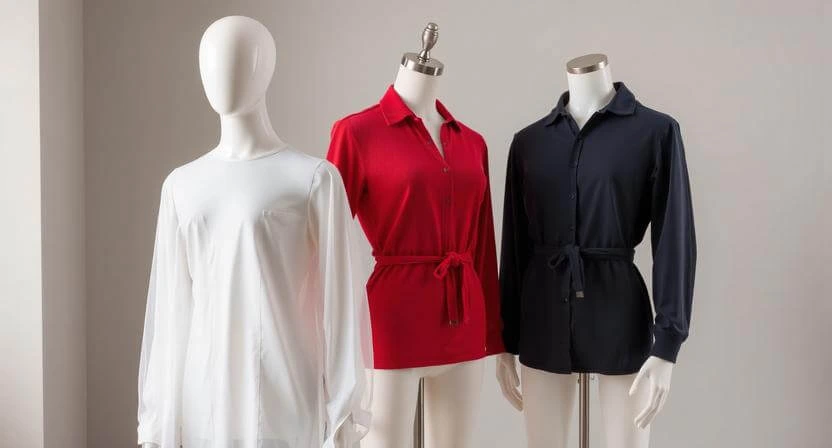
A ghost mannequin service also known as invisible mannequin editing or the hollow man technique is a post-production process where garments photographed on a mannequin are digitally transformed. The mannequin vanishes. What remains is clothing that appears to float in space, worn by an invisible body, with every seam, collar, and hem fully visible.
The magic happens through multi-shot compositing. A photographer captures at least two images per garment: the main front shot on the mannequin, and an interior shot showing the neckline, label, or sleeve openings. A skilled retoucher then merges these in Photoshop, removing the mannequin and reconstructing the inner areas that were previously hidden.
The result? A garment that looks dimensional, structured, and utterly professional without the expense of hiring live models for every SKU.
Why does this matter so much in 2026? Because eCommerce competition has exploded. The global fashion eCommerce market reached
779.3 billion in 2025 and is projected to hit 1.84 trillion by 2035. Standing out requires images that sell. Ghost mannequin images sell.
Ghost Mannequin vs. Flat Lay vs. Model Photography: Which One Wins?
Not all apparel photography is created equal. Here’s how the three main styles stack up:
| Factor | Ghost Mannequin | Flat Lay | Model Photography |
| Visual Style | 3D floating effect | 2D overhead shot | Lifestyle/studio |
| Fit Visualization | ⭐⭐⭐⭐⭐ | ⭐⭐ | ⭐⭐⭐⭐ |
| Conversion Potential | High | Medium–Low | Medium–High |
| Cost Per Image | Medium | Low | High |
| Scalability | ⭐⭐⭐⭐⭐ | ⭐⭐⭐ | ⭐ |
| Best Use | Product pages, catalogs | Social media, blogs | Brand campaigns |
Ghost mannequin wins where it counts: product detail pages. It shows shape without distraction. Flat lay can look beautiful, but beauty doesn’t always equal conversion. Model photography creates emotional connection, but it’s expensive, inconsistent, and impractical for large catalogs.
The smartest brands? They blend all three. Ghost mannequin for PDPs. Flat lay for social storytelling. Model shots for lookbooks and banners. But when the goal is making someone click “Add to Cart,” ghost mannequin leads the pack.
The Real Business Case: Numbers That Actually Matter
Let’s move past opinions. Here’s what the data reveals:
Conversion Rate Lift. Studies show ghost mannequin images lift conversion rates by 20–45% compared to flat lay photography. The lift is highest for structured garments—blazers, coats, and dresses—where shape and silhouette are key purchase criteria. Another industry analysis found that white-background ghost mannequin images specifically increase conversions by 21%.
Return Rate Reduction. Fashion eCommerce return rates average 20–30%, with some categories hitting 50%. The primary driver? Customers receive products that look different from what they expected. Ghost mannequin photography reduces returns by 20–30% because it accurately represents garment proportions and structure.
Here’s the math that makes CFOs pay attention: a brand doing €10 million in annual revenue with a 25% return rate saves approximately €500,000 per year just from a 20% reduction in returns. That’s before factoring in the conversion lift.
Customer Expectations. According to BigCommerce, 78% of online shoppers want product images to be the primary focus of their shopping experience. Ghost mannequin images deliver exactly that—pure product focus.
Real-World Example. A large-scale fashion eCommerce retailer similar to ASOS with 180+ active SKUs reprocessed its catalog using professional ghost mannequin editing. No new photo shoots. No pricing changes. No description modifications. Just cleaner images. The results: higher product page engagement, improved conversion performance, and lower return rates related to appearance mismatch.
How Much Does a Ghost Mannequin Service Cost?
Pricing varies dramatically based on complexity, volume, and provider location. Here’s a realistic breakdown:
| Service Level | What’s Included | Price Per Image |
| Basic Neck Joint | Simple neck joint only, clean edges | 0.50–6.00 |
| Standard | Neck + bottom joint, basic retouching | 5.00–10.00 |
| Premium Full Ghost | Neck + sleeve + bottom joints, shadow work, color correction | 10.00–18.00 |
| Photography + Editing | Complete shoot and post-production | 25.00–75.00+ |
For editing alone, most eCommerce brands pay between
0.50and5 per image when working with offshore or high-volume providers. Full-service photography studios charge more—typically
30–120 per final image because they handle the entire capture-to-delivery pipeline.
Volume discounts kick in around 100+ garments per month, with brands often negotiating 20–40% below list rates.
Is it worth it? Consider this: ghost mannequin editing is one of the lowest-cost performance upgrades in apparel eCommerce. Even a 1–2% conversion improvement can outperform the total editing cost across an entire catalog.
Which Garments Benefit Most from Ghost Mannequin Editing?
Not every clothing item needs the ghost mannequin treatment. But some absolutely demand it.
High-Impact Garments:
- Blazers, suit jackets, and tailored coats (structure is everything)
- Dresses with defined waistlines and draping
- Button-down shirts and blouses
- Denim and structured pants
- Hoodies and outerwear with interior details
- Any garment where fit drives the purchase decision
Lower-Impact Garments:
- Basic t-shirts and tank tops
- Socks, scarves, and simple accessories
- Lounge wear and loose-fit casual items
The rule of thumb: if a customer needs to understand how a garment fits to feel confident buying it, ghost mannequin is worth the investment. For structured pieces, skipping ghost mannequin can quietly sabotage conversion rates.
In-House vs. Outsourcing: The Smarter Choice
Building ghost mannequin capability in-house sounds appealing. Control. Speed. Brand alignment. But the numbers tell a different story.
In-House Reality Check:
- Professional mannequins: €200–€800 per size (need 3–5 sizes per gender)
- Lighting setup: €3,000–€8,000
- Camera and tethering system: €5,000–€15,000
- Skilled retoucher salary: €35,000–€55,000 annually
- Total initial investment: €15,000–€40,000
The break-even point for in-house ghost mannequin photography typically lands around 3,000–5,000 SKUs per month. Below that, outsourcing is almost always more cost-effective. And even above that, the seasonal nature of fashion means an in-house team sits idle during slow periods while a production partner absorbs those fluctuations.
Outsourcing a ghost mannequin service gives you access to specialized talent, faster turnaround (pros deliver 50+ images in 24–48 hour batches), and predictable per-image costs without the overhead. For most clothing stores, it’s the clear winner.
How to Choose the Right Ghost Mannequin Service Provider
Not all providers are equal. Here’s what separates the professionals from the amateurs:
Ask for Before/After Pairs. Request untouched and retouched versions of the same garment. Zoom to 200%. Look for clean neck joints, natural shadow placement, and consistent lighting across the composite. If you see blending artifacts, the retouching isn’t production-grade.
Check Color Accuracy Standards. Top studios calibrate to Delta E <2 the threshold below which the human eye cannot distinguish color differences. If a provider can’t specify their calibration standard, they aren’t measuring it.
Verify Turnaround Times. Enterprise grade turnaround for ghost mannequin photography is 3–5 business days from product receipt to final delivery. Studios quoting 2+ weeks are either undersized or not prioritizing efficiency.
Confirm Marketplace Compliance. Your images need to pass Amazon, Shopify, and Zalando specifications on the first submission. Ask about rejection rates—studios with deep marketplace expertise maintain rates below 2%.
Test with a Trial Order. Most reputable ghost mannequin services offer free trials—typically 1–5 images at no cost. Use this. Evaluate consistency, communication, and whether they actually follow your brand guidelines.
Common Mistakes That Ruin Ghost Mannequin Images
Even with a professional ghost mannequin service, certain errors can undermine your results:
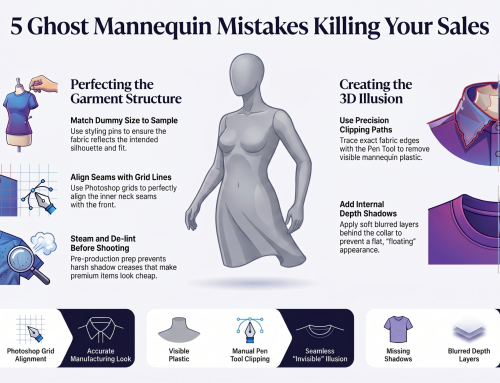
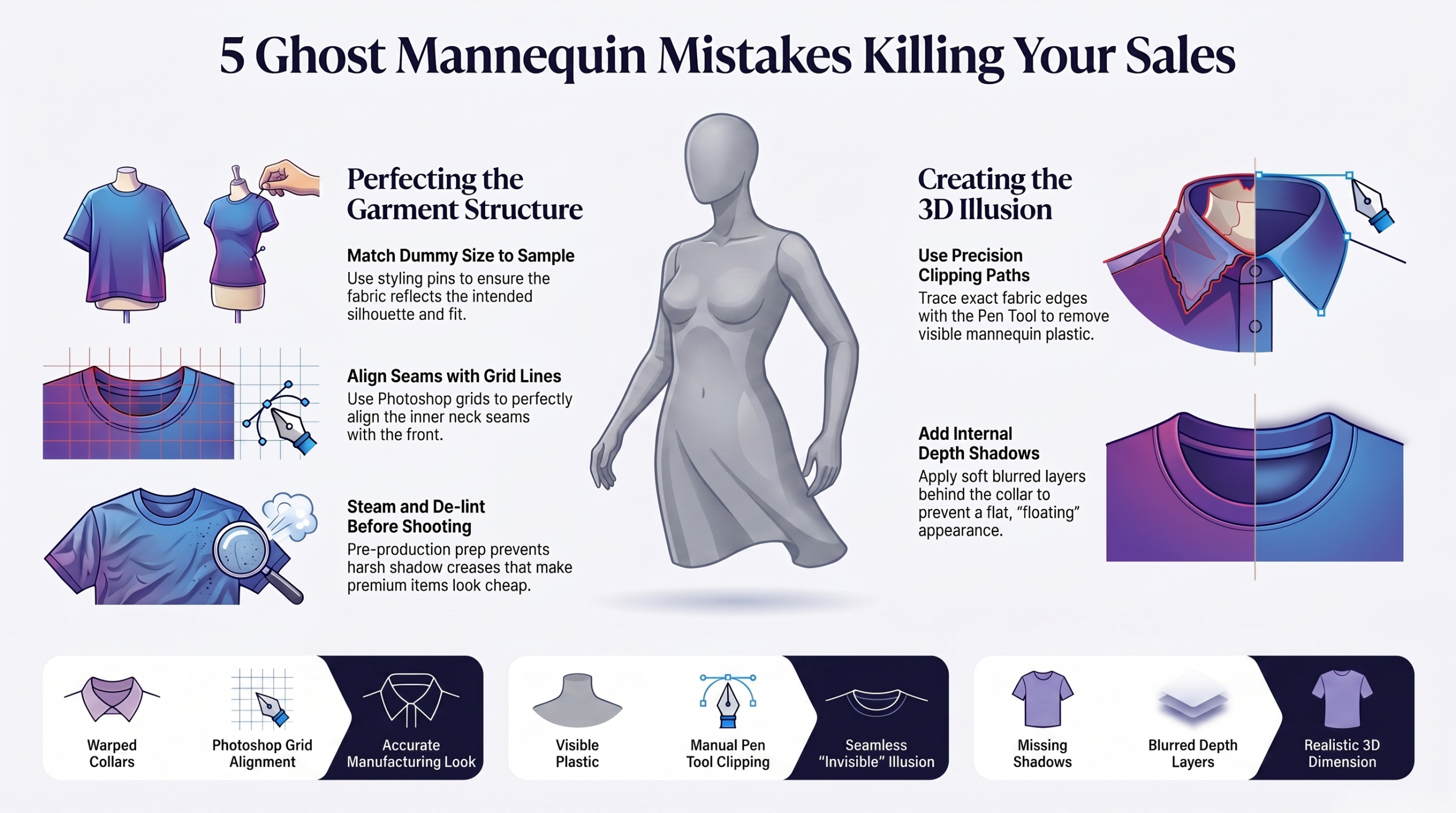
- Skipping the Interior Reference Shot. Without a separate photograph of the inside neck, collar, or sleeve openings, editors must rebuild structure from scratch. The result looks fake—hollow and flat rather than dimensional.
- Mismatched Lighting Between Shots. If the main exterior shot and the interior insert shot have different lighting temperatures, the composite will look patched together. Always lock your camera settings and lighting position.
- Using the Wrong Mannequin Size. A mannequin that’s too large stretches the fabric unnaturally. One that’s too small leaves the garment shapeless. Match the mannequin to the garment’s intended fit.
- Choosing the Cheapest Provider. Budget editing services often use automated tools instead of manual compositing. The result? Jagged neck joints, mismatched shadows, and inconsistent catalog presentation. Ghost mannequin editing requires human skill and that costs something.
- Neglecting Garment Preparation. Wrinkled, unsteamed clothing photographed on a mannequin still looks wrinkled after editing. Prep every garment before it reaches the camera: steam, de-lint, and pin excess fabric at the back for a snug, natural silhouette.
Conclusion
A ghost mannequin service is no longer a luxury for eCommerce clothing stores it’s a baseline requirement. The technique transforms ordinary apparel photographs into clean, conversion-focused product images that reduce buyer hesitation and accurately represent fit.
The data is unambiguous: conversion lifts of 20–45%, return reductions of 20–30%, and a professional catalog appearance that builds trust at every touch point. Whether you sell on Amazon, Shopify, or your own DTC store, ghost mannequin images align with platform requirements and shopper expectations alike.
Outsourcing this work to a specialized ghost mannequin service eliminates the heavy capital investment of building an in-house studio while giving you access to skilled retouchers who deliver consistent, marketplace-ready images at scale. For clothing brands serious about growth, the question isn’t whether to invest in ghost mannequin editing—it’s how soon you can start.
Frequently Asked Questions
What is a ghost mannequin service?
A ghost mannequin service is a professional photo editing process that removes the mannequin from apparel photographs, creating a clean 3D “invisible body” effect. This technique combines multiple images typically a front shot on a mannequin and an interior neck/label shot to produce a final image where the garment appears to float naturally, showing true fit and structure without distractions.
How much does ghost mannequin editing cost per image?
Ghost mannequin editing costs range from
0.50to18 per image depending on complexity and provider location. Basic neck joint edits start around
0.50–6, standard edits with multiple joints run
5–10, and premium full ghost mannequin compositing with color correction costs
10–18. Volume discounts typically apply at 100+ garments per month.
Does ghost mannequin photography actually increase sales?
Yes. Studies consistently show ghost mannequin images lift conversion rates by 20–45% compared to flat lay photography, with the highest lifts occurring for structured garments like blazers, coats, and dresses. Additionally, professional ghost mannequin images reduce return rates by 20–30% by accurately representing garment proportions and fit.
Which is better for eCommerce: ghost mannequin or flat lay photography?
Ghost mannequin outperforms flat lay for product detail pages because it shows three dimensional fit, structure, and silhouette critical factors in purchase decisions. Flat lay excels on social media and for lifestyle storytelling but lacks the depth to convey how a garment actually fits. Most successful brands use ghost mannequin for product pages and flat lay for social content.
Can I do ghost mannequin editing myself?
DIY ghost mannequin editing is possible for very small catalogs using Adobe Photoshop, but it requires significant skill in compositing, layer masking, and color correction. For brands with regular apparel sales, multiple SKUs, or running paid advertising, professional ghost mannequin services deliver superior consistency and accuracy at scale and the per-image cost is typically far lower than the revenue lost to poor product presentation.