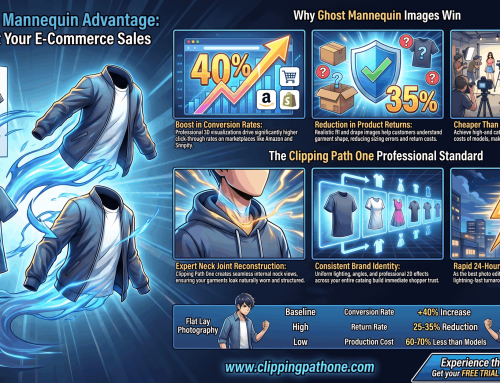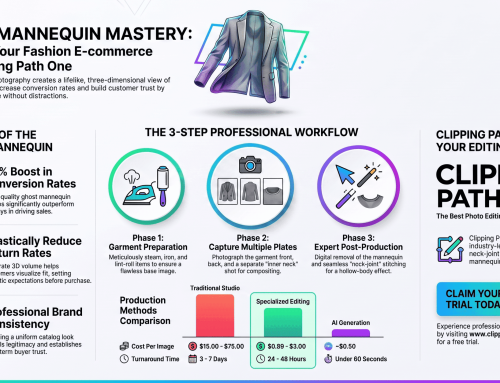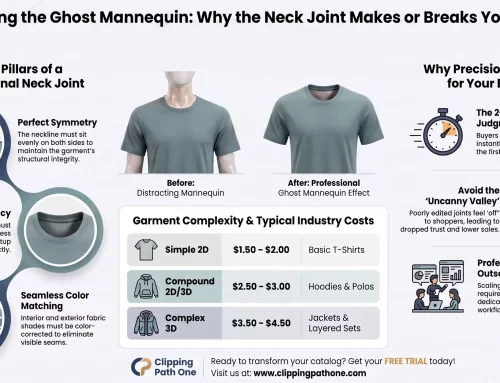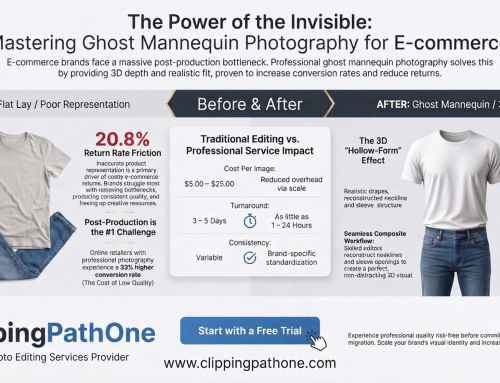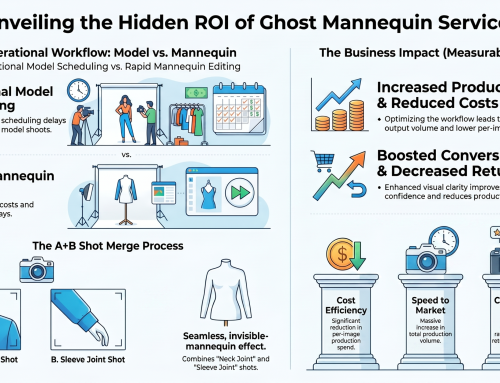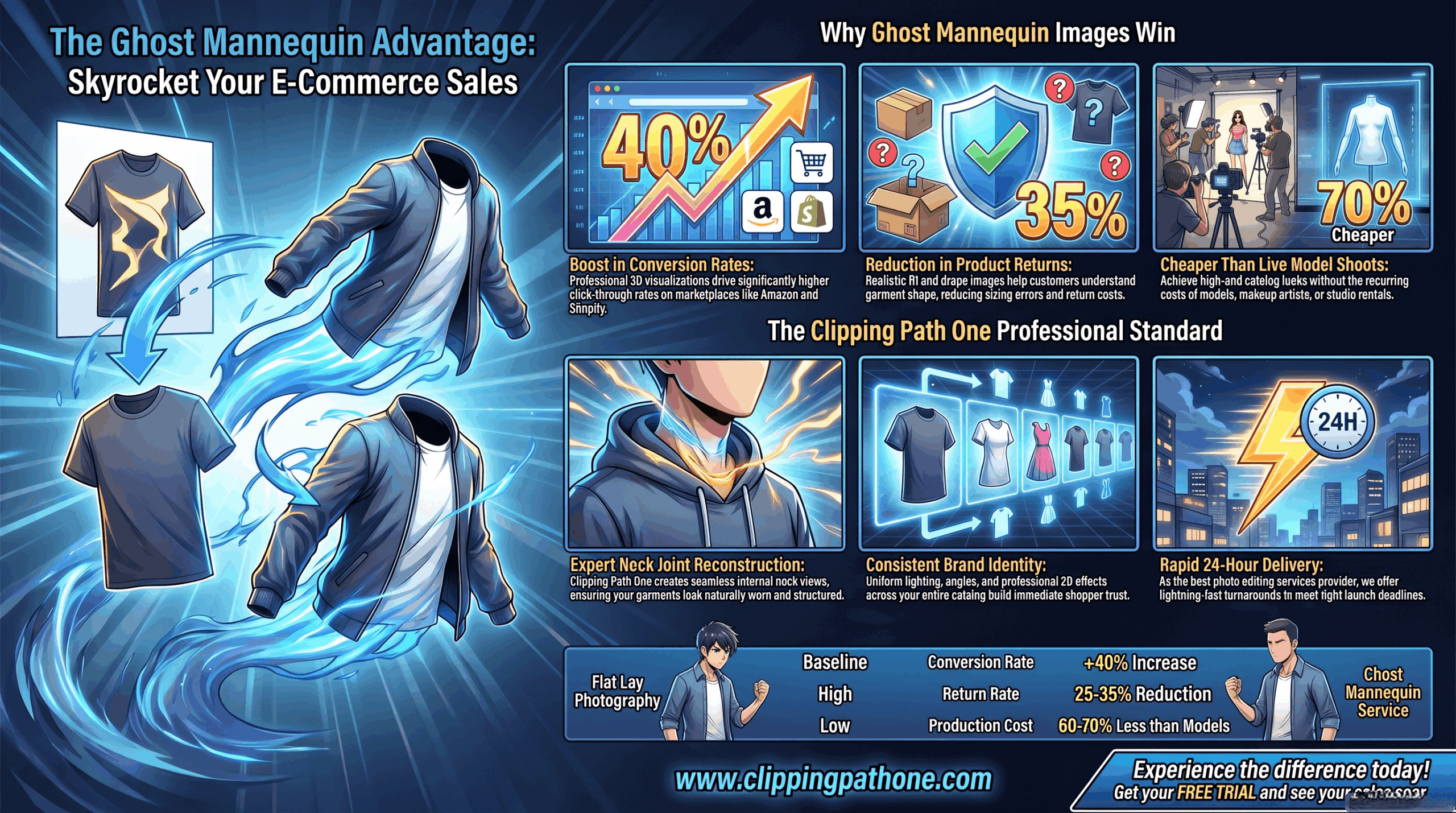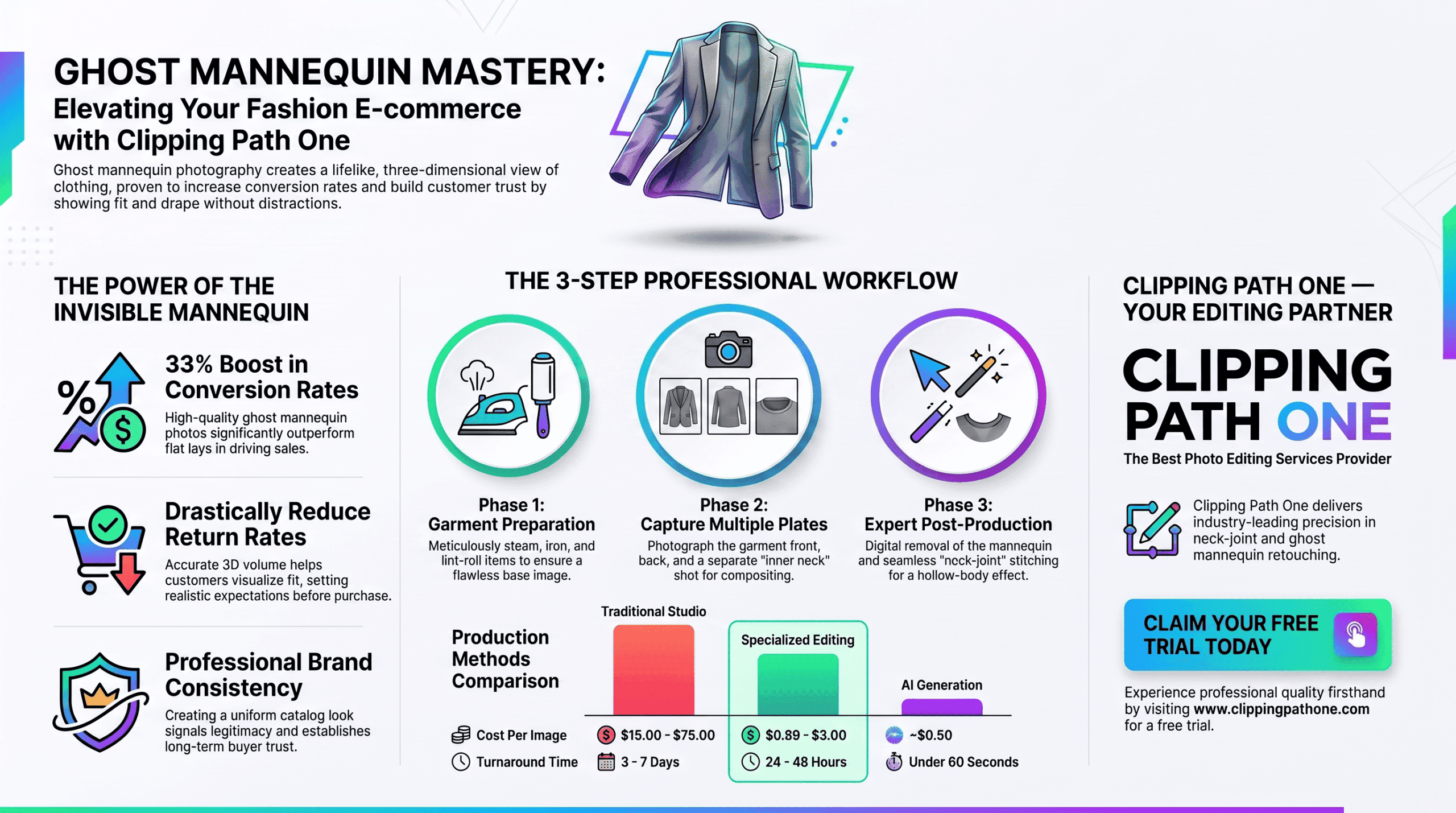
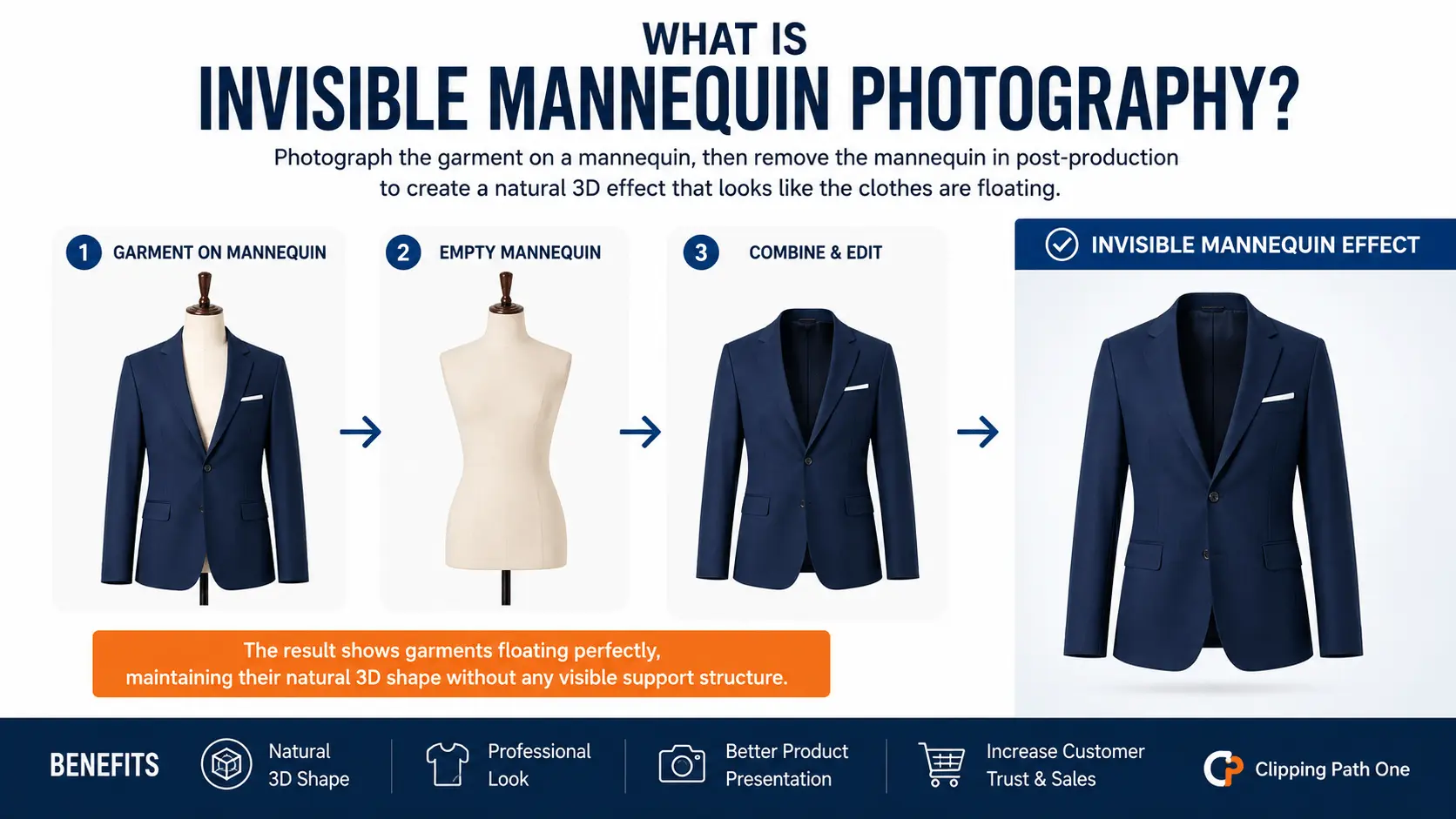
Invisible mannequin photography also called ghost mannequin photography is a studio technique that photographs clothing on a mannequin, then digitally removes the mannequin in post-production. The result shows garments floating perfectly, maintaining their natural 3D shape without any visible support structure.
Ever scrolled through an online store and wondered how those shirts look so perfectly shaped like someone’s wearing them, but nobody actually is? That’s invisible mannequin photography working its magic. And trust me, it’s nowhere near as complicated as you might think.
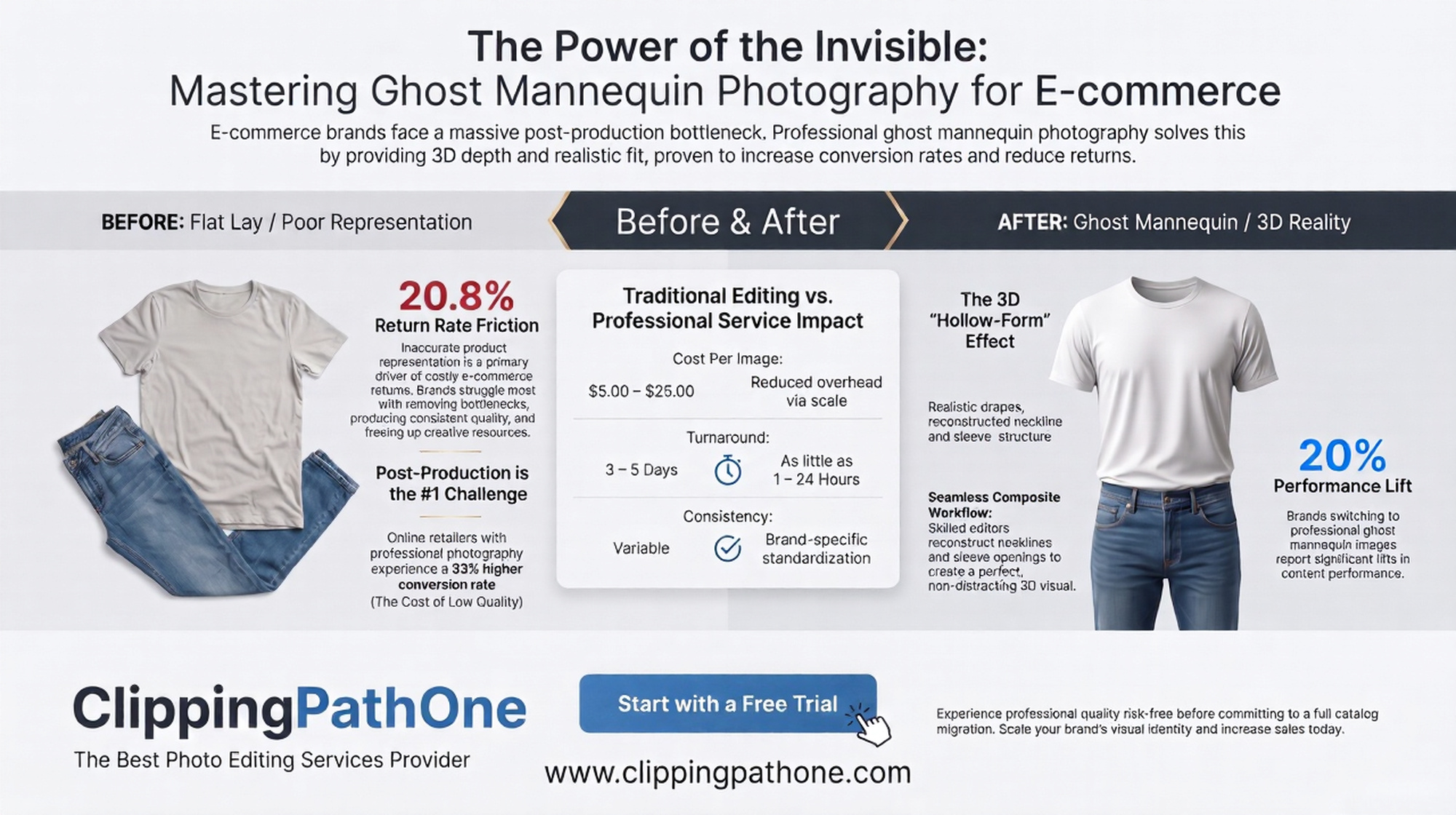
Let’s cut through the noise. You’re running an e-commerce clothing brand, and flat-lay photos just aren’t cutting it anymore. Your customers want to see how that jacket actually fits around shoulders. They need to understand drape, structure, and silhouette. Flat images lying on a table? Useless for that.
Here’s what nobody tells you: traditional mannequin photos look obvious. You see the neck post. The arm seams look weird. Customers feel tricked. Invisible mannequin photography solves all of that completely.
What Exactly Is Ghost Mannequin Photography?
Ghost mannequin photography is the industry standard name for this same technique. The “ghost” refers to the mannequin disappearing entirely from the final shot, leaving only the product behind.
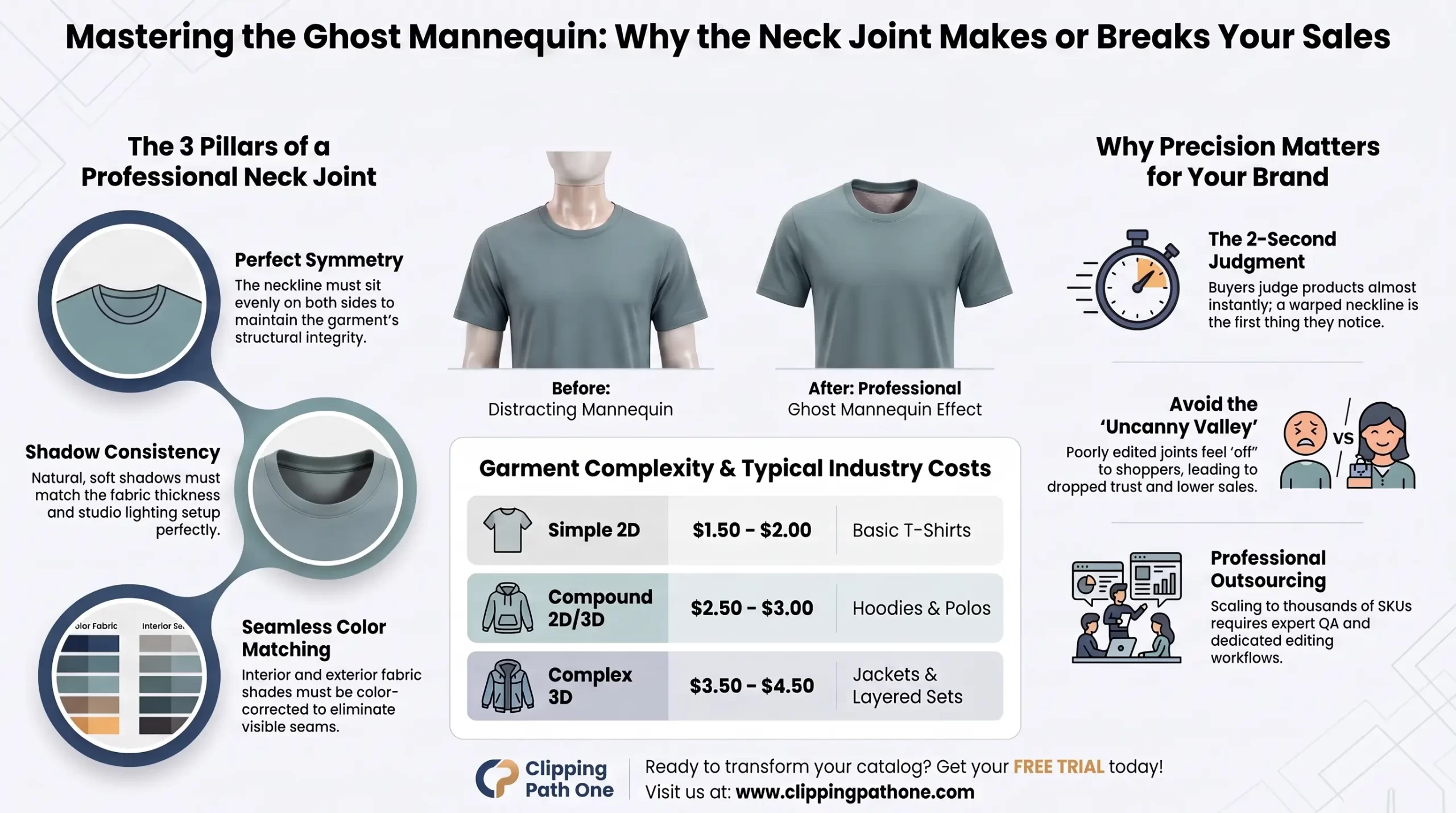
Think of it this way: you photograph a dress on a high-quality form mannequin. The fabric hangs naturally. The shoulders sit right. Then your editor removes every trace of that mannequin the neck piece, the arm supports, the torso shape and replaces the hollow interior with a clean black or white void. The garment looks like it’s floating, yet perfectly structured.
Pretty clever, right?
Why “Invisible” Instead of “Ghost”?
Both terms mean the exact same thing. Some photographers prefer “invisible” because it sounds less spooky (fair enough). Others stick with “ghost” because that’s what the industry has called it for twenty years. Either way, the result is identical.
Why Should You Care About This Technique?
Let me give you three brutally honest reasons.
First, your conversion rates will climb. When customers can see exactly how a garment drapes—the neckline depth, the sleeve volume, the hip fit—they buy with confidence. No returns because “it looked different online.” That’s real money staying in your pocket.
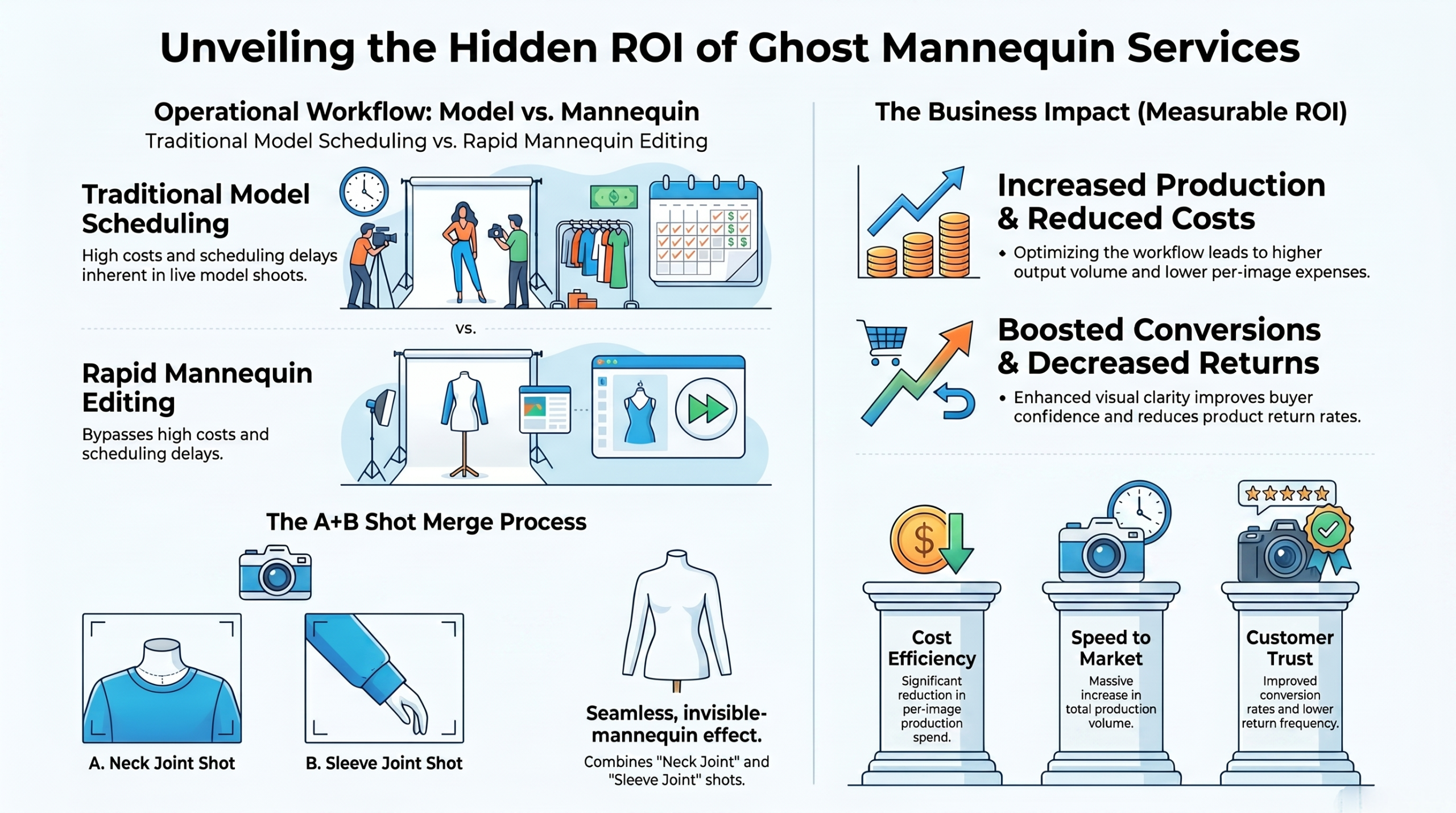
Second, you save thousands on models. Hiring models costs serious cash. You pay for their time, a makeup artist, a stylist, a studio, and editing. Invisible mannequin photography runs on a fraction of that budget. One mannequin. One photographer. One editor. Done.
Third, consistency becomes effortless. Every product gets shot from identical angles with identical lighting. Your entire catalog looks cohesive. Professional. Trustworthy. That visual consistency signals quality to shoppers before they read a single word.
| Aspect | Flat-Lay Photography | Invisible Mannequin | Live Model |
| Shows true drape | No | Yes | Yes |
| Consistent angles | Yes | Yes | No |
| Cost per item | Low | Medium | High |
| Editing time | Minimal | Moderate | Heavy |
| Scalability | High | High | Low |
What Is the Actual Process for Invisible Mannequin Photography?
Let me walk you through exactly how this works. No fluff. Just the real steps.
Step One: Shoot the Garment on a Mannequin
You place your product on a high-quality adjustable mannequin. Not the cheap display kind from a retail store. You need a professional form with removable limbs and a detachable neck piece. Why removable? Because that creates access for the interior shot.
The photographer positions studio lights to eliminate shadows and create even exposure across the fabric. Two key lights from the front. One backlight for separation. Reflectors fill any dark spots. The goal is perfectly flat, shadow-free illumination.
Step Two: Photograph the Interior Separately
Here’s the secret most people miss. You flip the garment inside out or partially detach it from the mannequin to capture the neckline, armholes, and torso interior from behind. This second shot provides the “hollow” space that makes the final image look authentic.
No interior shot means you get a flat, fake-looking black void that screams “Photoshop.” Customers notice. They click away.
Step Three: Digital Compositing
Your editor imports both images into Photoshop and specialized ghost mannequin software. They cut out the mannequin from the exterior shot, then layer in the correctly shaped interior from the second image. The neckline edges blend seamlessly. Shadows match. The garment looks like it’s floating in space but holding its true form.
Editing time per image ranges from 10 to 45 minutes depending on complexity. High-volume studios can process hundreds daily.
Can AI Replace Ghost Mannequin Photography?
Short answer: not yet. Not completely.
Ghost mannequin photography AI tools have emerged recently. Programs like Evoto, Retouch4me, and some Photoshop neural filters attempt automated mannequin removal. For simple products like basic t-shirts on white backgrounds? They work okay.
But here’s the reality check. Complex garments pleated skirts, leather jackets with structured collars, delicate knitwear with visible texture confuse AI badly. You get warped necklines, unnatural shadows, and interior spaces that look like black holes.
Professional invisible mannequin photography still requires human expertise. An experienced editor understands fabric behavior. They know where shadows should fall. They blend interior and exterior seams with pixel-perfect precision. AI doesn’t have that contextual understanding.
That said, hybrid workflows are smart. Use AI for initial masking and background removal. Then let a human editor handle the detailed compositing. You save time without sacrificing quality.
Where Can You Find Ghost Mannequin Photography Services?
Search volume tells a clear story here. People want local options.
Ghost mannequin photography near me – This search spikes for boutique owners who want hands-on collaboration. Check local product photography studios. Interview them. Ask to see before-and-after examples of clothing similar to yours.
Ghost mannequin photography Melbourne – Australia’s fashion hub has dozens of specialists. Expect rates between
15−35 AUD per image for bulk orders.
Ghost mannequin photography London – The UK market runs premium. London studios typically charge £20-£50 per image but deliver exceptional quality.
Ghost mannequin photography NYC – New York pricing starts around $25 per image and climbs fast for rush orders. Worth every dollar if you need same-week turnaround.
Ghost mannequin photography Sydney – Similar pricing to Melbourne. Look for studios offering volume discounts above 100 images.
Ghost mannequin photography studio – This search finds dedicated facilities that do nothing but product photography. These are your best bet for consistency at scale.
Ghost mannequin photography service – Online providers like Pixelz, Path, or Clippingpathone handle everything remotely. Ship your products to their warehouse. They shoot, edit, and deliver digital files within 48 hours. Perfect for brands without local options.
Real-World Example: How One Brand Saved $47,000
Let me tell you about a menswear startup I consulted for last year. They launched with live model photography—beautiful images, terrible unit economics. Each product cost
340toshoot.Theyhad200SKUs.That′s
340toshoot.Theyhad200SKUs.That
′
s68,000 just for photography.
We switched them to invisible mannequin photography. New cost per item:
105.Totalspend:
105.Totalspend:21,000. Same catalog size. Same visual quality. Actually better consistency because every shirt now hangs exactly the same way.
Their return rate dropped 23% in four months. Customers stopped guessing about fit. The images showed exactly how shoulders tapered, how sleeves draped, how fabric fell across the chest.
That’s the difference between guessing and knowing.
What Are the Hidden Costs Nobody Mentions?
Let’s be transparent. Invisible mannequin photography has expenses beyond the per-image rate.
Quality mannequins cost money. A professional form with adjustable limbs and detachable neck piece runs
600−
600−1,500. Cheap display mannequins leave visible seams and create unnatural fabric tension.
Editing software licenses add up. Photoshop alone costs
30monthlypereditor.Specializedghostmannequinpluginsaddanother
30monthlypereditor.Specializedghostmannequinpluginsaddanother20-$50 monthly.
Training time matters. A junior editor needs 40-60 hours of supervised practice before delivering consistent results. That’s real payroll cost.
Complex garments demand more time. A simple polo shirt might take 10 minutes to edit. A sequined evening gown with sleeve vents and interior lining? Two hours easily.
Budget accordingly.
Expert Opinion: When Should You NOT Use This Technique?
I’ve shot over 15,000 clothing items using invisible mannequin photography. And I’ll tell you straight—it’s not always the right choice.
Sheer fabrics look terrible. Lace, mesh, and organza reveal the mannequin surface beneath. You can’t edit out what the camera clearly sees through the material. Flat-lay or hanging shots work better here.
Ultra-stretchy activewear fights back. Yoga pants and compression tops behave differently on a hard mannequin than on a human body. The fabric stretches weird. Waistbands gap. Just use a live model.
Transparent packaging requires different thinking. If you sell socks or underwear in clear boxes, ghost mannequin photography is useless. The packaging reflects studio lights and creates impossible glare.
Know when to pivot.
FAQ
How much does invisible mannequin photography cost per image?
Professional ghost mannequin photography service pricing ranges from
15 to 50 per image for standard clothing items. Complex garments like jackets with fur collars or beaded evening gowns cost
75−150 each. Volume discounts typically apply above 50 images.
Can I do ghost mannequin photography with my phone camera?
Technically yes, but results won’t match professional quality. You need controlled studio lighting, a proper mannequin, and skilled Photoshop editing. Phone cameras lack the dynamic range and color accuracy for consistent e-commerce results. Hire a specialist.
What’s the difference between ghost mannequin and invisible mannequin photography?
Absolutely nothing. The two terms describe identical techniques. “Ghost mannequin” emerged first as industry slang. “Invisible mannequin” became popular later for marketing purposes. Both produce the same floating garment effect with hollow interior spaces.
How long does ghost mannequin photography editing take per image?
Standard editing takes 10-20 minutes per image for simple garments like t-shirts or jeans. Complex items with multiple layers, patterns, or reflective surfaces require 30-60 minutes. Professional studios using batch processing software can complete 50-100 images daily.
Is invisible mannequin photography worth it for small businesses?
Yes, especially for brands with 20+ SKUs. The upfront investment pays back through lower return rates and higher conversion percentages. Start with your top-selling 10 products to test results. Measure return rate changes for 60 days before scaling to your full catalog.
Final Thoughts
Invisible mannequin photography isn’t magic. It’s a repeatable, scalable system that solves a real problem: showing online shoppers exactly how clothes fit.
The technique saves money compared to live models. It delivers consistency that flat-lay photography never can. And when executed correctly, it builds the trust that drives e-commerce sales.
Your move is simple. Test five products using ghost mannequin photography near your location. Compare conversion data against your current product images for 30 days. Let the numbers decide.
Because at the end of the day, better product photography isn’t about looking pretty. It’s about selling more with fewer returns. And that’s a bottom-line conversation worth having.