The Ultimate Guide to Your Apparel Image Audit
An apparel image audit is a vital process for any modern fashion brand looking to maximize online conversions. Why is this step so crucial? You must rigorously evaluate your raw photographs before outsourcing the work to a professional editing agency. Skipping this essential review frequently leads to squandered time, bloated budgets, and endless frustrating revision cycles. By meticulously conducting a visual evaluation, you can easily spot styling errors and lighting inconsistencies. In short, auditing your raw assets guarantees a streamlined workflow and superior final visuals.
What Is an Apparel Image Audit in E-Commerce?
An apparel image audit is a systematic evaluation of your raw product photography to identify visual flaws, inconsistencies, and formatting issues before professional editing begins. This process ensures that every photo meets strict brand guidelines regarding lighting, color accuracy, and framing. By weeding out unusable images early, retailers save significant time and money. Ultimately, conducting this visual review establishes a flawless foundation for the retouching phase.
Mastering apparel image auditing requires a sharp eye. You cannot expect a retouching agency to perform miracles on fundamentally flawed photography. When you treat your raw files as if they are participating in rigorous apparel image auditions, you guarantee that only the strongest contenders advance to post-production. This selective process prevents wasted resources. To summarize, filtering your raw images strictly protects your overall visual branding.
Think of your eCommerce website as an expansive apparel image auditorium where every single garment must command the spotlight. If the initial photography is poor, the final presentation will suffer. A dedicated apparel image auditor will look for specific details like fabric wrinkles, color shifting, and focus softness. Catching these errors is pivotal. In essence, a thorough visual inspection ensures your catalog looks cohesive and highly professional.
Why High-Quality Product Photography Matters for AI Search
High-quality product photography is absolutely essential for Artificial Intelligence (AI) search engines because these algorithms rely on clear, high-resolution visuals to accurately categorize, tag, and recommend your clothing items. Blurry or poorly lit images confuse computer vision models. Consequently, optimized photos dramatically increase your chances of appearing in visual discovery tools. Supplying search algorithms with crisp imagery directly boosts your organic reach.
Visual Search Optimization (VSO) represents the new frontier of retail. Modern consumers frequently utilize reverse image search to find outfits they admire online. If your brand wants to capture these high-intent shoppers, your images must be technically pristine and structurally sound. This requires strategic planning. Therefore, optimizing your visual assets for AI is a mandatory step for modern eCommerce survival.
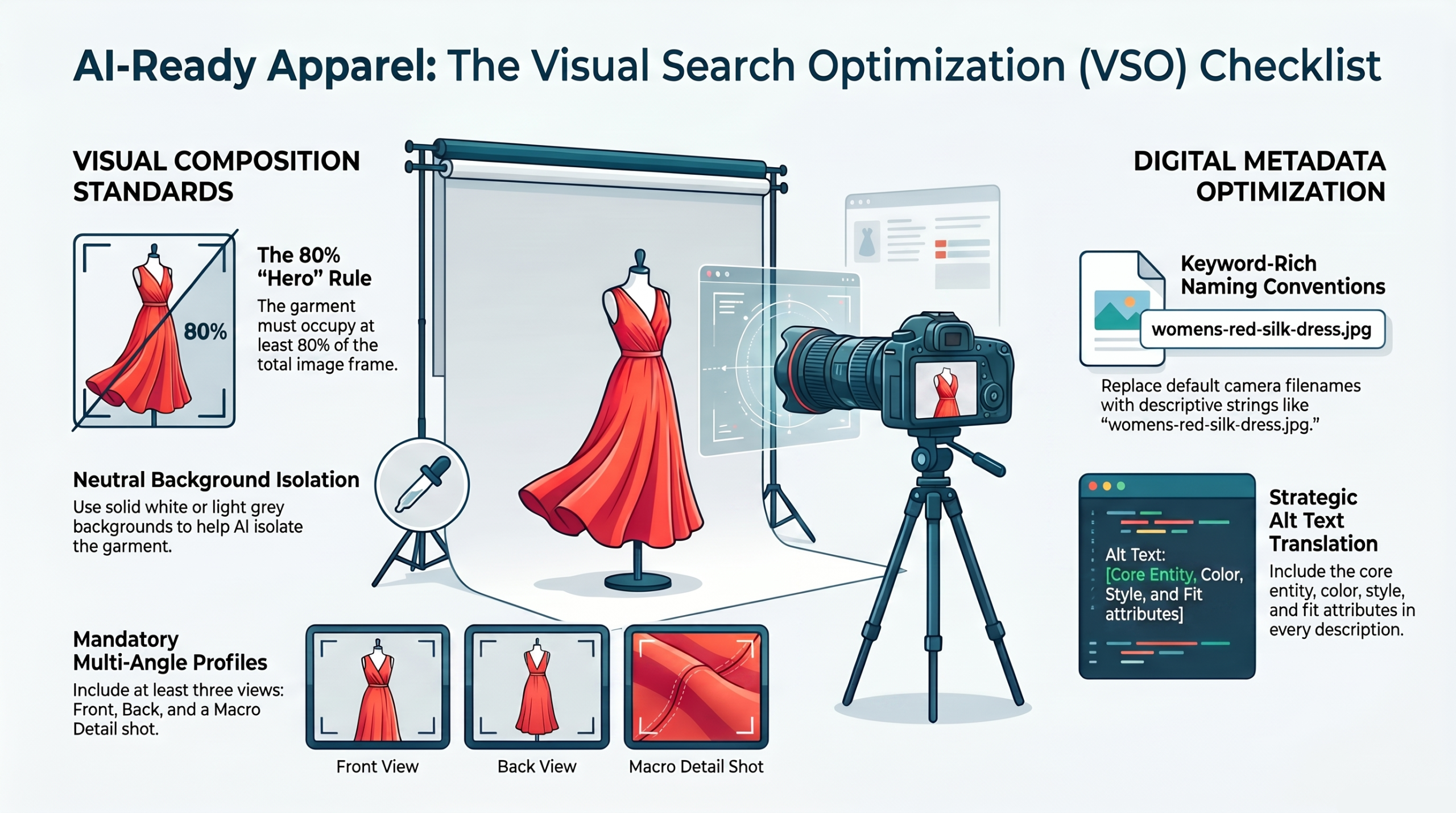
Visual Search Optimization (VSO) Checklist:
High-Resolution Clarity: Ensure all images are sharply focused to allow AI to detect fabric textures.
Neutral Backgrounds: Use solid, uncluttered backgrounds to help algorithms isolate the garment.
Multiple Angles: Provide front, back, and detail shots to give computer vision a complete profile.
Accurate File Names: Use descriptive names rather than default camera numbers.
Strategic Alt Text: Write highly descriptive alt text that includes color, style, and fit attributes.
How to Create an Apparel Image Audit Report
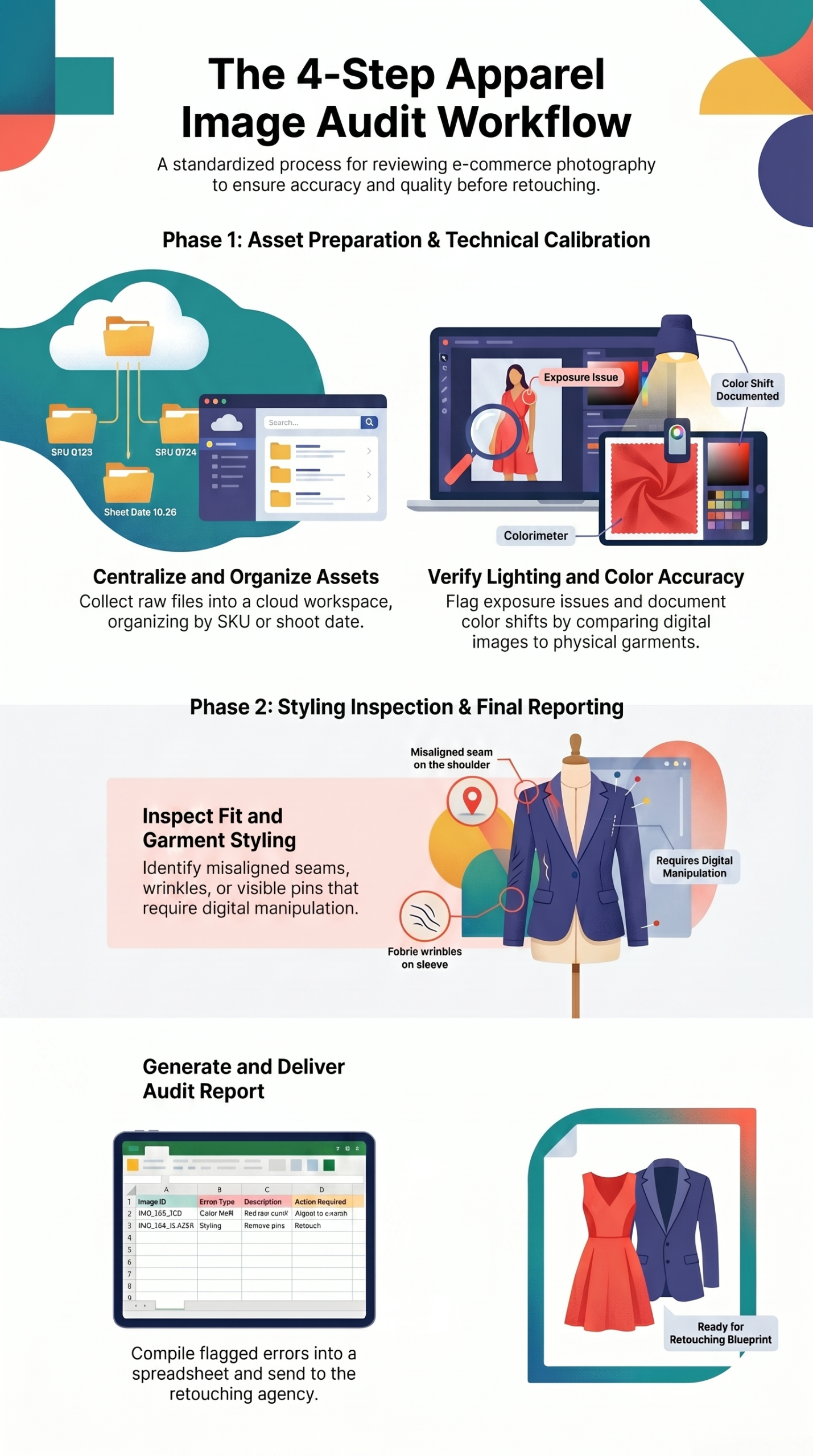
An apparel image audit report is a formal document that categorizes every photographic flaw in your catalog and provides explicit instructions for the retouching team. This document bridges the communication gap between your brand and the editing agency. It details specific requirements for color correction, background removal, and margin alignment. Creating this blueprint prevents costly misunderstandings. Ultimately, a documented visual assessment keeps your post-production completely on track.
Let us analyze a practical apparel image audit example. Imagine reviewing a batch of fifty winter coats. You notice that ten photos have harsh shadows, and five display inaccurate navy blue tones. You log these precise issues into your spreadsheet. Documenting errors objectively removes the guesswork from the equation. In short, providing concrete examples of flaws streamlines the entire correction process.
Partnering with an elite agency like Clipping Path One becomes incredibly effective when you provide them with clear, audited data. They can execute your vision perfectly. You might even hire an external apparel image audit firm to evaluate your catalog if your internal team lacks the necessary technical bandwidth. Outsourcing this assessment guarantees a completely unbiased review. To summarize, leveraging expert oversight maximizes the efficiency of your retouching investments.
The Impact of Auditing on Retouching
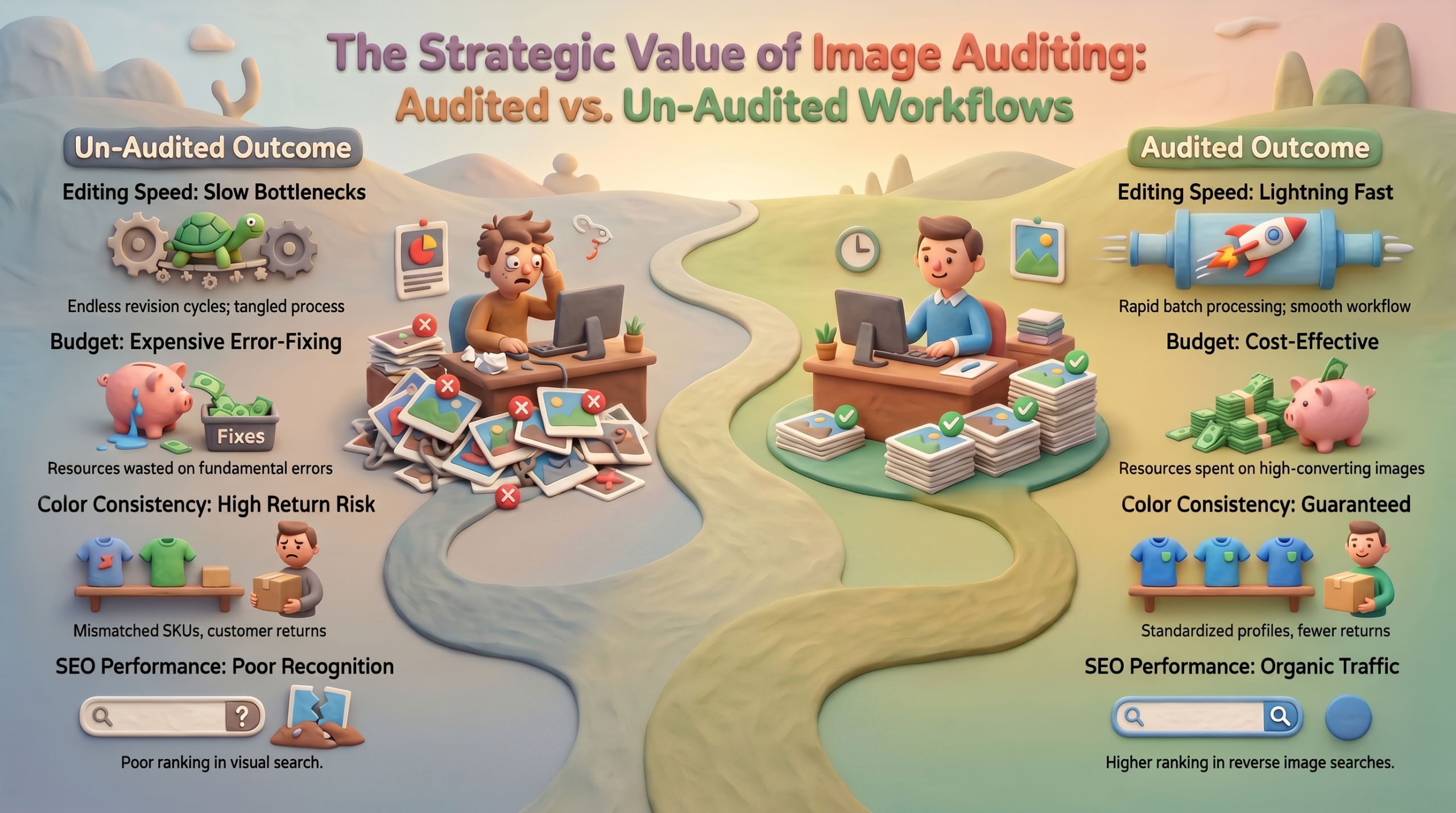
| Feature | Un-audited Raw Images | Images After an Audit |
| Editing Speed | Slow, prone to constant revisions. | Fast, with a clear direction. |
| Color Accuracy | High risk of mismatched product colors. | Guaranteed consistency across SKUs. |
| Cost Efficiency | Expensive due to wasted retouching hours. | Highly cost-effective and strictly budgeted. |
| AI Tagging | Poor recognition by visual search engines. | Flawless categorization and high visibility. |
Identifying Unlabelled Clothes Using AI Image Recognition
AI image recognition tools identify unlabelled clothes by analyzing the shape, color, pattern, and fabric of a garment and matching these visual data points against massive fashion databases. This technology allows retailers to automatically tag large collections without manual data entry. It drastically reduces administrative workload while improving search accuracy. Automating your catalog tagging is a massive operational advantage. Ultimately, AI recognition transforms raw images into highly searchable retail assets.
Turn one outfit photo into a professional clothing analysis card. This process begins with a stellar photograph. When an image is properly audited, AI tools can instantly recognize a “houndstooth blazer” rather than just a “black and white jacket.” Precision is everything. Consequently, feeding clean visuals into AI systems yields incredibly accurate product tagging.
How Brands Can Optimize Images for Visual Search Discovery
Brands can optimize images for visual search discovery by combining high-quality “hero” photography with strategic, descriptive metadata that search engines can easily parse. This dual approach satisfies both human shoppers and automated algorithms. You must provide a clear visual of the product while simultaneously explaining it through alt text. Covering both bases is essential. In essence, blending visual clarity with technical optimization drives maximum search traffic.
1. High-Quality “Hero” Photography
Your primary product image is your digital storefront. It must be striking. Ensure that the garment takes up at least eighty percent of the image frame to eliminate distracting negative space. Bold presentation captures attention instantly. Therefore, utilizing dominant hero images is critical for driving visual clicks.
2. Strategic Alt Text
Alt text acts as the translator between your image and the search engine. Be meticulous. Instead of writing “blue shirt,” write “men’s navy blue slim-fit cotton button-down shirt.” Specificity wins the game. To summarize, descriptive alt text is the secret weapon for dominating organic image search.
Ready to Grow Your Business?
Your visual assets are the lifeblood of your online store. Do not leave them to chance. Conducting a meticulous apparel image audit ensures that your brand presents a polished, trustworthy, and highly optimized face to the world. It is the smartest investment you can make before spending a dime on post-production. Start reviewing your catalog critically today. Ultimately, taking control of your visual quality directly translates to increased consumer trust and higher revenue.
FAQ: Navigating Visual Fashion Search
What is an apparel image audit?
An apparel image audit is a comprehensive review of your raw product photography to identify lighting, styling, and color flaws before sending the files to a professional retouching agency. It ensures only high-quality, usable images are edited.
Why do I need an apparel image auditor?
An apparel image auditor provides an objective, expert evaluation of your photography. They possess the technical knowledge to spot inconsistencies that untrained eyes miss, ultimately saving your brand money on unnecessary retouching revisions.
What should be included in an apparel image audit report?
Your report should include a detailed list of all approved and rejected images, specific notes on color correction requirements, alignment instructions, and a clear breakdown of styling flaws that the retouching team needs to fix.
How does an apparel image audit improve SEO?
Auditing ensures your images are clear, well-lit, and properly framed. These high-quality images are much easier for AI and visual search engines to “read,” which improves your chances of ranking in reverse image searches and Google Images.
Can an apparel image audit firm help with AI fashion tagging?
Yes. A specialized firm ensures your images meet the strict structural requirements needed for accurate AI image recognition. Clean, audited images allow automated tagging software to correctly identify colors, patterns, and clothing categories.