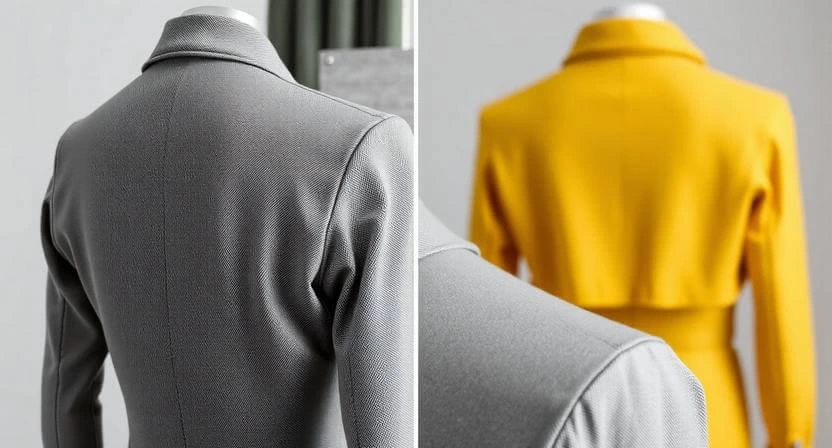
The direct answer? Neither method wins outright. AI ghost mannequin editing delivers blazing speed at rock-bottom cost think 15 seconds and pennies per image. Manual ghost mannequin editing offers precision and brand finesse that algorithms still fumble. The smartest brands in 2026 are blending both. Here is exactly how to decide what works for your catalog.
What Is AI Ghost Mannequin Editing?
AI ghost mannequin editing uses machine learning models to automatically detect, remove, and reconstruct the hidden areas behind a mannequin. Instead of a human retoucher spending 20 to 30 minutes compositing neck joints and blending seams, an algorithm does the heavy lifting.
It is fast. Shockingly fast. A task that consumes a senior retoucher’s focused attention for half an hour gets compressed into under 15 seconds.
The AI ingests your garment photo, identifies the mannequin, erases it, and then regenerates the inner collar, back label area, and shadow cavities. No second reference shot required in some tools. That alone is a workflow revolution.
But here is the catch: AI lacks contextual understanding. It does not know what a collar should look like. It predicts. And predictions, however sophisticated, sometimes miss. When they miss, you get plasticky textures, warped weaves, and the occasional anatomical blob where a neckline should be.
What Is Manual Ghost Mannequin Editing?
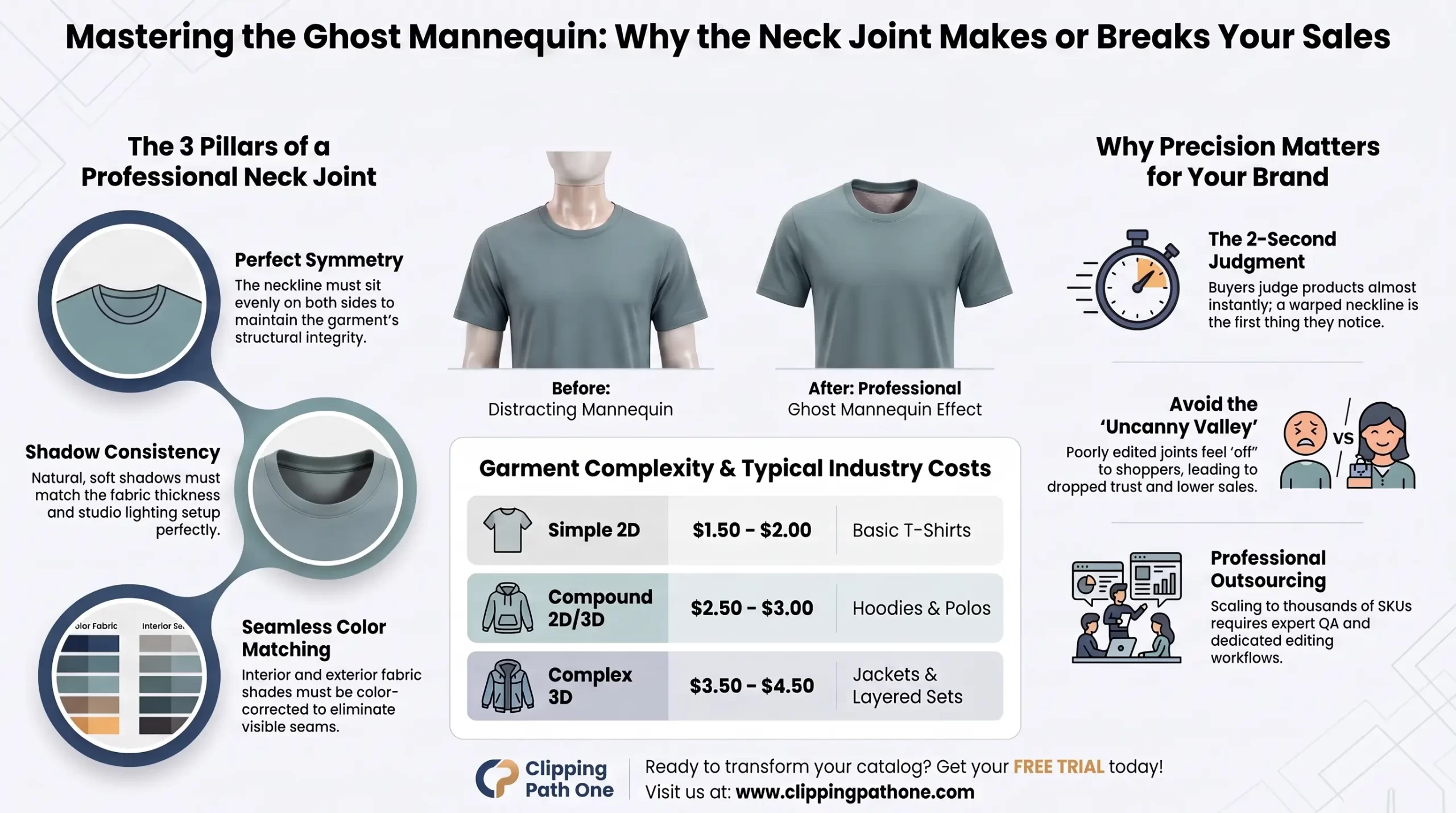
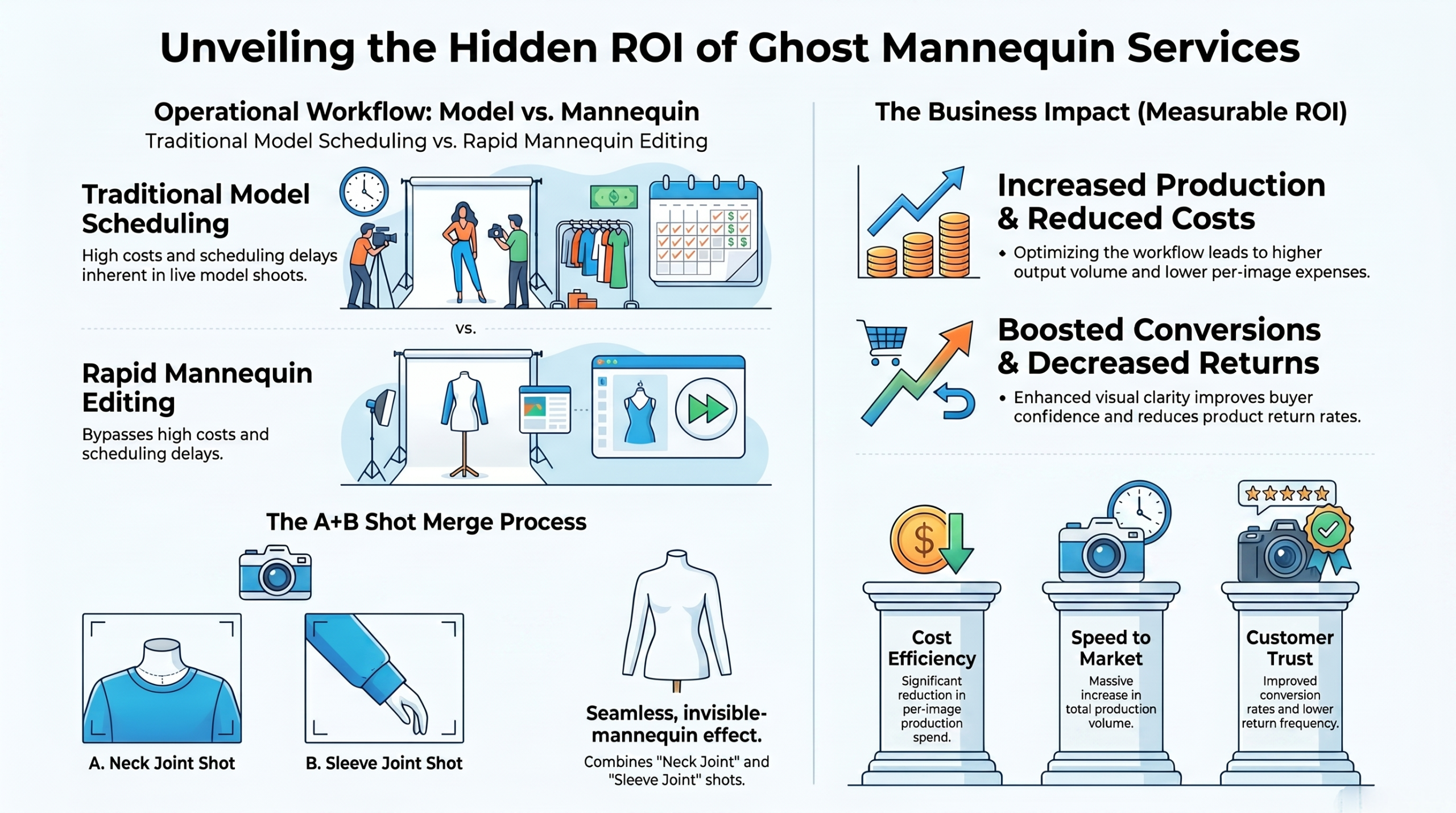
Manual ghost mannequin editing is the traditional craft. A retoucher takes two or three source photographs front shot on mannequin, interior label shot, and sometimes a back view—and composites them in Photoshop using the Pen Tool, layer masks, and frequency separation.
This is painstaking, detail-obsessed work. A professional retoucher needs 2 to 5 minutes on a standard image. Complex garments? Far longer. The neck joint alone blending the inner collar seamlessly with the front exterior can take 10 minutes of careful cloning, healing, and shadow calibration.
The result, though, is undeniable. Manual editing respects fabric physics. It preserves the thread-over-thread pattern of woven cotton, the directional sheen of velvet, the asymmetry of real light. It keeps brand labels intact and colors calibrated to a specific Kelvin value.
No algorithm matches that level of material fidelity. Not yet.
Head-to-Head: AI Ghost Mannequin Editing vs Manual Editing
Speed
AI is absurdly faster. That is not marketing fluff. A major fashion retailer integrating AI tools slashed image processing time by 70%. Another provider reports going from 20 to 30 minutes per image down to 15 seconds.
Manual editing? An hour or more per product, once you factor multiple angles, complex fabrics, and quality control. Winner: AI.
Cost
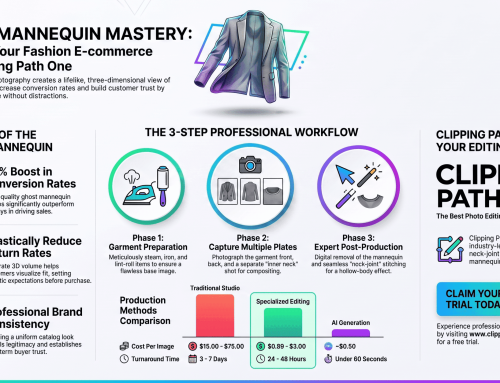
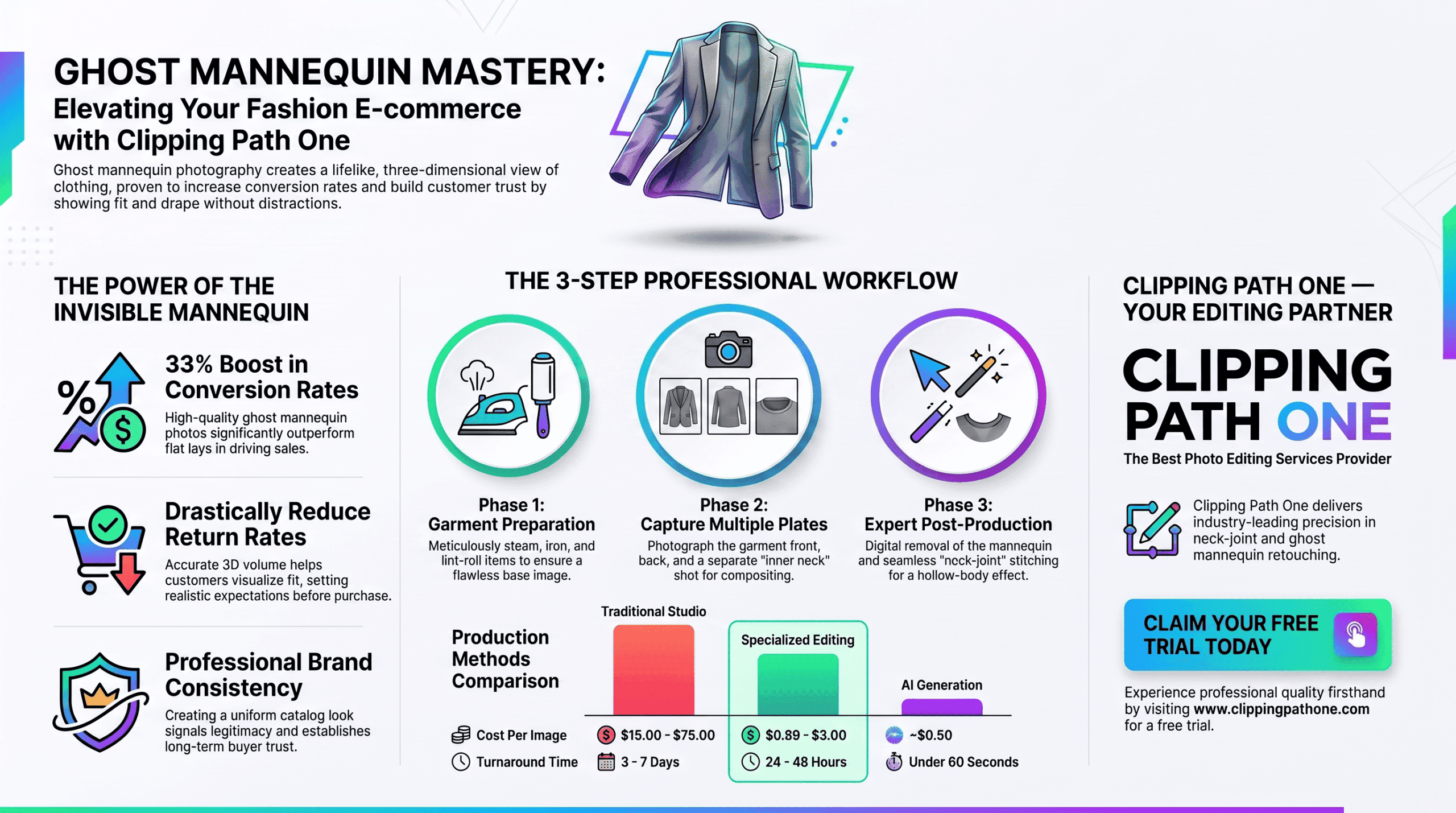
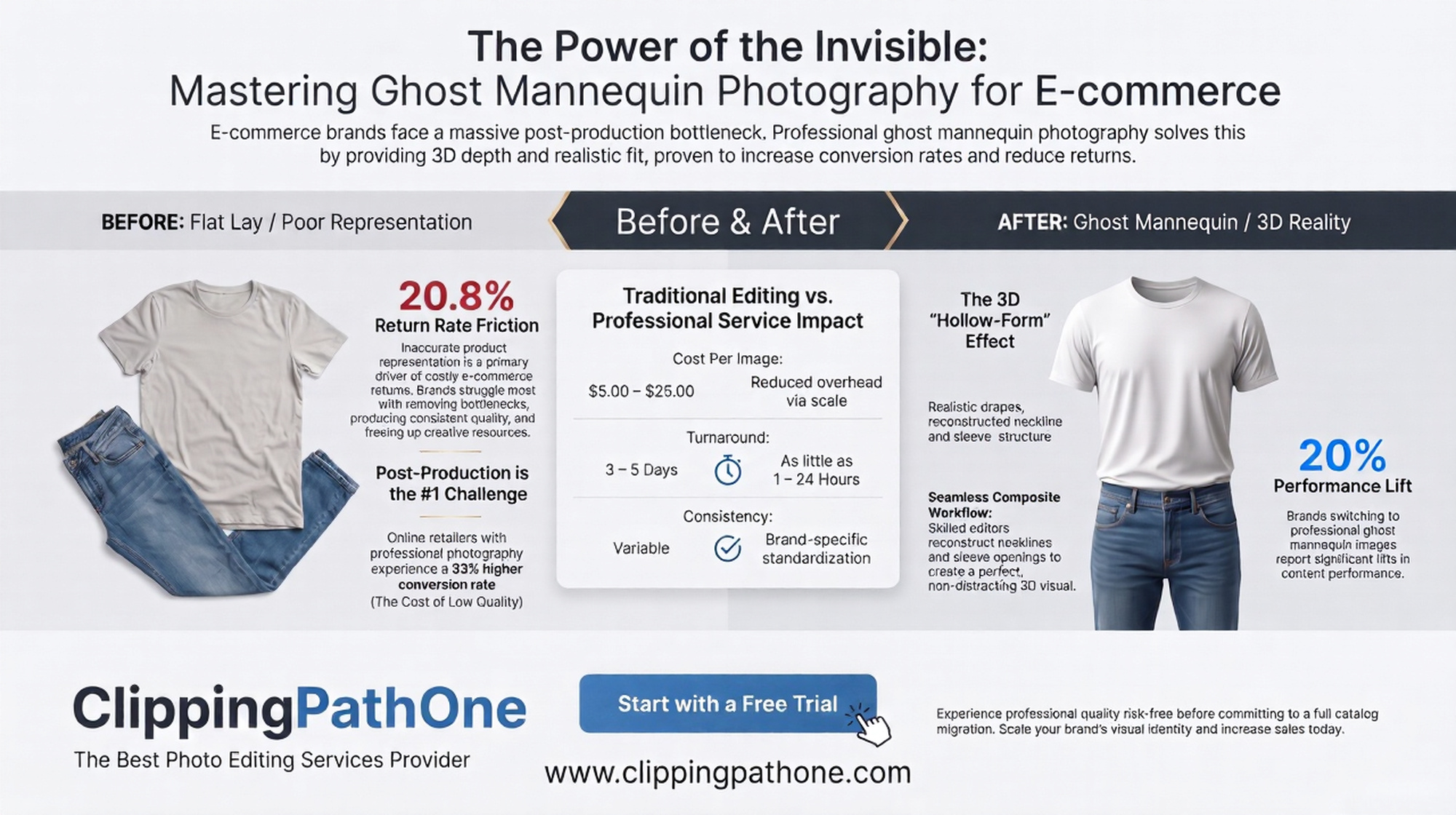
Manual ghost mannequin editing costs anywhere from 0.50 to 25 per image, depending on complexity and provider. Most professional services cluster between 3 and 8 for standard quality work. Complex garments with multiple joint types push toward 10 to 18.
AI tools, by contrast, cost 0.10 to 0.50 per image, or come bundled in monthly subscriptions that amortize to pennies at scale. Some platforms even offer free tiers.
For a brand with 500 SKUs, manual editing could run 1,500 to 4,000. AI might cost 50 to 250. That gap is seismic. Winner: AI.
Quality & Accuracy
Here the ground shifts. AI edits can look flawless on simple garments plain cotton tees, basic button-downs, untextured fabrics. But introduce ribbed knit, tweed, lace, or unique pocket shapes, and the cracks appear.
AI consistently smooths micro-texture, eliminating the tactile signals that shoppers subconsciously rely on. Color shifts of 15 to 30 hex values are common. Lighting consistency across a catalog? AI edits each image in isolation with no memory of the previous shot’s light model.
Human retouchers apply frequency separation, shadow calibration, and brand-style memory across every SKU. The result is fewer returns and higher conversion rates.
One study found that 67% of buyers identified “product photos that look edited or fake” as a reason to abandon a purchase. That statistic should haunt any brand considering pure AI workflows.
Winner: Manual editing, decisively.
Consistency at Scale
AI wins for uniformity across thousands of simple images. Manual editing wins for maintaining brand identity through nuanced creative choices.
Here is the tension: AI gives you identical looking images fast. But “identical” can mean identically imperfect. Manual editing introduces subtle human variation mostly invisible, sometimes problematic at enormous scale.
Winner: Tie. Depends on your catalog complexity.
Creative Control
AI is a black box. You prompt it, it generates. You get three variations, and you pick the least objectionable.
Manual editing is a conversation. The retoucher understands fabric drape, brand guidelines, and the emotional register of an image. They can make a collar sit slightly open because that looks more inviting, or deepen a shadow to emphasize drape.
AI cannot make creative judgments. It can only infer.
Winner: Manual editing.
Comparison Table
| Factor | AI Ghost Mannequin Editing | Manual Ghost Mannequin Editing |
| Speed | 15–60 seconds per image | 2–30 minutes per image |
| Cost | 0.10– 0.10–0.50 per image | 0.50– 0.50–25+ per image |
| Accuracy | High on simple garments; struggles with texture | Near-perfect across all fabrics |
| Consistency | Uniform output, may replicate errors | Slight variation; brand-aware consistency |
| Creative Control | None; AI predicts | Full; human judges |
| Best For | High-volume catalogs, simple garments, tight budgets | Luxury brands, complex fabrics, brand-defining hero images |
The Hybrid Approach: Why the Smartest Brands Choose Both
A growing number of professional studios are adopting a hybrid workflow. The logic is simple: let AI do what AI does well, and let humans do what humans do well.
AI takes the first pass. It removes the background, crops, adjusts exposure, and generates an initial ghost mannequin composite. These tasks follow predictable patterns. AI handles them reliably.
Then a human retoucher takes the second pass. They refine colors to brand specs, fix fabric details AI missed, ensure draping looks natural, and check overall consistency.
Even more sophisticated: routing systems based on AI confidence scores. If an AI processes a leather handbag with complex stitching and scores its own output at 70% confidence, that image gets automatically routed to human review. Simpler images with high confidence go directly to export.
This model cuts turnaround time dramatically. Quality stays high. Costs stay manageable you are paying for human expertise only where it actually matters.
When Should You Use AI Ghost Mannequin Editing?
- You manage a catalog of 200+ SKUs with mostly simple garments.
- Your budget is tight, and speed matters more than pixel-perfect fabric detail.
- You sell on marketplaces like Amazon or Shopify where clean, consistent product images meet the baseline standard.
- You need images turned around in hours, not days.
When Should You Stick with Manual Editing?
- Your brand identity depends on visual precision and material authenticity.
- You sell luxury apparel, textured fabrics, or garments with unique structural details.
- Your return rate is sensitive to visual accuracy—customers return what does not match expectation.
- You are producing hero images for a campaign, not just catalog thumbnails.
Real-World Results: What the Data Says
A fashion retailer that integrated AI-powered editing tools reduced image processing time by 70% and saw a 25% increase in online conversion rates. Another e-commerce platform using AI automation cut operational costs by 50% while boosting photo output by 40%.
High-resolution AI renders when done right can lift conversions by 30% compared to traditional photography.
But the flip side is equally instructive. AI edits on color-sensitive items like dyed fabrics generated a 22% return rate due to color inaccuracy. And AI-labeled ads? They saw click-through rates drop by approximately 31.5% compared to unlabeled human-made versions.
The lesson: AI quality varies wildly by use case. Deploy it strategically.
Expert Insight
Keble Zhu, founder of Rewarx Studio AI, describes the challenge plainly:
“The hardest part isn’t removing the model; it’s reconstructing what was behind them—the inner back of the collar, the curvature of the sleeve openings, maintaining the lighting consistency inside the hollow areas.”
His team built a specialized pipeline combining semantic masking, depth estimation, and context aware in painting. Even with that level of sophistication, they acknowledge that high-strength in painting still struggles with material texture preservation.
That honest assessment captures the state of play in 2026: AI is remarkable. But it is not finished.
Practical Steps: Choosing Your Workflow
- Audit your catalog. Separate simple garments tees, tanks, basic shirts from complex ones jackets, knits, layered outfits.
- Test AI on a small batch. Run 20 images through an AI ghost mannequin tool and check for texture errors, color drift, and neck joint realism.
- Identify your quality threshold. If 90% of your AI outputs pass inspection without human touch-ups, scale the AI workflow. If not, adopt a hybrid model.
- Build a routing system. For hybrid workflows, define which image types go directly to export and which require human review. Use AI confidence scores if your tool supports them.
- Track return rates. If returns spike after switching to AI-edited images, the cost savings are an illusion.
FAQ
Is AI ghost mannequin editing cheaper than manual editing?
Yes. AI ghost mannequin editing costs roughly
0.10 to 0.50 per image, while manual ghost mannequin editing ranges from
0.50 to over 25 per image depending on complexity and provider. For high-volume catalogs, the cost difference can reach thousands of dollars per month.
Can AI ghost mannequin editing match manual quality?
Not on complex garments. AI excels on simple fabrics but frequently misrepresents textures like ribbed cotton, tweed, and lace. It can shift colors by 15 to 30 hex values and produce unnaturally smooth surfaces. Manual editing preserves material authenticity and brand identity with far greater fidelity.
How fast is AI ghost mannequin editing compared to manual?
AI ghost mannequin editing processes images in 15 to 60 seconds. Manual editing takes 2 to 30 minutes per image. Over a catalog of hundreds of products, AI saves days of production time.
What is a hybrid ghost mannequin workflow?
A hybrid workflow splits the editing process: AI handles the first pass background removal, exposure correction, initial ghost mannequin generation and human retouchers refine the final details. AI confidence scores can automatically route complex images to human review, keeping quality high while cutting turnaround time significantly.
Does AI ghost mannequin editing affect conversion rates?
It can go either way. High-quality AI renders have been shown to boost conversions by 25% to 30% through visual clarity and consistency. However, AI-edited images that look fake or misrepresent color can increase return rates and erode buyer trust. A 2023 study found that 67% of shoppers abandon purchases when product photos appear edited or inauthentic.
Conclusion
AI ghost mannequin editing is not a replacement for manual skill. It is a force multiplier. It compresses repetitive work from hours into seconds, freeing human retouchers to focus on the creative, brand-defining details that machines still cannot grasp.
Manual ghost mannequin editing remains the gold standard for fabric fidelity, lighting consistency, and creative nuance. For luxury brands, textured garments, and hero images that define perception, it is irreplaceable.
But for the vast middle the catalogs of hundreds of SKUs where speed and budget collide the hybrid model is winning. AI first. Human second. Each doing what they do best.
Choose based on your catalog, your brand identity, and your tolerance for imperfection. There is no universal answer. There is only the answer that fits your business.